
Endangered Redwoods: Saving California’s Treasured Coniferous Trees
Although redwoods are renowned for their strength and endurance, these coniferous trees face growing threats from human activity and climate change, endangering one of California’s natural treasures.

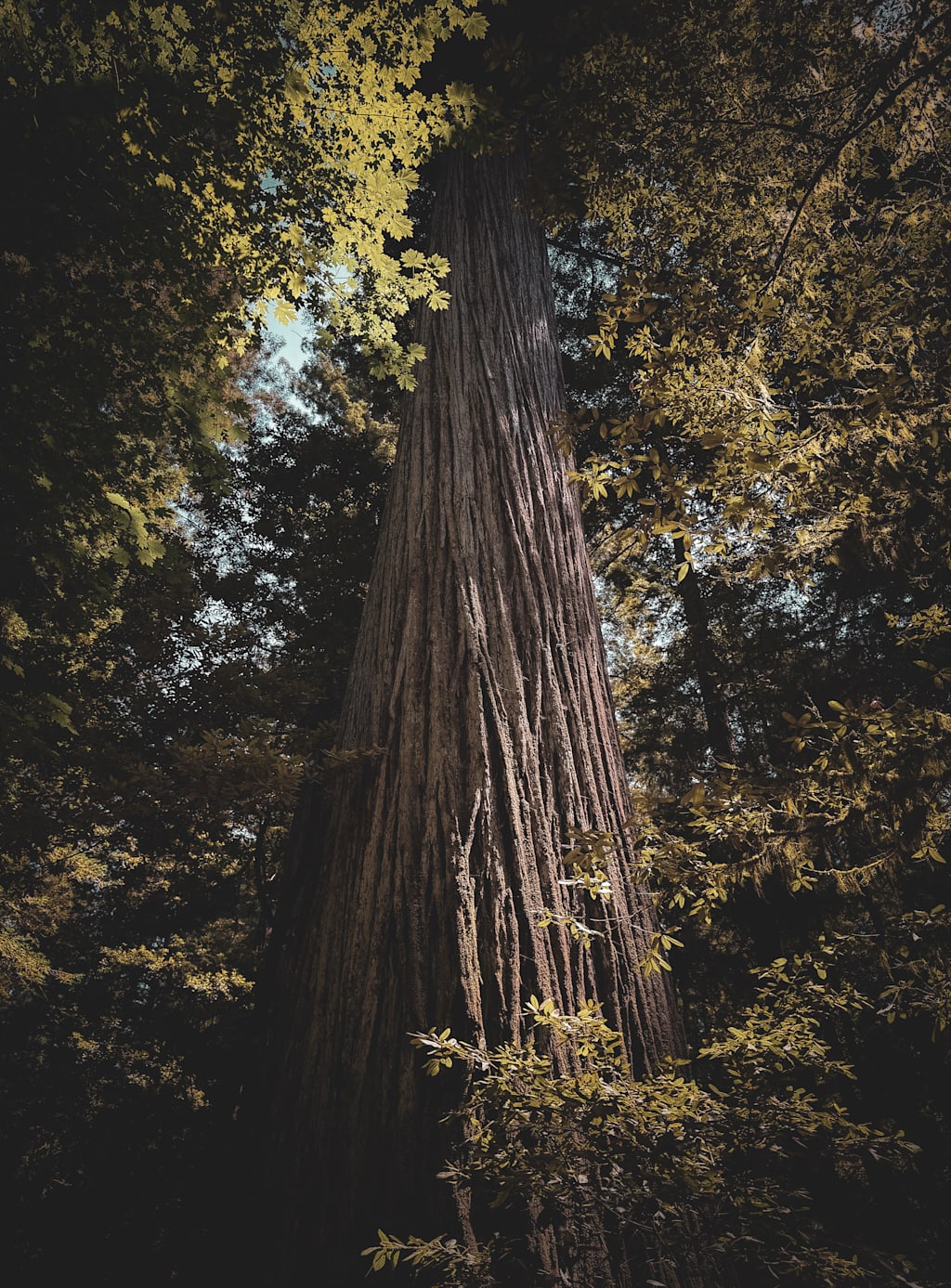
Along the west coast of the United States, redwood trees symbolize natural beauty and a deep connection to nature. As robust coniferous trees, redwoods are renowned for their strength and endurance. Despite their resilience to environmental disturbances, including forest fires, severe floods, and extreme winds, redwoods remain endangered by human activity and anthropogenic climate change.
Although climate variables over the past 10,000 years have restricted redwood growth to California and Oregon, the current decline of redwood forests is due in part to extensive logging and urban development. According to environmental researchers Dangerfield, Voelker, and Lee, “extensive logging during the 19th and 20th centuries [has] removed over 95% of the old-growth forests ...” Furthermore, as a result of global warming, redwood trees are also exposed to ecological fragmentation, particularly through intensified droughts and wildfires.
In response to these pressures, it is necessary to address the following questions: why have redwood trees become so vulnerable? Why does the sustainability of redwood forests matter? And what measures can be taken to prevent their further decline?
The Origin of Redwoods
Redwood trees are historically significant for their ancient existence on Earth. According to the Sempervirens Fund, redwoods are almost as old as dinosaurs, living on Earth “before flowers, birds, spiders … and, of course, humans.” Regarding their ecological origin, all redwood varieties descend from a small group of conifers that existed over 144 million years ago. In terms of their scientific name, the Coast Redwood bears the species name “sempervirens”, which, when translated into English, means “always green or flourishing.”
Receiving their common name from their heartwood, which is reddish-brown in colour due to high tannin levels and other phenolic compounds, redwood trees are highly distinctive from other coniferous trees. As the Sempervirens Fund notes, redwoods are deemed the tallest trees on Earth, standing over 300 feet high. The tallest recorded tree on Earth is the “Hyperion”, which stands in California’s Redwood National Park.
Across the globe, there are three main redwood varieties: the Coast Redwood (Sequoia sempervirens), the Giant Sequoia (Sequoiadendron giganteum), and the Dawn Redwood (Metasequoia glyptostroboides). The Coast Redwood and Giant Sequoia can be found along the west coast of the United States, while the Dawn Redwood is native to China.
California’s National Treasure
Renowned for their height, strength, and grandeur, redwood trees are an invaluable national treasure to many Americans. Evident in Travels with Charley: In Search of America, John Steinbeck, an American novelist, writes:
“The redwoods, once seen, leave a mark or create a vision that stays with you always. No one has ever successfully painted or photographed a redwood tree. The feeling they produce is not transferable. From them comes silence and awe. It’s not only their unbelievable stature, nor the color which seems to shift and vary under your eyes, no, they are not like any trees we know, they are ambassadors from another time.”
Similarly, in Outdoor Pastimes of an American Hunter, Theodore Roosevelt, the 26th president of the United States, expresses:
“There can be nothing in the world more beautiful than the Yosemite, the groves of the giant sequoias and redwoods, the Canyon of the Colorado, the Canyon of the Yellowstone, the Three Tetons; and our people should see to it that they are preserved for their children and their children’s children forever, with their majestic beauty all unmarred.”
After reflecting on the historical significance of redwood trees, such authors reveal the enduring importance of American nature and the value of keeping its flourishing forests alive and well.
Redwood Trees at Risk
Despite the protection of 85% of existing old-growth redwood forests in national, state, and local conservation areas, several redwood trees are at risk of ecological decline. Within the last 150 years, the influence of human activity, especially widespread logging and climate impact, has significantly altered the resilience of redwood forests.
Historically, in California, redwood forests once covered approximately 2 million acres of land. However, during the California Gold Rush of 1848, large-scale logging practices reduced old-growth redwoods to under 10% of their original extent. Such logging practices were swiftly carried out due to urban development, as redwood timber was sought after for its natural resistance to fire and decay.
According to Dangerfield, Voelker, and Lee, “following Euro-American settlement, land cover changes caused by logging and urban development left the remaining redwood distribution heavily fragmented and exposed to different types of edge effects.” From these exposures, such as residential, agricultural, and roadway effects, many remaining old-growth redwood trees became subject to an overwhelming increase in sunlight, air, soil temperatures, and wind. In turn, as Dangerfield, Voelker, and Lee report, “modern disturbances compounded by climate change add new challenges to these forests.”
Vulnerability to Climate Change
Redwood trees are highly vulnerable to anthropogenic climate change, which refers to the long-term shifts in global temperature and weather patterns resulting from human activities. From the burning of fossil fuels to industrial and manufacturing processes, these human activities have increased the release of greenhouse gases into the atmosphere.
With the heightened release of carbon dioxide, methane, and nitrous oxide into the atmosphere comes the rise in warmer temperatures and drier environments. As the National Park Service states, “climate change increases the Earth’s temperature, which disrupts precipitation across the globe. As we continue to burn fossil fuels, these changes will amplify. One change that’s already happening is more severe droughts. Droughts put stress on plants, agricultural farms, and the ecosystems we depend on.”
Additionally, the National Park Service suggests that redwood trees depend on 160 gallons of water per day. This is especially important during the summertime, when redwood trees rely on coastal fog as their primary water source, which accounts for 40% of their annual water intake. However, the National Park Service also emphasizes that “the fog redwoods need to survive has decreased by about a third.” Referencing Joanne Kerbavaz, senior scientist at Big Basin, Jeff Berardelli from CBS News reports, “[Kerbavaz] is concerned that in the coming decades, if the fog continues to shrink, the habitat suitable for redwoods that live further away from the ocean will also shrink.”
Furthermore, since 2000, the western portion of the U.S. has experienced an extensive megadrought, one of the most severe droughts in 1,200 years. From 1970 onward, summers in California have increased by 2 to 3 degrees Fahrenheit. As Berardelli from CBS News reports, “these types of climate conditions, warmer and drier, set the stage for a longer fire season with larger, more intense fires.”
Concerning this, Berardelli further highlights that the shifting intensity and frequency of forest fires pose a serious risk to the resilience and adaptability of redwood trees. As Berardelli’s evidence suggests, “scientists say as the climate warms, these fires will grow bigger at an accelerating pace. And although the giant redwoods and sequoias have been historically resilient to natural wildfire, these unnaturally intense fires are starting to overwhelm their defences, with fires reaching higher up into their crowns.”
Field Research Findings
To further understand the effects of anthropogenic climate change on redwood trees, it is beneficial to examine the field research completed by Marie E. Antoine and Stephen C. Sillett from California State Polytechnic University, Humboldt.
Antoine and Sillett began their research by selecting 45 forests, 32 primary and 13 secondary forests, located in California’s Monterey County to Oregon’s Curry County. After extracting samples from the cores of 235 trees and sampling 1.2 million annual tree rings, Antoine and Sillett highlighted concerns regarding responses to warmer temperatures and dry environments.
Their academic research uncovered that redwoods have experienced an increase in drought sensitivity. As Antoine and Sillett outline, “southern trees experience problems earlier during multi-year droughts, and they recover more slowly from extreme drought than northern trees. Across the range, smaller and younger trees in secondary forests experience more growth suppression during extreme drought than larger and older trees in primary forests.”
Additionally, Antoine and Sillett also discovered that “in late 2022, when [their] analysis was published, the whole redwood range was once again in the midst of a multi-year drought. Abundant rain returned to the region in early 2023 with excessive precipitation and extreme winds presenting an entirely different challenge to redwoods.”
With these findings at the forefront, Antoine and Sillett conclude that “regardless of precipitation, the redwood range will experience progressive drying due to global warming ... the drying power of air—vapor pressure deficit (VPD)—increases exponentially with temperature. High daytime VPD means trees need to close their leaf stomata earlier in the day to prevent damaging water loss.”
In turn, this physiological process “limits photosynthesis, but such ‘source limitation’ is mitigated by rising atmospheric carbon dioxide (CO2) levels.” Antoine and Sillett's findings note that “in today’s enriched atmosphere (CO2 currently 419 parts per million, was 317 in 1960), trees can partially close leaf stomata to reduce water loss and still absorb plenty of CO2 for photosynthesis. Nevertheless, heatwaves with extreme daytime temperatures can lead to treetop dieback, and another temperature effect directly inhibits radial growth of redwoods.”
Overall, after analyzing the research presented, it is evident that the influences of rising temperatures from climate change are causing an impact on redwood trees, their photosynthesis process, and their ability to maintain healthy growth. Although higher atmospheric CO2 levels can partially offset these challenges by encouraging sufficient photosynthesis, the consequences of extreme heat and drying from climate change may eventually overcome these adaptations and lead to reduced growth and thinning of the forest canopy.
Management Strategies and Next Steps
After uncovering the vulnerability of redwood trees in the United States, it is vital to develop additional management strategies to mitigate the effects of human activity and climate change. Anthony Ambrose of the Department of Integrative Biology at the University of California, Berkeley, suggests planting new redwood seedlings, which will provide the species an opportunity for new growth.
However, this does not address the current vulnerability of old-growth redwood trees, which, because of their geographic location and increasing climatic stress, may continue to decline in the future.
In response, as emphasized by the Sempervirens Fund, it is imperative to incorporate human intervention as a necessary mitigation strategy to support the survival of old-growth redwood trees. This includes supporting non-profit organizations such as Sempervirens Fund, Save the Redwoods League, and Redwood Forest Foundation to further the mission of ecological restoration and forest preservation.
Going forward, such preservation measures can be implemented on a larger scale, protecting redwood ecosystems through land conservation and protection laws, public education, and forest reforestation. By doing so, such mitigation strategies may help halt the current pressures affecting redwood ecosystems, ensuring healthy forests for generations to come.
About the Creator
Christina Hinds-Hueglin
A Copywriter from Canada with a Master of Arts in Sociology from Queen’s University. Acquiring 7+ years of proficiency in written communication, striving to create compelling narratives and impactful content.
Enjoyed the story? Support the Creator.
Subscribe for free to receive all their stories in your feed.
Comments
There are no comments for this story
Be the first to respond and start the conversation.