
El Niño’s Impacts on Pest Infestations: What You Need to Know
These abnormal weather patterns are likely to bring abnormally high levels of pest activity.

The summer of 2026 is shaping up to be a wild one, with heat waves sweeping the globe and severe weather sowing chaos across different parts of Canada.
This season’s high temperatures are driven in part by an emerging El Niño, a naturally occurring climate phenomenon caused by warming of the Pacific Ocean near the equator. Occurring every two to seven years, El Niño is associated with higher global surface temperatures and disruption of normal weather patterns, increasing the risk of extreme events like drought and flooding in different parts of the world.
Scientists are predicting that this year’s El Niño may be one of the strongest ever recorded. This could bring not only a sweltering summer, but an explosion of pest population growth from now through 2027.
What is El Niño?
El Niño is a natural climate pattern caused by cyclical shifts in wind and water currents in the tropical Pacific Ocean. Because the Pacific covers one third of the planet, changes in currents and heat distribution there can massively alter ordinary global air circulation patterns and create extreme weather disruptions across the globe.
Under normal conditions, trade winds in the tropical Pacific blow from east to west, pushing warm surface water away from South America and along the equator towards Indonesia and Asia.
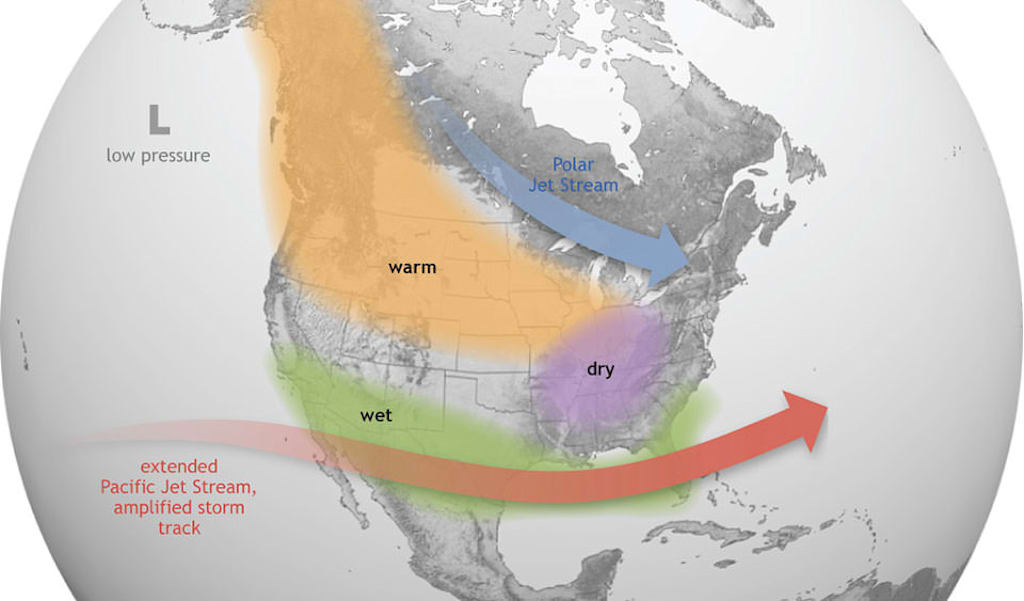
But during an El Niño, these trade winds weaken or reverse, pushing the warm water back towards South America. High water temperatures in the eastern Pacific disrupt ocean currents, altering wind and weather patterns worldwide. The Pacific jet stream moves south and extends further east across North America, causing storms and flooding across the southern United States while the northern U.S. and Canada become warmer and drier than usual.
El Niño conditions typically last 9 to 12 months, usually developing between March and June, reaching peak intensity between November and February, and dissipating during the following spring and early summer. The name El Niño, which means “little boy” or “the Christ child” in Spanish, was first coined by Peruvian fisherman who noticed the peak in warm ocean temperatures around Christmas time.
An El Niño is officially declared when sea surface temperatures in the eastern equatorial Pacific remain at least 0.5 degrees Celsius above the long-term average for a period of several months. This year, these sea surface temperatures are predicted to be more than 2°C higher than average, creating a very strong or “super” El Niño. Scientists say to expect intensified drought and extreme rainfall events as well as record-breaking temperatures.
What does this mean for pests?
Though things are heating up now, the most pronounced effects of El Niño typically aren’t felt in Canada until later in the year.
El Niño conditions in Canada create shorter, warmer winters with less snow. The most recent El Niño, which lasted from 2023 to 2024, generated the country’s warmest winter on record. During the last “super” El Niño in 2015-2016, the Prairies, B.C., and Yukon experienced one of the driest winters recorded, and temperatures climbed four degrees above average.
These effects of El Niño create prime conditions for pest insects to proliferate. Here’s how:
1. Longer breeding seasons
During an El Niño, warm temperatures persist later into the fall and come back earlier in the spring. This extends the breeding season for many species of pest insects, delaying them from entering hibernation and allowing them to re-emerge earlier in the season. Longer breeding seasons can allow for many more generations per year, making the pest population more difficult to contain.
2. Milder winter temperatures
In a normal year, winter acts as a natural pest control. Heavy snowfall and deep freezes make it difficult for overwintering insects to survive. But under El Niño’s warming effect, more individual insects make it through the winter months, resulting in a larger starting population for the next breeding cycle. Combined with the extended breeding season, this can generate seemingly exponential growth of pests like wasps, ticks, midges, and mice.
3. Precipitation changes
Changes in precipitation patterns during an El Niño can be harder to predict than temperature changes. Typically, El Niño causes drier conditions overall across Canada, but it can also create a split scenario in which southern Ontario and the Maritimes experience wetter summers with intense thunderstorms. Combined with warm temperatures, erratic, heavy rainfall events can cause sudden flare-ups of pests like mosquitoes, which breed in standing water, and termites, which swarm to create new colonies right after a rainfall. Heavy rains can send pests like cockroaches and mice scrambling for shelter, often inside buildings and homes. On the other hand, prolonged dry spells can also drive pests indoors, seeking moisture sources like faucets and leaky pipes.
4. Reduced natural enemies
Humans aren’t alone in our battle against pests. Most pest insects have “natural enemies”: predators or parasites that help keep the pest population in check. For example, lacewings and ladybeetles feed on pests like aphids, beetles, and mites. Unfortunately, beneficial insects and parasitoids are often more sensitive to extreme heat than the pests they prey upon. The changes in seasons caused by El Niño can also disrupt these natural enemies’ life cycles, creating timing mismatches that allow the pests to proliferate.
5. More migration pathways
As winters in general become milder, seasonal patterns shift, and global temperatures continue to trend upward, new species of pests are able to extend their range into areas where they previously could not survive. Over the past few years, warmer-than-average temperatures have led to rapid northward expansions of disease-carrying ticks and mosquitoes and tree-destroying invasives like emerald ash borers and spotted lanternflies. El Niño conditions, though temporary, can exacerbate these trends and allow pests to gain new footholds in places they didn’t inhabit before.
What can we do about it?
With the next 9-12 months likely to bring extreme temperatures and an ever-increasing pressure from pests, the most important thing to do is to be prepared. Homeowners and businesses should take proactive measures to prevent pests from getting established before they cause substantial damage.
About the Creator
Jason C
Hi! I'm a dude from Toronto, Canada. Thanks for visiting my page and reading any posts.
Enjoyed the story? Support the Creator.
Subscribe for free to receive all their stories in your feed.
Comments