
Earthquake Lights and Tectonic Plates
For years, people have reported strange lights appearing before or after an earthquake. Some have speculated it has something to do with shifting tectonic plaints. Others say it’s something else. Either way, this is a mystery that refuses to go away.

Mysterious “Bulbs” of Light
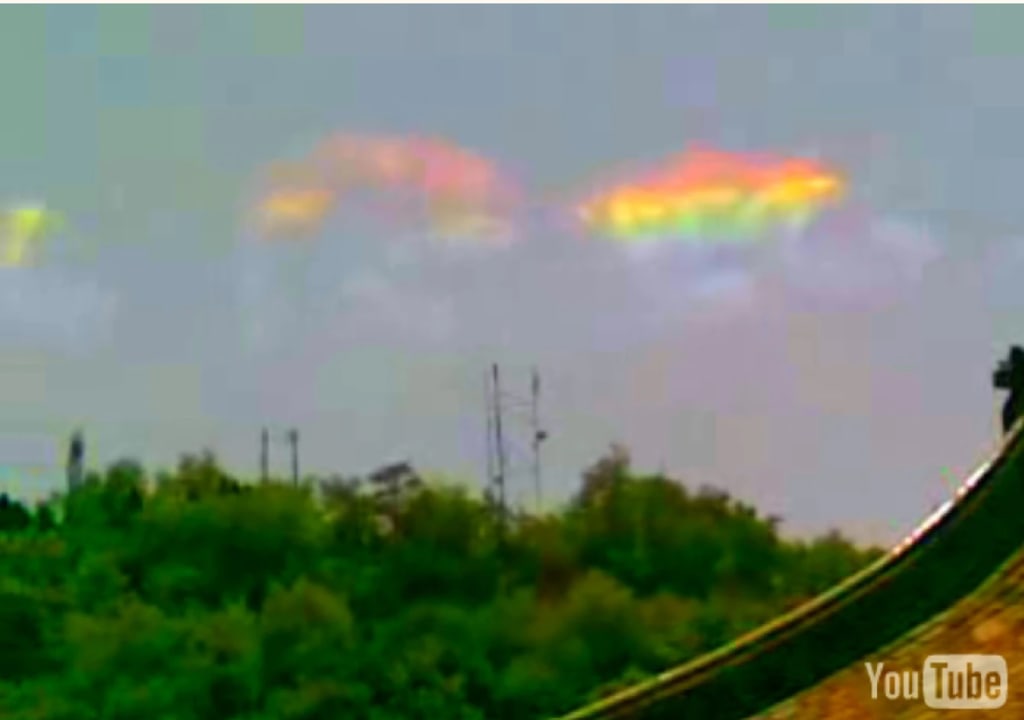
The ground shakes, but it’s not the earthquake that gets people's attention. Whether it’s a tremor or a major earthquake, witnesses had observed balls of lights being emitted into the air.
Is it possible that those strange lights in the sky are actually terrestrial in origin? If a theory that combines psychology and geology is correct, the earth’s tectonic plates may be able to produce Earth Lights.
Earth Lights (just one of many names given to them) was a mystery for years. In some cases, they were not considered real or just a figment of one’s imagination. But, today’s technology is proving they do exist. The question now is what is causing it and can it be used to help us understand earthquakes?
Despite its murky and mythological past, these lights are now seen as a reality.
What are Earthquake Lights
First off, Earth Lights (as it is often used on the Internet) supposedly emitted by earthquakes shouldn’t be confused with another definition of earthlights. Earthlight (as one word) refers to “diffused reflection of sunlight reflected from Earth's surface and clouds” (Wikipedia, 2026).
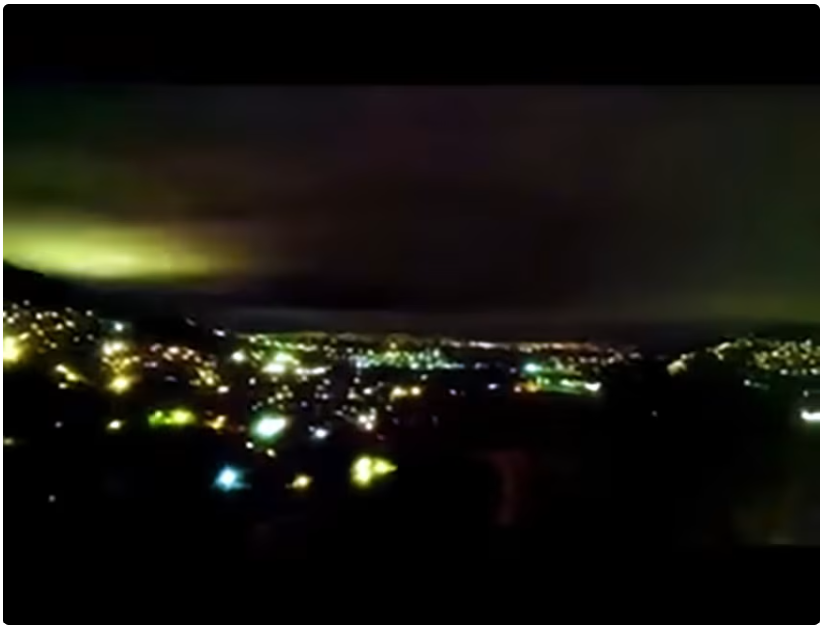
Earth Light or its common alternative name , Earthquake Light (or EQL), is a phenomenon of lights being emitted from the Earth’s surface during an earthquake. Despite being rare, according to various sources, this strange occurrence has been witnessed, photographed and videotaped.
In the past, these lights were often misidentified as paranormal anomalies.
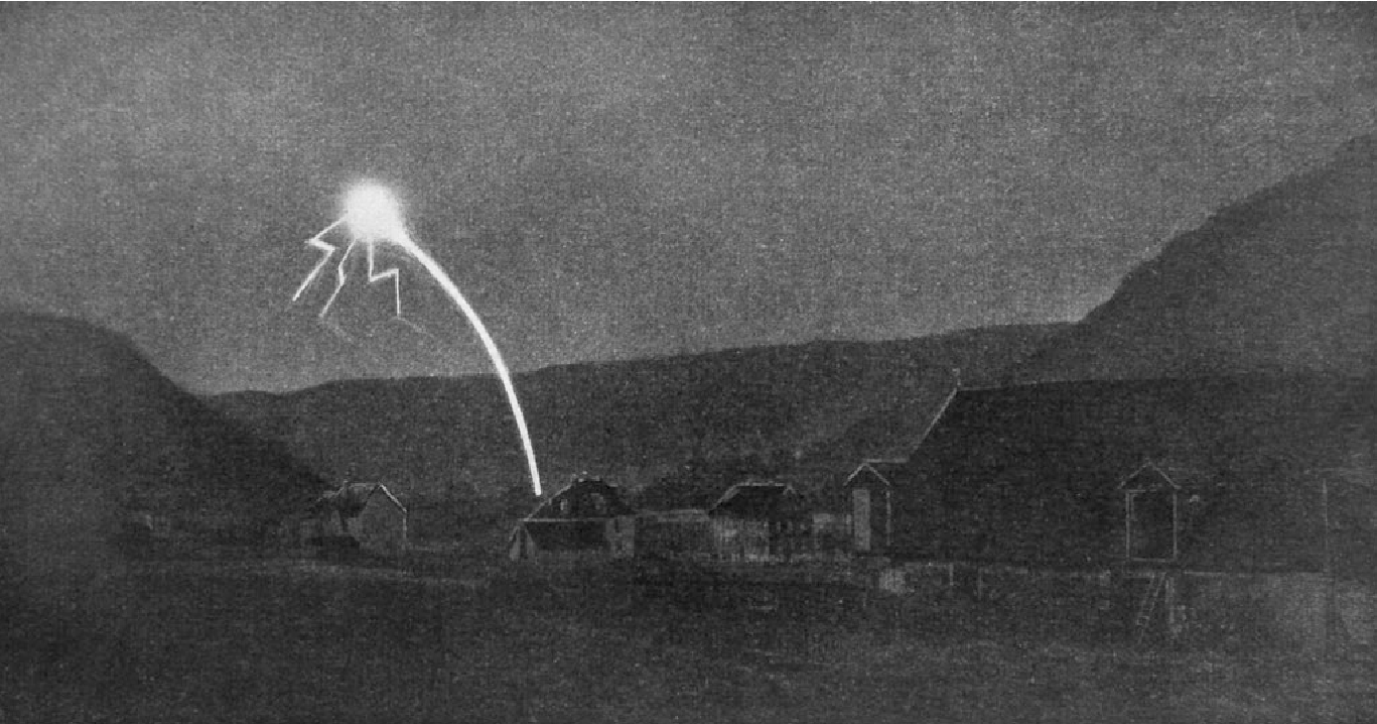
A quick glance of images from the Internet reveals that these lights take on various forms. Some are multi-colored bursts of the light while others are similar to lightning or the rare ball lightning. Some reports indicate they last less than a second or the duration of an earthquake (on average an earthquake may last a few seconds).
Interestingly, this phenomenon is not new. There are reports of it that go as far back as ancient Greece, according to several sources. Still, it wasn’t, as one CNN reporter put it, until the advent of smartphones that the event was photographed and recorded. As one researcher pointed out, surveillance cameras and smartphones have made it easier to study them. He also stated that more than 40 years ago capturing these lights was next to impossible.
In the past, these lights were often misidentified as paranormal anomalies. Some observers (mostly paranormal investigators) listed them as ghosts or UFOs. Others suggested that they were hallucinations (more on that later).
Throughout history, the lights went by numerous names such as:
- American Spook-lights,
- bung Fai paya nak (or Naga fireball of Thailand) or
- min-min lights (in Australia).
- Anomalous luminous phenomena (ALP)
- Yakima Lights
The latter, however, may refer to one of a series of lights that have little to do with earthquakes and are often considered as “mysterious lights” witnessed over the years (and would probably need its own articles to explain them). Yakima Lights' most logical identification may be the Northern Lights (aurora borealis ) that has occasionally dipped down south of Alaska and been observed over the Pacific Northwest skies, including over Yakima, Washington.
EQL on the other hand, has a broader observance. They’ve been spotted throughout the world during tremors and major earthquakes.
The Tectonic Strain Theory
Even before recent studies, there were a few theories being explored about the origin of the lights. Also, more than 50 years ago, there were many that believed the lights they saw were UFOS.
However, as he continued his research, it became apparent that something real was causing people to see lights in the sky.
In 1975, The Tectonic Strain Theory devised by John Derr and Dr. Michael A. Persinger PhD took an interesting and controversial concept. Also known as “anomalous luminous phenomena” (or ALP). While its name implied it was a geological theory, it was actually one that combined geology with psychology. In addition it was trying to explain why witnesses of these lights were misidentifying them as UFOs.
Persinger’s Theory
Dr. Persinger, cognitive neuroscientist from Laurentian University in Canada, was researching the phenomena from a physiological perspective. He believed that the experience of the lights by the observers were direct stimulation of the observer’s brain and communal reinforcement (the belief in which a claim becomes a strong belief through repeated assertion by members of a community).
However, as he continued his research, it became apparent that something real was causing people to see lights in the sky. Thus, Dr. Persinger went outside his field and started investigating geological phenomena such as earthquakes and tectonic plates. He concluded that the tectonic movements and its creation of electromagnetic waves caused some observers to “hallucinate or lose consciousness (Carrol, 2026)” This theory seemingly suggested that eye witnesses were affected by electromagnetic release from an earthquake. It also stipulated that many people viewing such things had some form of collective hallucination.
UFO Theories Debunked
Despite Persinger’s faulty conclusion (more on that later), his theory unintentionally dispelled the UFO theories. One such theory came from UFO researcher Aime Michel who once theorized that UFOs were spotted on a predetermined pathway in the sky. It was known as the Straight Line Theory. The theory was seriously scrutinized by the Condon Report for having skewed data.
A book that shed some light on the theory - but didn’t get it right - was from the book “UFO from the Volcanoes” by Egon Bach. In it, Bach surmised that the lights were being spotted over volcanoes before an eruption or earthquake. One problem, however, is that he confused plasma lights with UFOs.
Tectonic Strain Theory Has Its Critics
Tectonic Strain Theory may have helped shut down the UFO concept, but it didn’t escape scrutiny from others. Among them was writer and Canadian UFO researcher Chris Rutkowski of the University of Manitoba. He argued that Persinger’s claim that the lights – and the hallucinations - being able to manifest itself from hundreds of miles away from an area of seismic activity were absurd. Also, he questioned the ability of electromagnetic waves to create hallucinations.
Lately, the idea that the lights are hallucinations have been debunked. As mentioned, the availability of photographic evidence has verified that these lights are real.
Movement of Particular Type of Fault
In a peer reviewed article from the Seismological Society of America, researchers reviewed numerous reports of EQL. According to them, they looked at “65 documented EQL cases since 1600AD” in which “85 percent appeared spatially on or near rifts, and 97 percent adjacent to subvertical faults (a rift, a graben, strike-slip or transform fault) (SSA, 2014)."
In other words, they came to the conclusion that EQL were the products of Continental rift environments, which also included the type of rocks that these faults were found in. In addition, most if not all EQL were associated with the geologic formation of the faults where the earthquake came from.
According to Oregon State University website Volcano’s World, Continental rifts are “dynamic geological zones where the Earth’s lithosphere is stretched and thinned by tectonic forces (OSU, 2005).” In a sense, when the plates rub or smash into each other, they produce a type “spark” that becomes the EQL.
Possible Predicator for Earthquakes?
EQL have been reported to happen before or during earthquakes. In rare instances they appear after one. The ability to predict an earthquake has always been on the top of seismologists’ lists. While it still needs to be determined, EQL may be the thing they are looking for.
Although knowledge of this occurrence has been known since ancient times, understanding what they are is new. A lot still needs to be learned about EQL, and it’s possible that knowing more may lead to better ways to predict the next major earthquake.
Work Cited
- Carrol, Robert “anomalous luminous phenomena (alp)” ; The Skeptic’s Dictionary (retrieved 2026)
- Wikipedia editors: "Earth Lights": Wikipedia.org (Retrieved 2026)
- Katie Hunt: "Strange ‘earthquake lights’ explained": CNN.com (Sept. 2023)
- Katie Hunt: "Strange lights spotted in Morocco earthquake videos may be a phenomenon reported for centuries, scientists say": CNN.com (Sept. 13, 2023)
- Reddit contributor: "How many spook-lights are there in the USA?": Reddit.com (2025) Note: these are list for another phenomenon known as spook lights. The only one on this list was Yakima Lights that actually has a rational explanation and has at time been clumped in with either being earthquake lights or ghostly lights despite most likely being Northern Lights
- Michael A. Persinger: "The Tectonic Strain Theory as an explanation for UFO Phenomena: A Non-Techinical Review of the Research, 1970-1990": Journal of UFO Studies, 1990, 2, 105-137
- Egon W. Bach :"UFOs" from the Volcanoes: (Out of Print).
- Chris A. Rutkowski: The Tectonic Strain Theory of Geophysical Luminosities: PSICAN (Paranormal Studies and Inquiries): (1984)
- Seismological Society of America: "Earthquake lights linked to rift environments, subvertical faults": Eureka-Alert! (Jan. 2014)
- Britannica editors: "Condon Report": Britannica.com (Retrieved 2026).
- Volcano World editors: "Continental Rifting": Oregon State University (Retrieved 2026)
About the Creator
Dean Traylor
* Masters in special education and degree in journalism.
*Seasoned writer for the last 30+ years (Newspapers, Magazines, Internet sites)
* Former writer at Hubpages, Helium, and Wikinut.
* Current: Medium (https://medium.com/@ds_traylor)
Enjoyed the story? Support the Creator.
Subscribe for free to receive all their stories in your feed.
Comments
There are no comments for this story
Be the first to respond and start the conversation.