
Earth Knocked Over By 80Cm Due To Groundwater Overused
Causes of Earth's Tilt

Earth Knocked Over By 80Cm Due To Groundwater Overused
Humans have removed so much water from the earth throughout the world that it has actually changed the Earth's spin, causing the pole to wander between 1993 and 2010 at a rate of 4.36 centimeters per year. As a result, Earth is tilted by almost 80 centimeters. Based on a new climatic mode, experts have made an estimate for the east. According to a study published in the geophysical research letters, groundwater depletion from irrigation is a significant anthropogenic factor that contributes to sea level rise. From 1993 to 2010, the Earth's pole shifted towards 64.16 degrees east at a rate of 4.36 centimeters per year as a result of this groundwater depletion and sea level rise.
Causes of Earth's Tilt
One of the primary causes of Earth's tilt is the overexploitation of groundwater resources. As the global population continues to grow, the demand for freshwater has intensified. Groundwater, stored in aquifers deep below the Earth's surface, has been heavily tapped to meet the increasing water requirements for agriculture, industry, and domestic use. This excessive extraction of groundwater has disrupted the natural balance, leading to a shift in the Earth's rotational axis.

The rotational axis of the Earth plays a crucial role in maintaining the planet's stability and balance. However, recent studies have revealed a concerning development - the Earth has been knocked over by approximately 80 centimeters due to excessive groundwater overuse. This unprecedented event has significant implications for various aspects of our planet, from its geological structure to the environment and human society.
Impact on Earth's Rotation
The overuse of groundwater has a direct impact on the distribution of mass across the Earth's surface. As aquifers are depleted, the weight that was once supported by groundwater decreases. This imbalance in mass distribution causes a shift in the Earth's rotation axis, resulting in a measurable tilt. Although 80 centimeters may seem small in comparison to the Earth's size, it has significant consequences for our planet.
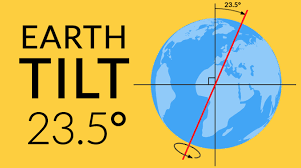
The red paper despite acknowledging that it is challenging to measure the precise amount due to the movement of water on Earth, the worldwide team of experts concluded that people have pumped out 2150 gigatons of groundwater, which is equivalent to more than 0.24 inches of sea level rise. It may produce minute adjustments to the way our globe rotates. We demonstrate that the model's predicted water redistribution from aquifers to the oceans will cause the rotating pole of Earth to shift approximately 78.48 centimeters in the direction of 64.16 degrees east. the red paper Our research demonstrates that among climate-related factors, the Earth's rotating pull truly varies a lot.
Environmental Consequences
The tilt of the Earth caused by groundwater overuse also has severe environmental consequences. The altered rotational axis affects climate patterns, leading to shifts in weather systems and long-term climatic changes. Some regions may experience more extreme weather events, including prolonged droughts or intense rainfall. Ecosystems are disrupted as habitats and species adapt to the changing conditions, potentially leading to biodiversity loss and ecological imbalances.
The main influence on the rotational pole's drift really comes from the redistribution of groundwater important one Co According to the team's estimates, the majority of the water was redistributed during the study period in Western North America and Northwestern India, according to a geophysicist at Seoul National University who led the study. Researchers maintained that the location of the aquifers groundwater also matters for Earth's spin to change.
Human Impact
The repercussions of Earth's tilt extend to human society. Coastal areas may face increased risks of coastal erosion and sea-level rise, threatening communities and infrastructure. Agricultural practices reliant on predictable weather patterns may suffer, impacting food production and livelihoods. Additionally, the socioeconomic implications of natural disasters resulting from geological changes can be significant, causing displacement, economic losses, and social unrest.
Researchers noted that while the modest drifting of the pole won't affect the seasons, it may have an impact on the climate over a longer geologic time period.

Measures to Address the Issue
To mitigate the consequences of excessive groundwater overuse and the Earth's tilt, sustainable groundwater management practices are crucial. Governments and communities need to implement measures that promote water conservation, efficient irrigation techniques, and the development of alternative water sources. Raising awareness about the importance of preserving groundwater resources and adopting responsible water consumption habits is vital in ensuring a sustainable future for our planet.
Conclusion
The unexpected shift in the Earth's rotational axis due to groundwater overuse is a wake-up call for humanity. It highlights the urgent need for sustainable water management practices to safeguard our planet's stability and the well-being of future generations. By taking proactive steps to address this issue, we can mitigate the environmental, geological, and socioeconomic impacts associated with Earth's tilt and foster a more resilient and harmonious relationship with our home.

About the Creator
Enjoyed the story? Support the Creator.
Subscribe for free to receive all their stories in your feed.
Comments
There are no comments for this story
Be the first to respond and start the conversation.