
Don’t Chop Down That Broken Tree Just Yet
Why structural support—not total removal—is often the safest way to save mature trees after a severe storm.

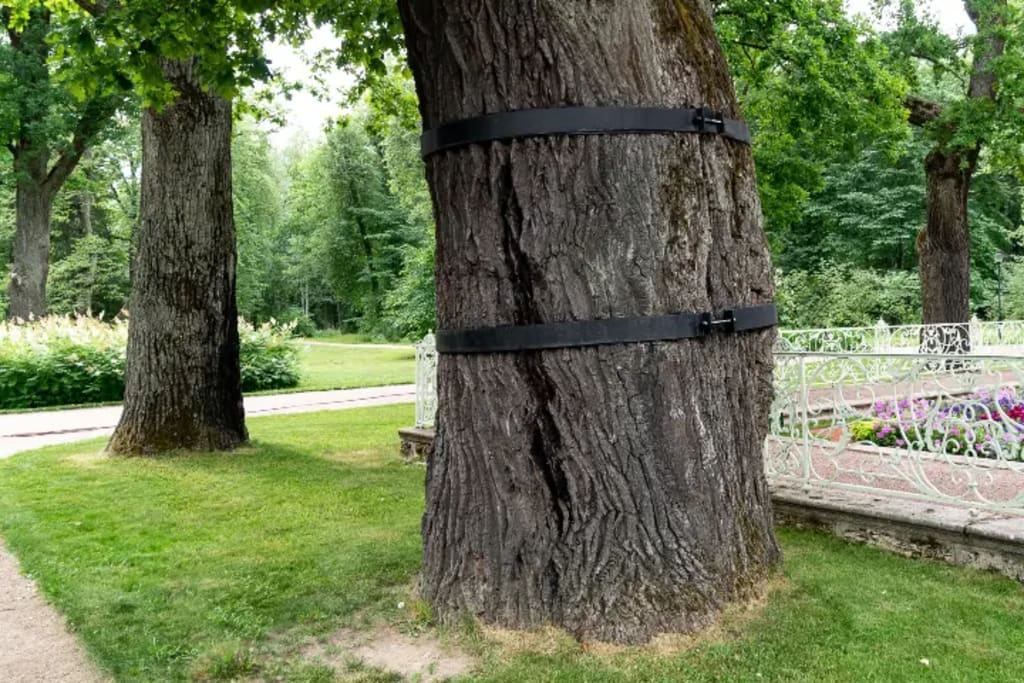
Every winter, severe storms roll through suburban neighborhoods. Strong winds batter the canopy, heavy rains saturate the soil, and property owners wake up to find a mature oak, sycamore, or elm severely damaged. A primary limb might be split at the crotch, or a heavy branch might sag dangerously over the driveway.
The immediate reaction is panic. Looking up at a cracked limb, the risk feels overwhelming. Images of caved-in roofs or crushed cars dominate the mind, leading to a panicked phone call to cut the entire tree down to a stump.
While prioritizing safety is understandable, rushing to remove a mature tree often destroys a decades-old asset that could have been saved. Structural damage after a storm does not automatically mean a tree is dying. More often, it simply means wind forces exceeded the mechanical strength of its weakest attachment point.
Before choosing complete removal, property owners should understand how structural support systems—specifically tree cabling and bracing—can stabilize compromised limbs and restore safety.
How Trees Recover from Physical Stress
Trees do not heal damaged tissue by replacing broken cells. Instead, they compartmentalize wounds, forming internal barriers around injured wood while growing fresh, stronger reaction wood over the outside of the damage.
However, this natural defense mechanism requires complete stability. If a split branch union continues to flex and twist in the breeze, the tree can never form a secure bond over the injury. The crack reopens, rainwater penetrates deep into structural wood, decay sets in, and total failure becomes inevitable.
Tree cabling and bracing serve a distinct mechanical purpose: they hold compromised wood completely still so the tree can safely adapt and reinforce itself over time.
Understanding Support Hardware
Arborists rely on two primary structural support methods to reinforce weakened trees, often combining them for added stability:
Tree Cabling: High-strength steel cables or dynamic synthetic ropes are installed in the upper third of the canopy. Linking major limbs together limits excessive sway during windstorms, transferring physical loads across stronger branches.
Tree Bracing: Threaded steel rods are installed directly through split branch unions or cracked stems. Unlike flexible cables, bracing rods provide rigid physical support, acting like structural bolts that clamp split wood together so a crack cannot widen under tension.
Red Flags & Vulnerabilities
Structural weaknesses frequently hide behind full foliage until the next storm causes a complete breakdown. Warning signs include hairline cracks where large branches meet the trunk, crushed bark along a crotch, hanging limbs, a sudden lean after heavy rain, or excessive swaying during mild breezes.
Certain natural growth patterns make trees particularly vulnerable. Codominant stems—where a tree grows two main trunks from a tight V-shaped junction—frequently split because bark gets trapped inside the joint ("included bark"), preventing solid wood bonding. Heavy lateral limbs extending far from the trunk also act like levers, putting extreme torque on attachment points.
Deciding Between Cabling and Removal
Determining whether a storm-damaged tree can be saved comes down to a clear question: Is the issue isolated mechanical stress, or is it systemic biological decay?
Tree cabling is ideal if the tree exhibits vibrant foliage, the root plate remains firmly anchored in stable soil, and the damage is limited to structural stress on specific limbs. Removal is necessary if widespread rot has hollowed out the trunk, roots show major lifting, or the tree poses an unmitigatable hazard hardware cannot fix.
Because winter storms arrive in successive cycles, a minor crack from one storm can easily turn into total failure during the next. Taking a breath after a storm and considering structural support options can save a valuable shade tree that took half a century to grow.
About the Creator
ORB Tree Service Marketing
ORB Tree Service Marketing provides SEO and local search strategies for the tree care and roofing industries. Follow us for insights on search optimization and lead generation for home services.
Enjoyed the story? Support the Creator.
Subscribe for free to receive all their stories in your feed.
Comments
There are no comments for this story
Be the first to respond and start the conversation.