
Climate Refugees:The human cost of a warming world
The human face of environmental collapse

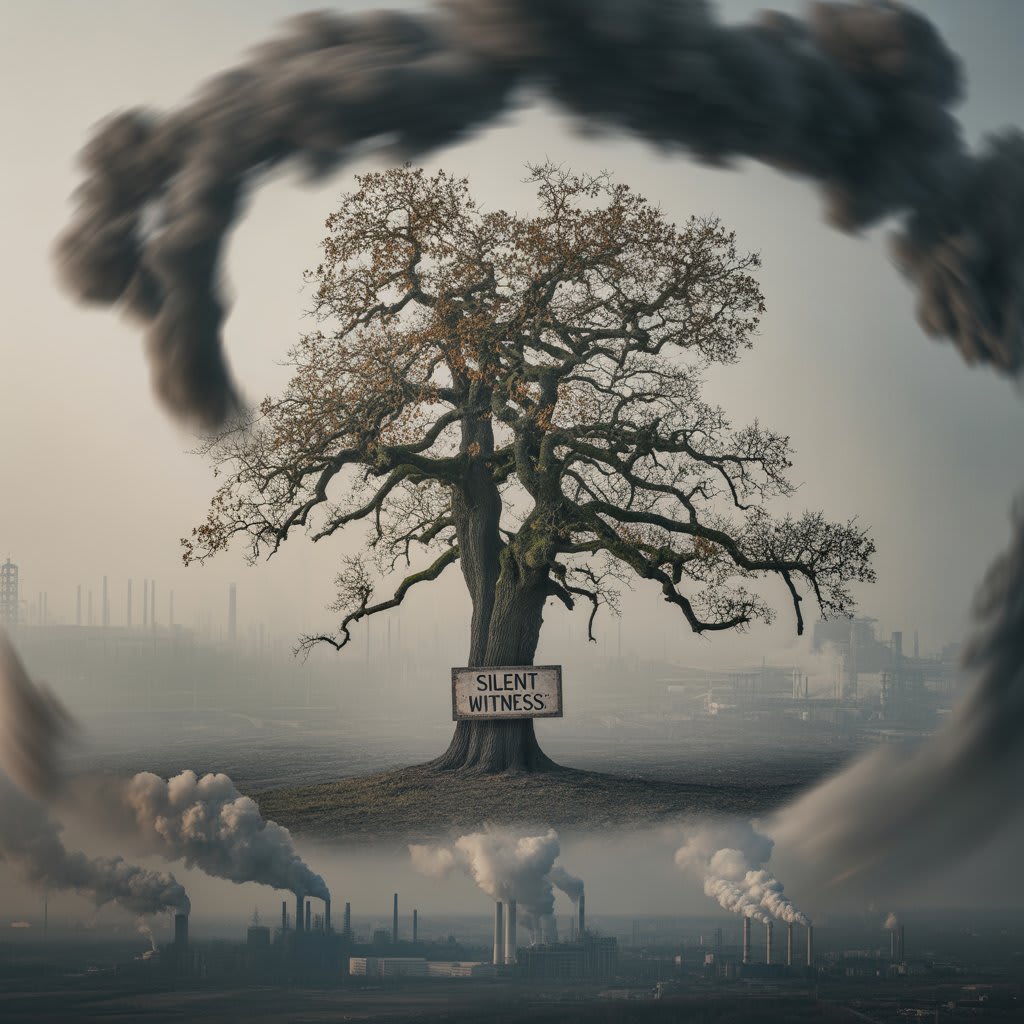
Human activity remains the driving force behind climate change , a fact that shapes entire lives, uproots communities, and highlights the immense human cost of environmental collapse. This article explores how human‑caused global warming creates refugees, people forced from their homes by environmental disasters and brings forward the stories behind the statistics. 1. When the climate leaves millions behind Climate change is not an abstract phenomenon, it is already displacing people today. According to the Internal Displacement Monitoring Centre (IDMC), in 2023, around 7.7 million people in 82 countries were living internally displaced specifically due to climate‑ or disaster‑related causes . Globally, weather‑related disasters triggered some 23.7 million internal displacements in 2021, accounting for nearly 60 % of all internal displacements that year . These are not projections but human stories. In Pakistan in 2022, catastrophic floods submerged one third of the country, displacing 8 million people, including thousands of Afghan refugees who had already fled conflict zone crises . One man, Bahadur Khan, lost his home within minutes as floodwaters broke through an embankment, forcing him to flee with his family with no warning . His life like that of millions is a vivid demonstration of how fossil fuel‑driven climate change interacts with political instability and conflict. Thousands more have been displaced by increasingly severe droughts. In Somalia from 2021 to 2023, the worst drought in four decades struck around 7.8 million people, forced more than one million Somalis from their homes in 2022 alone, and caused an estimated 43,000 excess deaths in 2022 . Those trends continued into 2023, with hundreds of thousands remaining displaced by the drought’s lingering effects. 2. A “force multiplier” for conflict and poverty Climate hazards often act as a multiplier of existing vulnerabilities. The UN’s “No Escape” report, released in November 2024, emphasizes that while conflict remains a leading cause of displacement, climate shocks are intensifying these crises especially in fragile states. The report finds that out of more than 120 million forcibly displaced people, three‑quarters live in countries heavily exposed to climate risks, and half live in places affected by both conflict and extreme climate events like floods, heat waves, and droughts. This creates a tragic feedback loop: communities weakened by conflict and displacement are less capable of adapting to climate shocks, while climate disasters worsen the humanitarian and security crises they face. These dynamics trap people in cycles of displacement with little prospect of return or recovery. 3. Recent cases: A world already in crisis a) South Sudan floods, 2024 From August 2024 onward, record rainfall and overflow from Lake Victoria caused catastrophic flooding in South Sudan’s Sudd region. More than 735,000 people were impacted and 65,000 were displaced, of whom over 41,000 came from traditionally flood‑affected communities . Even worse, researchers warn that prolonged expansion of wetlands could render entire regions permanently uninhabitable, a potential first in recorded human history. b) The Philippines’ coastal communities, 2025 As reported in July 2025, fishing communities across the Philippines, especially in Luzon, are facing more intense typhoons, sea‑level rise, and dwindling fish stocks. Over 1.6 million Filipinos rely on small‑scale fishing, yet increasingly destructive storms, rising seas, and ocean changes threaten their livelihoods and force repeated displacement. Children face disrupted education, mental health stress, and persistent poverty. The 2013 Typhoon Haiyan became a defining moment leading to legal and grassroots action, mangrove replanting, and creation of storm‑resilient housing in affected areas but many communities remain marginalised and distrustful of empty political promises. 4. Why this tragedy is entirely of our making At the core of every climate‑driven displacement lies human activity: the extraction and burning of fossil fuels, deforestation, industrial agriculture, and overconsumption have thrown Earth’s climate systems out of balance. This rise in greenhouse gas emissions has warmed the planet by more than 1.3 °C above pre‑industrial levels, fueling more frequent, more intense floods, droughts, heat waves, and sea‑level rise. These trends disproportionately harm communities that have contributed least to the problem. The UNHCR report highlights that climate‑vulnerable countries receive on average US $2.10 per person per year for adaptation compared to $161 per person in wealthier nations . Yet those are the same countries whose citizens now live at the climate‑conflict nexus, where climate impact and displacement reinforce one another. 5. The personal and cultural toll Displacement is more than a relocation, it shatters identity, severs livelihoods, and fractures cultural continuity. When an entire Pacific or coastal village is forced to move inland, generations of cultural knowledge tied to land and water are lost. Children miss school; elders lose their familiar rhythms and supports. Communities like those in Bangladesh’s Sundarbans or South Sudan’s Sudd wetlands face displacement not just geographically, but existentially. 6. Paths toward justice and resilience Despite the severity of the crisis, the UN “No Escape” report outlines clear solutions: Protect displaced individuals legally and assist them proactively during disasters. Include displaced people and host communities in climate planning and financing decisions. Invest where needs are greatest especially in already fragile and conflict‑affected regions. Accelerate emissions reduction globally to avert further environmental collapse . To ensure fair outcomes, low‑income and conflict‑affected countries must receive greater adaptation funding and a stronger voice in climate negotiations. Moreover, the emerging legal framing like the International Court of Justice’s advisory opinions affirming states’ obligations to combat human‑caused emissions and uphold climate justice offers both moral and legal leverage for climate‑affected communities. Although these rulings are advisory, they set strong precedent for holding nations accountable and acknowledging displaced people’s rights to refuge and compensation. 7. The human face of agency and resilience Across the globe, displaced communities are organizing and demanding justice. In the Philippines, survivors of Haiyan like Marinel Ubaldo have become international climate justice advocates, fighting for rights and reparations through grassroots efforts and legislation. In Vanuatu and other small island states, communities have turned to international law seeking an advisory opinion from the International Court of Justice on states’ duties to prevent climate harm and protect vulnerable populations. These stories reveal not just suffering, but also adaptation, advocacy, and dignity—showing that while climate change is a disaster wrought by human action, so too is the potential for collective human response. 8.Conclusion: A crisis of our creation—and our responsibility Climate refugees are living proof of how our industrial habits and policy choices have real, personal consequences. The floods in South Sudan, the droughts in Somalia, the survivors in Pakistan and the Philippines, all tell the same story: human‑caused global warming is not abstract; it is deeply human. Yet solutions exist. With equitable climate finance, inclusion of displaced voices, legal frameworks recognizing responsibility, and collective action to reduce emissions, we can reduce the human cost and build resilience. The future of millions depends on choices made today. We must remember: these are not just numbers or news,the faces behind the statistics deserve protection, justice, and long‑term hope. 1. Fishing communities in the Philippines… coastal residents frequently face displacement. "July 2025 news report on climate impacts in the Philippines". 2. Thirty‑five million Africans driven from homes by war and climate disaster."IDMC report summarizing displacement trends across Africa as of late 2024".
About the Creator
INAM ULLAH
"Nature enthusiast exploring the great outdoors, one adventure at a time 🌳🏞️. Passionate about preserving our planet's beauty and sharing inspiring stories 🌟This
Enjoyed the story? Support the Creator.
Subscribe for free to receive all their stories in your feed.
Comments
There are no comments for this story
Be the first to respond and start the conversation.