
Cities may be getting hotter due to air conditioning.
Climate action is limited by human behaviour.

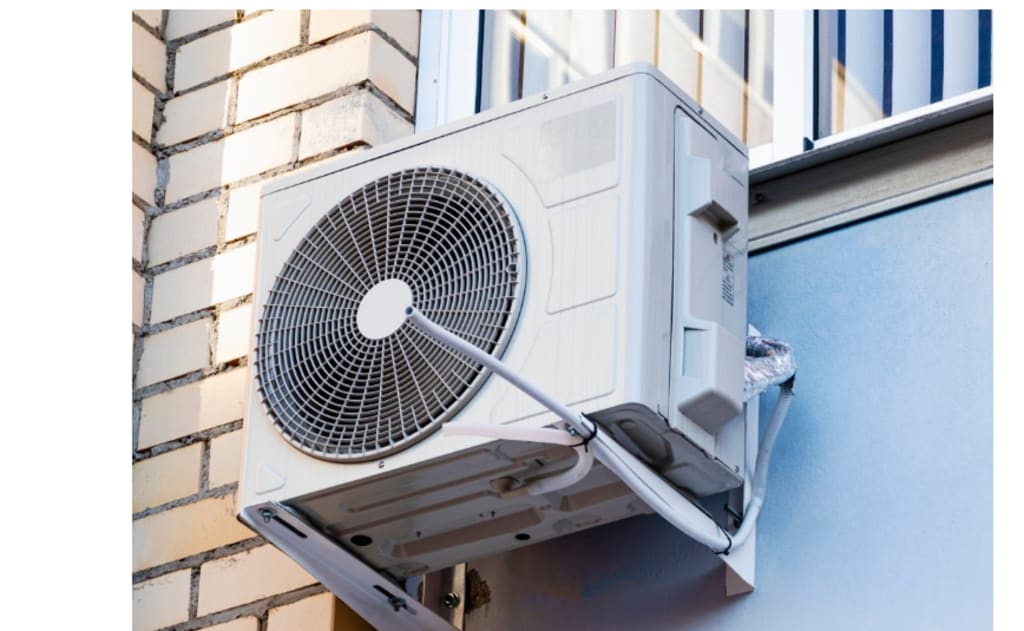
During periods of intense heat, air conditioning has become indispensable. It makes it easier for individuals to work safely, lets kids sleep soundly, and shields senior citizens from harmful heat stress. Air conditioning is no longer regarded as a luxury in many tropical towns. It's a fundamental survival tool.
However, there's a catch. People may be less inclined to embrace larger measures that may cool entire neighbourhoods if they depend more on private cooling to avoid rising temperatures. This is the unsettling conflict that underlies a recent study conducted in Singapore, where researchers discovered that air conditioning may be subtly altering people's reactions to local climate issues.
Climate action is limited by human behaviour.
Comfort is not the only issue. Climate change is causing cities all across the world to heat up quickly. The urban heat island effect, which occurs when concrete, asphalt, and closely spaced buildings retain heat long after sunset, exacerbates the problem.
In certain places, the temperature does not drop at night. Consequently, using air conditioners causes heat to be released into the atmosphere. This tendency is referred to as "behavioural insulation"
by researchers from the Singapore-ETH Center and the Singapore University of Technology and Design. The concept is straightforward: the impetus to support broader public solutions begins to wane when people can protect themselves from heat indoors.
The use of air conditioning is rising.
The survey responses from 967 adults in 416 Singaporean households were examined by the researchers. Additionally, they looked at heat conditions and residential electricity use in various neighbourhoods. The specialists discovered a disconnect between awareness and action.
Heat-affected individuals were more inclined to discuss climate issues and inspire others to take an interest in them. However, this worry seldom resulted in reduced energy consumption at home. Air conditioning-dependent households consumed more electricity and were less likely to
According to Dr. Natalia Borzino, the study's primary author, "one of the key findings is that experiencing heat does not automatically translate into lower-energy behaviour or stronger collective climate action." "While still heavily depending on energy-intensive cooling to manage daily life, people may become more climate-aware and vocal about heat." The need for cooling is growing worldwide, so this is crucial.
The International Energy Agency (IEA) cautions that in the upcoming decades, air conditioning may be one of the main causes of the increase in energy use. Asia, Africa, and the Middle East are predicted to see particularly significant increases. Millions of homes are buying air conditioners for the first time as living standards improve and wages rise.
The issue outside the entrance door
Singapore provided the researchers with a helpful location to investigate this problem. The city-state is extensively urbanised, thick, humid, and air-conditioned. The circumstances there might provide a sneak peek at what other warmer cities might experience in the near future.
The researchers discovered that inhabitants in hotter neighbourhoods used more air conditioning, which led to higher electricity use. The primary connection between increasing urban heat and increased energy use was air conditioning.
Support for public initiatives aimed at reducing outdoor temperatures, such as tree planting, shaded walkways, and greener neighbourhoods, was also damaged by heavy cooling use. In the meantime, a lot of households continued to be eager to invest additional money in enhancing indoor comfort.
Entangled in a vicious cycle
This leads to a challenging cycle. The more people cool themselves in solitude, the hotter cities get. People may feel less pressure to advocate for more significant community solutions if private cooling becomes increasingly successful.
"Heat is more than just a problem with temperature. Additionally, it presents a planning and behavioural issue, according to Professor Samuel Chng. "Cities run the risk of locking in higher energy demand while weakening the collective support needed for wider urban heat solutions if they rely too heavily on private cooling."
Cooling cities rather than simply structures
The researchers take care to avoid portraying air conditioning as the villain. Cooling promotes health and wellbeing in tropical regions. It can save lives in extremely hot conditions. However, the report contends that cities cannot rely solely on air conditioning.
The ability of shade, trees, ventilation, reflecting building materials, and more intelligent street design to reduce neighbourhood temperatures has long been recognised by urban planners.
Surface heat can be decreased by parks and green roofs. Heat trapping can be avoided by improving airflow between buildings. Sunlight can be reflected rather than absorbed by even lighter-colored rooftops and roads.
Personal flexibility and group resilience
Compared to air conditioning, these modifications operate differently. They reduce everyone's exposure to heat outside rather than cooling one flat at a time. This study demonstrates that adaptation is more than just an infrastructure or technical problem.
According to Dr. Harvey Neo, it is mostly behavioural and social. "Designing systems where individual adaptation and collective resilience reinforce each other rather than move in opposite directions is a challenge for cities."
A caution for expanding cities
Even now, air conditioning is still not widely available in many places. That is rapidly changing. Over the coming decades, billions of people are predicted to purchase air conditioners as temperatures rise and cooling technology becomes more affordable.
The demand for electricity during warmer months is at an all-time high in nations already struggling with the intense summer heat. In certain areas, power grids are having difficulty keeping up. According to the Singapore study, the discussion on cooling should go beyond just gadgets.
It is important to keep people safe during periods of high heat. However, creating urban areas where residents are less exposed to hazardous temperatures in the first If not, there might be more air conditioners, greater energy consumption, hotter streets, and less public support for the kinds of improvements that could improve everyone's quality of life in metropolitan areas.
About the Creator
Enjoyed the story? Support the Creator.
Subscribe for free to receive all their stories in your feed.
Comments
There are no comments for this story
Be the first to respond and start the conversation.