
Circular Economy Solution: Turning Coconut Shell Waste into Biochar for Soil Improvement
From Agricultural Waste to Valuable Resource

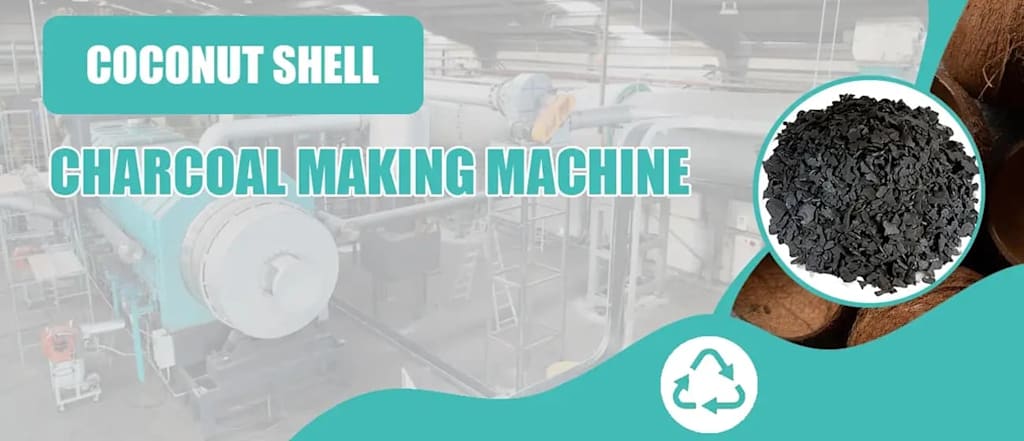
As global agriculture and food industries expand, organic waste generation is rising rapidly. One often overlooked but highly valuable waste stream is the coconut shell. Each year, millions of tons of coconut shells are discarded from food processing industries, street markets, and households. Instead of being burned or left to decompose inefficiently, these shells can be transformed into biochar through pyrolysis, creating a powerful circular economy solution that benefits both the environment and agriculture.
This approach connects waste management, renewable energy, and soil restoration into a single integrated system, making coconut shell biochar one of the most promising sustainable materials in modern agriculture.
From Waste to Resource: The Role of Coconut Shells
Coconut shells are a lignocellulosic biomass with high carbon content and strong structural density. Traditionally, they are considered agricultural waste, often used as low-value fuel or simply discarded. However, their physical and chemical properties make them an excellent feedstock for pyrolysis.
When processed correctly, coconut shells produce a high-quality biochar with a stable carbon structure, high porosity, and excellent adsorption capacity. These characteristics make it particularly suitable for long-term soil improvement applications.
Pyrolysis Process: Converting Shells into Biochar
The transformation of coconut shells into biochar takes place in a pyrolysis reactor, where the material is heated in an oxygen-limited environment. Instead of burning, the biomass decomposes thermally, producing three main outputs: biochar, syngas, and bio-oil.
For coconut shells, the resulting biochar is typically high in fixed carbon and has a well-developed porous structure. This structure is key to its performance in soil applications, as it allows the material to retain water, nutrients, and beneficial microorganisms.
The syngas produced during the process can be reused to supply energy for the reactor itself, making the system more energy-efficient and reducing external fuel requirements. This internal energy loop is an important element of circular economy design.
Biochar and Soil Improvement
One of the most significant benefits of coconut shell biochar is its impact on soil health. When applied to agricultural land, biochar acts as a long-term soil conditioner rather than a short-term fertilizer.
Its porous structure improves soil aeration and water retention, which is especially valuable in sandy or degraded soils. By holding moisture and nutrients more effectively, biochar reduces the need for frequent irrigation and chemical fertilizer use.
In addition, biochar provides a habitat for beneficial soil microorganisms. These microbes play a critical role in nutrient cycling and plant growth. Over time, this leads to improved soil fertility and higher crop yields.
Unlike organic fertilizers that decompose quickly, biochar remains stable in the soil for decades or even centuries, making it a long-lasting solution for soil restoration.
Circular Economy Benefits
Coconut charcoal making machine into biochar is a clear example of a circular economy in action. Instead of treating shells as waste, they are reintroduced into the production cycle as a valuable agricultural input.
This system creates multiple layers of value. Agricultural waste is reduced, renewable energy is generated through syngas utilization, and soil quality is improved through biochar application. At the same time, carbon is sequestered in a stable form, contributing to climate change mitigation.
For coconut-producing regions, this model is particularly attractive. Countries in Southeast Asia, Africa, and Latin America generate large volumes of coconut waste, making them ideal locations for decentralized pyrolysis facilities.
Environmental Impact and Carbon Sequestration
Beyond soil benefits, coconut shell biochar plays an important role in carbon sequestration. During pyrolysis, a significant portion of the carbon contained in the biomass is locked into a stable form. When applied to soil, this carbon remains stored for long periods, preventing its release as carbon dioxide.
This process helps reduce greenhouse gas emissions in two ways. First, it prevents the natural decomposition of biomass that would release CO₂ or methane. Second, it displaces the use of carbon-intensive soil amendments and fertilizers.
As a result, coconut shell biochar projects can contribute to climate mitigation efforts and may even generate carbon credits under recognized environmental standards.
Economic Opportunities in Rural and Agricultural Regions
The commercialization of coconut shell biochar also creates new economic opportunities, especially in rural areas. Farmers and local cooperatives can supply coconut shells as feedstock, while biochar production facilities generate employment and technical skill development.
Additionally, biochar can be sold as a soil amendment product to agricultural markets. High-value crops such as vegetables, coffee, and fruit plantations are increasingly adopting biochar to improve soil performance and yield stability.
This creates a diversified income model where value is generated not only from waste processing but also from agricultural enhancement and potential carbon credit revenues.
About the Creator
Bestonpyrolysis
Engaged in waste plastic/tyre/rubber recycling, oil sludge treatment, biomass recycling, sewage sludge management and paper recycling…
https://bestonpyrolysisplant.com/
Enjoyed the story? Support the Creator.
Subscribe for free to receive all their stories in your feed.
Comments
There are no comments for this story
Be the first to respond and start the conversation.