
Choosing the Right Roof Waterproofing Solution
Water-Based vs. Traditional Methods

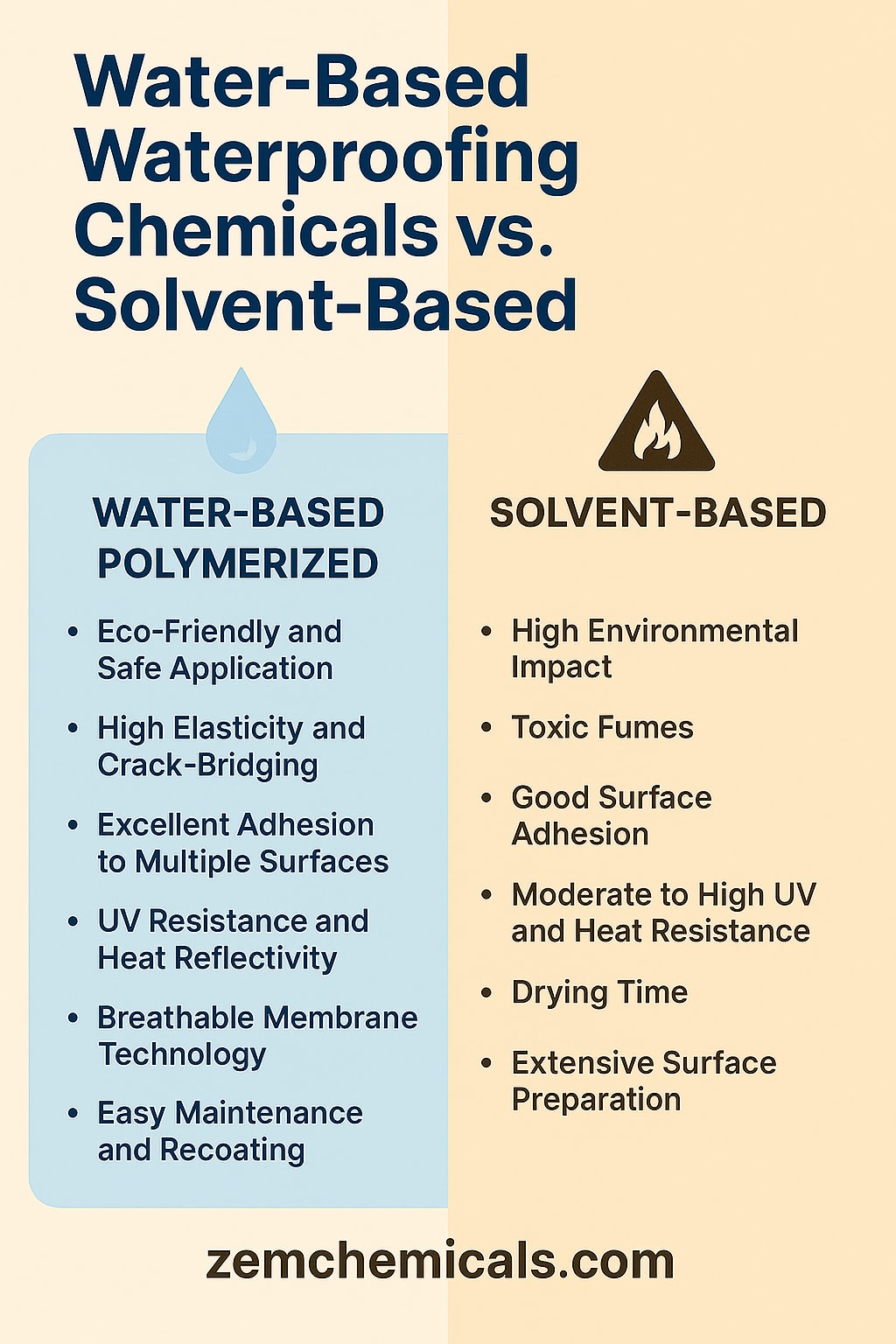
When it comes to protecting a building from water damage, especially on flat or concrete roofs, the type of waterproofing chemical you choose can make all the difference. While solvent-based waterproofing chemicals have long been the conventional choice, there’s a growing shift toward water-based polymerized waterproofing systems—and for good reason.
This article explores how these two approaches differ, with a special focus on why water-based systems are becoming more popular, particularly for roof waterproofing projects.
The Evolution of Waterproofing Technologies
Waterproofing is no longer just about sealing leaks; it’s about durability, sustainability, and compatibility with modern construction materials. Traditional solvent-based waterproofing systems rely heavily on strong chemical solvents to deliver their results. These chemicals evaporate after application, leaving behind a waterproof layer. However, they also bring environmental and safety concerns.
On the other hand, water-based waterproofing chemicals use water as the carrier medium for polymer compounds. These polymers form an elastic membrane once the water evaporates, offering advanced protection without the drawbacks associated with solvents.
Benefits of Water-Based Polymerized Waterproofing
1. Eco-Friendly and Safe to Use
One of the standout advantages of water-based polymerized waterproofing is its low toxicity. It doesn’t release harmful vapors or VOCs, which makes it a safer choice not only for the environment but also for people applying it. This matters a lot when waterproofing residential roofs or buildings in busy areas.
2. Outstanding Elasticity
The polymers used in these formulations allow the material to stretch and move with the structure. Roofs often expand and contract due to temperature shifts, and water-based chemicals can handle this flexing without cracking or peeling.
3. Seamless Waterproof Barrier
These formulations form a continuous film over the surface, eliminating joints and seams where leaks typically begin. This makes them ideal for roof waterproofing, where complete coverage is essential.
4. Highly Compatible with Concrete and Cement Surfaces
Because most roofs in our region are made from concrete or cementitious material, water-based waterproofing excels due to its excellent adhesion and ability to penetrate into the surface for a stronger bond.
5. UV and Weather Resistance
Modern water-based polymer coatings often come with UV-resistant properties. This ensures that the surface doesn’t degrade quickly under sun exposure—a common issue on roofs. Additionally, it resists rain and humidity without losing its integrity.
6. Easier Application and Cleanup
Water-based products are generally easier to apply with brushes, rollers, or sprayers. They don’t emit harsh fumes, and cleaning tools or spills is far simpler—just water and mild detergent do the trick.
Where Solvent-Based Waterproofing Falls Short
Although solvent-based chemicals are still used in some industrial contexts, their disadvantages are becoming increasingly apparent:
- Toxic Fumes: They emit strong odors and VOCs, requiring masks and proper ventilation during application.
- Flammability Risks: Their chemical composition makes them highly flammable, posing storage and application hazards.
- Rigid Finish: Once dried, the waterproofing layer tends to be less flexible, which can lead to cracking under structural movement.
- Environmental Concerns: The disposal of unused material and contaminated tools requires special care to avoid pollution.
Why It Matters More on Roofs
Among all areas of a building, the roof is one of the most exposed and vulnerable to water damage. It faces direct sun, rainfall, dust, and shifting temperatures—sometimes all in a single day. This is where water-based waterproofing chemicals really shine. Their ability to create a breathable yet waterproof film allows trapped moisture to escape without compromising the protective layer.
Unlike rigid coatings that can eventually crack, polymerized waterproofing systems move with the structure, maintaining a strong barrier over time. They’re also ideal for retrofitting old roofs, as they can be applied directly on top of existing waterproof layers with minimal preparation.
Final Observations
The choice between solvent-based and water-based waterproofing chemicals isn’t just about preference anymore—it’s about performance, safety, and long-term reliability. As building standards evolve and environmental awareness increases, water-based polymerized waterproofing is proving to be a forward-thinking solution. Its performance on rooftops, in particular, continues to outperform older alternatives in both harsh and moderate climates.
About the Creator
Abdul Samad Karar
Structural Engineer
Enjoyed the story? Support the Creator.
Subscribe for free to receive all their stories in your feed.
Comments
There are no comments for this story
Be the first to respond and start the conversation.