
Choking on Convenience: Plastic Pollution in Bangladesh
A Closer Look at the Nation’s Battle Against Plastic Pollution
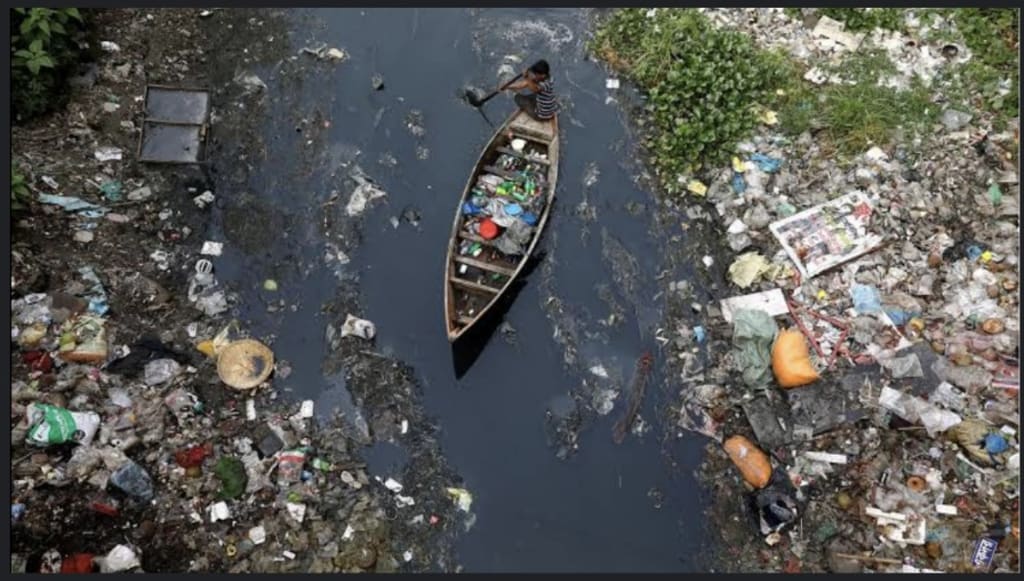
Polythene is a synthetic plastic made from polymers. It is widely used for all kinds of applications such as packaging, shopping bags, and many others. It was cheap to produce at the time of manufacture. It is versatile and water-resistant. But it has not been biodegradable (due to its long-term nature). Therefore it has suffered serious environmental damage in previous centuries. This essay looks at the current situation of polythene use in Bangladesh. The issue of its widespread use, effects and efforts to control it are discussed.
Plastic was first introduced to Bangladesh in the 1980s, and because of its relatively cheap price, convenience, and ease of use it quickly became popular. By the late 1990s plastic had become widely used especially in markets and homes. The growing amount of plastic waste clogged drains and caused serious waterlogging in cities like Dhaka. As a response to this situation, Bangladesh became the first country in the world to ban thin polythene bags in 2002. After several years, few plastic products were carried out properly and there was a lack of alternative products, especially for women, so the use of plastic reoccurred. Today, despite the ban, polythene is still used and has caused concerns about the sustainability of this material and public health.
Despite the 2002 ban on polythene bags, plastic use in Bangladesh is widespread. Plastic bags are still widely used at markets, grocery stores and food stalls in both urban and rural areas because plastic bags are low cost and readily available. Thus the plastic bag is the preferred material of sellers and consumers.Lack of enforcement, lack of awareness and low availability of alternatives have made the ban largely arbitrary. Perhaps as much as 3, 000 tonnes of plastic waste comes from Dhaka every day, a report by The Daily Star (2023) said, with most of it in drains, rivers and landfills.Currently 63% of plastic trash in Bangladesh gets thrown away only once and only 37% finds itself being recycled—more than half of the recycling is from informal workers, who don’t have appropriate safety equipment. But plastic doesn’t just get thrown away from bags; packaging, bottles, containers and even disposable items add up to its growing pile—especially when one considers how many thousands of informal workers make a living by working on large scale or taking pay for it.Overall, even as government efforts continue, plastic remains an enormous part of our lives. This requires more enforcement, awareness and affordable alternatives that take account of the environmental factors to curb our dependence on plastic and enhance its effects.
As of 2002 the ban on polythene is in place in Bangladesh. However, not only is it an environmental and social menace but also a threat to public health and the environment. In Dhaka only, about 2. 5 crore single use polythene bags are discarded per day. They infringe on drainage and cause waterlogging due to rains. This creates traffic blockages, damage to property and disruptions to one’s normal life (Prothom Alo 2023). Dhaka due to discarded polythene bags, to cause urban flooding during heavy rains)Source: Somoy news, 2024. Polythene is not biodegradable and can stay in the environment for millennia. Rivers like Buriganga and Turag are also heavily polluted by plastic layers that suffocate aquatic life (Bangladesh Pratidin, 2024). As polythene breaks down it produces microplastics that come into the foodstuffs and pose risks of diseases like hormonal disorders and cancer (Bangladesh Pratidin, 2024). Socially, improper disposal and open burning of polythene generates toxic fumes that harms low-income communities and continued illegal production is allowed due to ineffective enforcement (Bangladesh Post, 2023)
The Bangladeshi government banned polythene bags in 2002 and introduced eco-friendly alternatives like jute bags. However, enforcement remains weak. Over 3,000 illegal factories still produce banned polybags daily due to lax monitoring and corruption (Bangladesh Post, 2023). Occasional drives seize plastic, but lack consistency.For this reason the government embarked on campaigning for reuse of bags and promoting eco-packaging, the High Court has also ordered stricter enforcement in recent years (Prothom Alo, 2023).Public responses have been mixed. Despite the danger, many urban dwellers understand the advantages and often continue the use, whereas few rural residents are aware of or willing to consider the alternatives, and the issue is being at least partially discussed by environmental activists and students.
To conclude, the continuing use of polythene in Bangladesh poses serious environmental and social challenges, despite the existing bans. Polythene remains widely available in markets and home industries, and its presence has not been sufficiently controlled by authorities to bring about effective restrictions, nor have sufficient cheap alternatives become available. The consequences of its use, including clogging drains and pollution and health problems, are increasing at an alarming rate. The government must do more to reduce Bangladesh's dependence on polythene and move towards a cleaner, healthier and more sustainable future.
About the Creator
Tasmia Alam 2512014626
about life
Enjoyed the story? Support the Creator.
Subscribe for free to receive all their stories in your feed.
Comments
There are no comments for this story
Be the first to respond and start the conversation.