
Champagne Market Set to Reach USD 12.74 Billion by 2033 as Luxury Consumption and Premium Gifting Trends Accelerate Worldwide
From Celebrations to Status Symbols, Champagne Continues to Spark Global Demand

When people think of celebration, achievement, elegance, and luxury, one beverage often comes to mind before any other—champagne. Whether it's a wedding toast, a New Year's countdown, a corporate milestone, or an exclusive social gathering, champagne has become deeply embedded in global celebration culture.
Today, champagne is no longer limited to traditional markets such as France, the United States, and the United Kingdom. Rising disposable incomes, expanding luxury consumption, and changing lifestyles are introducing this iconic sparkling wine to millions of new consumers worldwide.
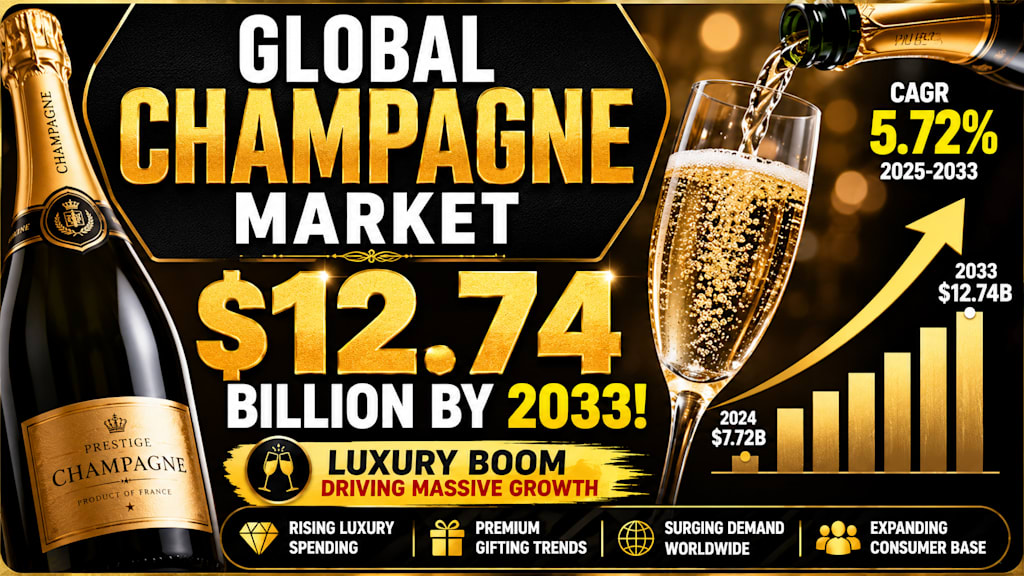
According to Renub Research, the Global Champagne Market was valued at USD 7.72 billion in 2024 and is expected to reach USD 12.74 billion by 2033, growing at a CAGR of 5.72% during the forecast period.
The market's growth reflects a broader shift toward premium experiences, luxury gifting, and increased consumer willingness to spend on products associated with status, celebration, and exclusivity.
Understanding Champagne's Unique Appeal
Champagne occupies a unique position in the global beverage industry. Unlike many sparkling wines produced around the world, authentic champagne can only be produced in the Champagne region of France and must adhere to strict production standards established under the Appellation d'Origine Contrôlée (AOC) system.
Produced primarily from Chardonnay, Pinot Noir, and Pinot Meunier grapes, champagne undergoes the traditional méthode champenoise process, which creates its signature bubbles and complex flavor profile.
Its exclusivity, heritage, and craftsmanship have enabled champagne to maintain its premium image for centuries. Even as consumers gain access to numerous sparkling wine alternatives, champagne continues to represent sophistication and prestige.
Rising Luxury Consumption Fuels Market Growth
One of the strongest drivers of the champagne market is the rapid growth of luxury spending worldwide.
Over the past decade, increasing wealth creation in emerging economies has transformed consumer purchasing behavior. Individuals with higher disposable incomes are increasingly seeking products that reflect personal success and social status.
Champagne perfectly aligns with these aspirations.
Countries such as China, India, the United Arab Emirates, and several Southeast Asian nations are witnessing growing demand for luxury beverages. Consumers in these markets often purchase champagne for celebrations, business events, gifting occasions, and premium dining experiences.
As luxury consumption becomes more mainstream among affluent consumers, champagne continues to benefit from its reputation as one of the world's most prestigious beverages.
Premium Gifting Culture Creates New Opportunities
Gift-giving remains a powerful cultural practice across many regions, particularly during festivals, weddings, anniversaries, and corporate events.
Premium alcoholic beverages have become increasingly popular gifting choices, and champagne sits at the top of that category.
Unlike many luxury goods, champagne offers both exclusivity and an experiential element. Recipients can enjoy the product during meaningful celebrations, creating emotional connections that reinforce brand loyalty.
Corporate gifting has also emerged as a significant growth area. Companies frequently choose premium champagne as executive gifts, client appreciation presents, and event rewards, further strengthening demand.
This trend is particularly evident in Asia-Pacific and Middle Eastern markets, where gifting traditions remain deeply rooted in business and social culture.
The Premiumization Trend Is Reshaping Consumer Preferences
Across the global beverage industry, consumers are increasingly choosing quality over quantity.
Rather than purchasing larger volumes of standard products, many buyers are opting for premium and ultra-premium alternatives that offer superior craftsmanship, exclusivity, and storytelling.
Champagne producers are responding by expanding their portfolios of prestige cuvées, vintage releases, and limited-edition collections.
These premium offerings often command significantly higher prices while attracting collectors, wine enthusiasts, and luxury consumers.
The growing popularity of wine tourism, private tastings, gourmet dining experiences, and social media-driven luxury lifestyles is helping elevate demand for premium champagne products.
Consumers are increasingly willing to pay more for authenticity, rarity, and exceptional quality.
Digital Commerce Expands Global Reach
Technology has transformed the way consumers discover and purchase champagne.
Online wine retailers, luxury marketplaces, and direct-to-consumer platforms now provide access to premium champagne brands regardless of geographic location.
Consumers can compare products, read expert reviews, participate in virtual tastings, and order bottles from around the world with just a few clicks.
This digital accessibility has proven especially valuable in markets where traditional wine retail infrastructure remains underdeveloped.
Social media platforms have further amplified awareness by enabling luxury brands to engage directly with younger consumers through storytelling, influencer partnerships, and lifestyle-focused content.
As e-commerce adoption continues to expand globally, online sales are expected to remain one of the fastest-growing channels within the champagne industry.
Challenges Facing the Champagne Industry
Despite its strong growth outlook, the champagne market faces several challenges.
Strict Production Regulations
Champagne's protected status is both a strength and a limitation.
The AOC system preserves quality and authenticity but restricts production to designated vineyards in France.
As global demand increases, producers cannot simply expand acreage or dramatically increase output. This creates supply constraints that can push prices higher and limit availability.
Climate change adds another layer of complexity. Variations in weather patterns can affect grape quality and harvest consistency, creating additional challenges for producers seeking to maintain quality standards.
Competition from Alternative Sparkling Wines
Champagne is increasingly facing competition from premium sparkling wines produced in Italy, Spain, Australia, England, and the United States.
Products such as Prosecco and Cava offer similar celebratory appeal at considerably lower price points.
For budget-conscious consumers, these alternatives provide attractive options that may reduce champagne's market share in certain segments.
To maintain its premium positioning, champagne producers must continue emphasizing heritage, craftsmanship, exclusivity, and superior quality.
Prestige Cuvée Segment Continues to Shine
Among all product categories, prestige cuvée champagne remains one of the most lucrative segments.
These exceptional products are typically crafted from the highest-quality grapes and aged for extended periods before release.
Brands such as Dom Pérignon and Cristal have become symbols of luxury, attracting collectors, investors, and high-net-worth consumers.
Limited availability and strong brand heritage often allow prestige cuvées to appreciate in value over time, creating additional appeal for collectors.
As global wealth continues to rise, demand for these elite products is expected to remain robust.
Growing Interest in Blanc de Noirs and Rosé Champagne
Consumer tastes are becoming increasingly sophisticated.
Wine enthusiasts are exploring styles beyond traditional non-vintage blends, leading to growing demand for specialized categories such as Blanc de Noirs and Rosé Champagne.
Blanc de Noirs, produced entirely from dark-skinned grapes such as Pinot Noir and Pinot Meunier, offers richer flavors and greater complexity.
Rosé Champagne, meanwhile, has gained popularity among younger consumers due to its visual appeal, versatility, and association with luxury lifestyles.
These niche segments provide producers with valuable opportunities for differentiation and premium pricing.
Online Stores Are Transforming Distribution
The digital transformation of wine retail continues to reshape champagne distribution.
Online stores offer consumers access to rare vintages, exclusive releases, expert recommendations, and subscription services that traditional retail channels often cannot match.
The pandemic accelerated online alcohol purchasing behavior, and many consumers have continued using digital channels even after restrictions ended.
This trend is particularly beneficial for premium champagne brands seeking to reach affluent customers beyond major metropolitan areas.
The convenience and accessibility of e-commerce are expected to drive substantial growth throughout the forecast period.
Regional Market Outlook
United States
The United States remains one of the world's largest champagne markets.
Strong demand for premium beverages, celebratory consumption, and luxury gifting continues to support growth. Younger consumers, including Millennials and Generation Z, are increasingly embracing sparkling wines for social occasions and premium experiences.
Germany
Germany's strong sparkling wine culture creates a favorable environment for champagne sales.
While consumers remain price-conscious, interest in premium vintages, sustainability, and wine education is helping drive demand among affluent buyers.
China
China represents one of the most promising growth opportunities for the global champagne industry.
Rising disposable incomes, growing appreciation for Western luxury products, and increasing participation in premium social experiences are fueling demand.
Champagne has become particularly popular for gifting, business entertainment, and upscale dining.
Saudi Arabia
Although conventional alcoholic champagne remains restricted, non-alcoholic sparkling alternatives are gaining popularity.
As Saudi Arabia expands its luxury hospitality and tourism sectors under Vision 2030, demand for premium alcohol-free celebratory beverages is expected to grow.
Competitive Landscape
The global champagne market remains highly competitive, with established producers focusing on innovation, premiumization, sustainability, and international expansion.
Major companies operating in the market include:
• Diageo plc
• La Marca USA
• F. Korbel & Bros.
• Cook's Champagne Cellars
• Champagne Taittinger CCVC
• Société Jacques Bollinger SA
• Andre Champagne Cellars
• Laurent-Perrier Group
• Champagne AYALA
• LVMH Moët Hennessy
These companies continue investing in product innovation, luxury branding, digital marketing, and global distribution networks to strengthen their market positions.
Final Thoughts
Champagne's enduring association with celebration, prestige, and luxury continues to make it one of the most desirable beverages in the world.
As emerging markets embrace premium lifestyles, digital commerce expands accessibility, and consumers increasingly seek memorable experiences, the industry is poised for steady growth over the next decade.
While challenges such as production limitations and rising competition from alternative sparkling wines remain, champagne's heritage, authenticity, and emotional connection with consumers provide a powerful competitive advantage.
With the global market projected to grow from USD 7.72 billion in 2024 to USD 12.74 billion by 2033, champagne appears set to maintain its position as the ultimate symbol of celebration and sophistication for years to come.
About the Creator
Enjoyed the story? Support the Creator.
Subscribe for free to receive all their stories in your feed.
Comments
There are no comments for this story
Be the first to respond and start the conversation.