
Before The Dinosaurs
How was earth before the dinosaurs?
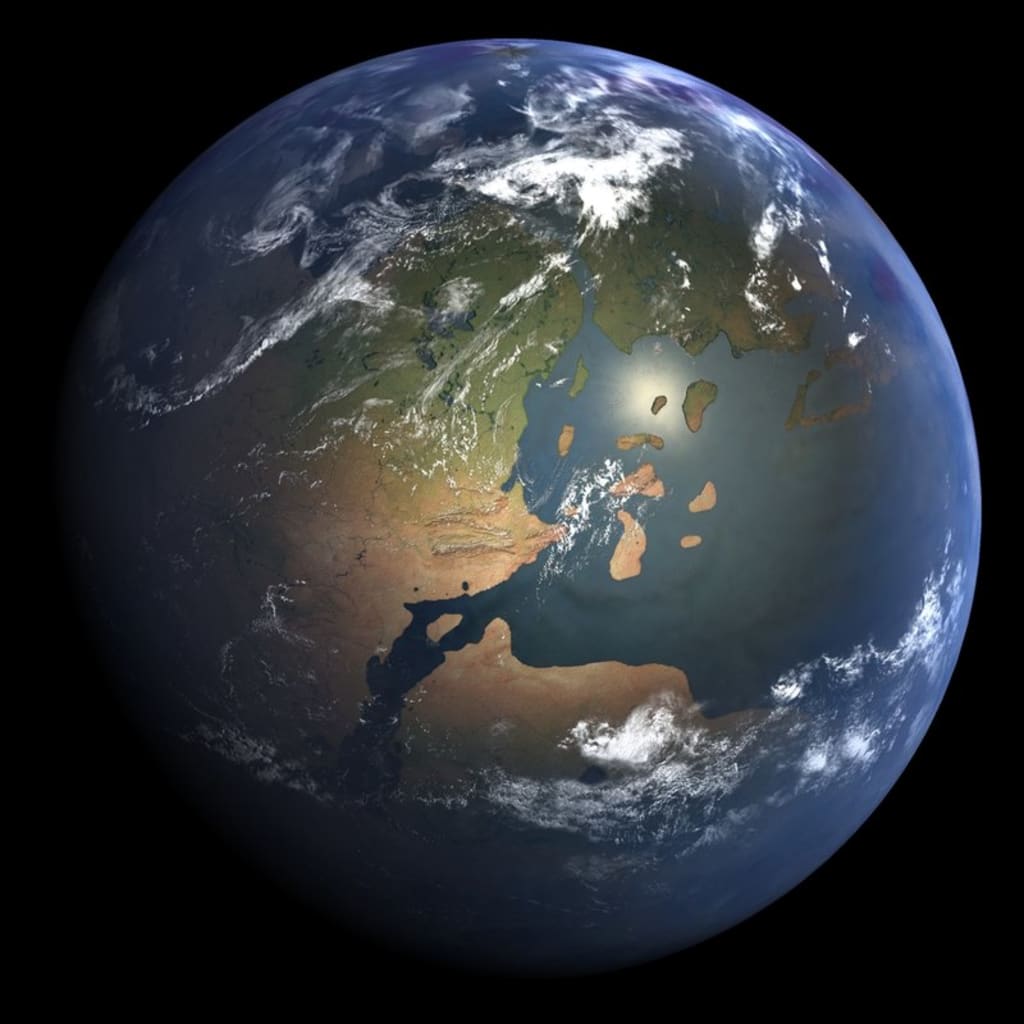
Millions of years ago, Earth looked very different. All the continents were fused into one, teeming with life both beautiful and terrifying. Even before the dinosaurs, there were other giant creatures ruling the Earth. Welcome to the Permian period, which began 300 million years ago. Back then, our planet had one supercontinent called Pangea surrounded by a world ocean called Pantherlassa. The Permian period started at the end of an ice age when temperatures were much cooler than today. During the early Permian days, Earth warmed to a lush environment with a diversity of plants and a rapid evolution of insect and animal life.
Over the next 50 million years, Earth kept growing hotter and drier. Eventually, the most deadly event in the history of our planet wiped out nearly everything that ever lived here. Scientists call this event the "Great Dying," and it was the most catastrophic mass extinction event the Earth has ever seen.
Back in the Permian period, some of the most incredible species that roamed our young planet are about to emerge. By the end of the early Permian, the Ice Age was on its way out, and Pangea was becoming a lush world. Plants and animals started to thrive.
This was a volcanic world; violent eruptions changed the climate, shaped the landscape, and paved the way for evolution. When giant swamp forests began drying out, plant life had to adapt. So, 290 million years ago, Earth saw the very first seed-bearing plants called gymnosperms. These plants carried seeds on their cones and spread across Pangea like wildfire.
The ancient evergreen forests of the early Permian were hiding something familiar. Just like today, you could find cicadas, beetles piercing and sucking on the plants, and the cutest of them all, cockroaches. However, these weren't the cockroaches you know today; these prehistoric vermin were gigantic, the size of birds. But despite their size, cockroaches never ruled prehistoric land. Something much more fascinating was roaming Pangea: the now-extinct ancestor of primitive mammals, Dimetrodon.
Dimetrodon was as fascinating as it was terrifying. Encountering a Dimetrodon would be quite a sight to behold. This ancient lizard grew to five meters long and weighed 225 kilograms. It had a large sail running down its spine. Scientists think this sail helped the reptile regulate its body temperature, soaking up warmth during the daytime and dissipating excess heat during the cooler nights. Dimetrodon was an apex predator of its time, with a mix of sharp and flat teeth that could slice and grind its prey.
In the middle Permian period, other mammal-like reptiles took over the planet, the therapsids. They had strong jaws with sharp teeth and a somewhat upright stance thanks to their legs being situated underneath their bodies. The therapsids varied from the five-meter-long, likely omnivorous Deuterosaurus to the five times smaller, meat-eating Lycanops. You could find plenty more therapsids if you stuck around for another 20 million years.
During the middle Permian period, Earth kept getting hotter, with the average global temperature on Pangea growing to about 25 degrees Celsius. Volcanoes were spitting greenhouse gases out into the atmosphere. Due to the changing climate, sea levels were shifting, but marine life found ways to thrive. If you were to take a dip in the prehistoric super ocean, you'd be swimming alongside ancient sharks and bony primitive fish. Many more complex marine species came and went as the environment kept changing.
In the late Permian period, you could have a friendly encounter with the Listrosaurus. These looked like a cross between a lizard and a pig but unlike all the scary prehistoric monsters out there, Listrosaurus was a herbivore. It was just one meter long and had powerful front legs for burrowing. Soon, another cute mammal-like lizard evolved, the Synodont. The Synodont looked like a giant rodent, about one meter long, had whiskers, and fed on small animals and insects.
During this time, something bad was brewing in the air. A large amount of volcanic activity was displacing oxygen from the atmosphere. Scientists think there was as little as 10 percent oxygen in the air, and the temperature kept rising. With an average temperature of about 28 degrees Celsius, this lush prehistoric world was turning into an oven. About 252 million years ago, about 90 percent of all plant and animal life was wiped out. This tragic moment is called the Great Dying, Earth's most devastating mass extinction event.
Scientists still debate what caused this catastrophic extinction. Most theories suggest it was the result of explosive volcanic activity. As huge volcanic eruptions swept the continent, massive amounts of ash were unleashed into the atmosphere, blocking out most if not all of the incoming sunlight. With no sunlight, global temperatures dropped suddenly. Plants couldn't perform their photosynthetic processes and died off, and without plants, the very basis of the food chain, animals, soon followed. Things got worse before they got better because of all the carbon dioxide emitted during the volcanic eruptions. Global temperatures rose again, and not just to where they were, but higher, much higher. This caused the super ocean to lose most of its oxygen, and unable to breathe, a majority of the Permian sea animals perished. Eventually, over 95 percent of marine species and more than 70 percent of land animals became extinct.
About the Creator
manuelo emmanuel
Dedicated to keeping mankind updated and informed
Enjoyed the story? Support the Creator.
Subscribe for free to receive all their stories in your feed.
Comments
There are no comments for this story
Be the first to respond and start the conversation.