
BEES SACRIFICIAL STING EXPAINED
Why do honeybees sting and die?

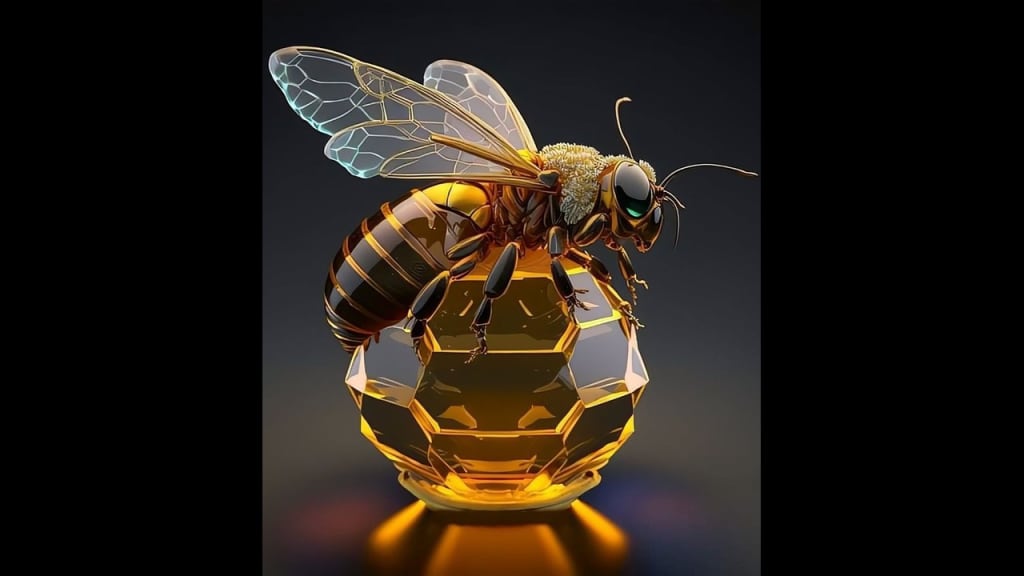
Have you ever been stung by a honeybee? Man, it's the worst! It burns for hours and then swells up, leaving a big red welt for days. But as bad as it feels, it's actually the bee that gets the raw end of this deal, because a few minutes after it's stung you, it dies. I know what you’re thinking……why would an animal have a self-defenses mechanism that's deadlier to it than the thing it's attacking? That doesn't make sense! Right?
Well, there's actually a lot more to this kamikaze defense mechanism than meets the eye. If you've ever been stung by a bee, it was probably your fault. Sorry to be the bearer of bad news, but, in general, bees only sting humans if we approach their hives or threaten them with aggressive or reckless behaviour.
If a bee is hunting for pollen, they'll leave us alone unless we handle them roughly or step on them. Now, you may have heard that all bees die after stinging. Well, actually, only the honeybee does. When any bee stings you, it simply inserts its stinger into your skin. But for the case of honeybees, their stinger is made of two barbed lancets, giving it rougher edges that can act as tiny hooks.
Because of these lancets, when a honeybee inserts its stinger into the skin, it can't pull the stinger back out, and that doesn't stop the honeybee from trying though. The second they try to take off, not only is their stinger pulled out, but the muscles, nerves and parts of their digestive system attached to it are torn out of their backside as well. It's a nasty way to go if you ask me. But there is an even more tragic element to it.
When honeybees sting insects, as they often do when bugs try to attack the hive, they can remove their stingers just fine. It's all down to the amount of fiber in the animal's skin that causes the stinger to lodge. Those barbed lancets are designed to dig in as deeply as possible, and when it comes to a mammal's fibrous skin, there's no removing that stinger without ripping it out. So those poor honeybees have no idea that when they sting us, the impact will kill them.
Have you ever wondered how a bee makes the decision to use its stinger?
Well, to answer that question, we first have to understand pheromones. A pheromone is a chemical or a mixture of chemicals released by an organism that affects the behavior of other members of the same species. So, its information communicated mainly by an organism's sense of smell. The idea that there are chemical messages floating around us all the time may sound a bit crazy, but pheromone signalling like this is essential to a bee's survival.
For example, a primer pheromone causes long-term changes in the physiology and behavior of a bee. That’s right! A chemical signal alone can literally alter a bee's body during development. But a releaser pheromone causes a rapid change in behaviour. So, alarm pheromones, which are a type of releaser pheromones, are emitted immediately after a bee sting something. This alerts other bees to something like a threat entering the hive, instructing all those that can sense the pheromone to attack the intruder.
But when do they know how to stop? Well, a team of researchers from the Universities of Constance and Innsbruck helped answer this question in 2021.They found that bees base their decisions about whether to sting or not based almost solely on the amount of alarm pheromone in the atmosphere.
In addition to this, they learned bees hold two internal thresholds that measure the pheromone's level: one that tells them when to begin stinging and one that tells them when to stop. Almost like an internal thermometer but for violence! These pheromones can also help the bees determine the extent of the threat they face, with more pheromones in the air indicating more danger.
I hope you learnt something new today, and always remember; “Reading is a passport to countless adventures.” ~Mary Pope Osborne~
About the Creator
Harriet Mukami Nyaki
Experienced and versatile freelance writer with a passion for crafting compelling, informative, and engaging content. With a strong command of language and a knack for storytelling.
Enjoyed the story? Support the Creator.
Subscribe for free to receive all their stories in your feed.
Comments
There are no comments for this story
Be the first to respond and start the conversation.