
ARE METEORS THE TRUE CAUSE OF DINOSAUR EXTINCTION ?
Was it really tragic as how we describe it?

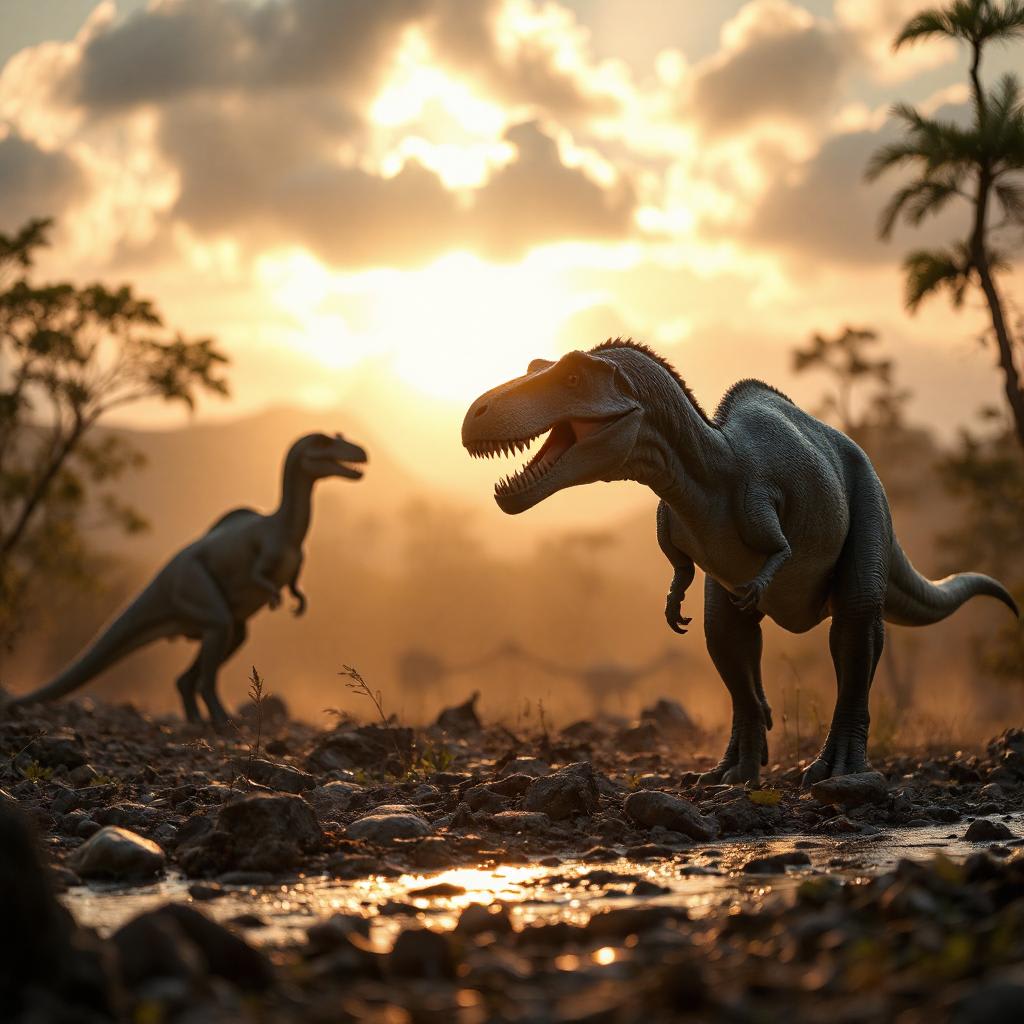
One of life's greatest illusions is continuity. Sixty-six million years ago, dinosaurs had been dominant for about 165 million years. The world was warm and pleasant. Land was covered with lush forests and a vast diversity of flora and fauna. Dinosaurs thrived and diversified into hundreds of species. Massive gentle giants shared habitats with predatory beasts like Tyrannosaurus rex and Edmontosaurus.
On a seemingly ordinary Tuesday afternoon, life for dinosaurs mirrored that of the previous day or even a millennium ago. Despite this continuity, an astronomical event was about to alter their fate. If dinosaurs had gazed at the stars that night, they might have noticed a new star appearing—a small dot that gradually enlarged over many weeks. One day, it resembled a small moon in the night sky, only to fade as it descended into Earth's shadow.
In the morning, the object reappeared, now almost as large as the sun. It headed toward the Yucatán Peninsula. The asteroid, traveling at nearly 60 times the speed of sound, impacted the Earth within seconds. This unnamed asteroid was larger than Mount Everest. When it struck the shallow ocean, it released energy equivalent to billions of nuclear weapons.
As the asteroid vaporized, a brilliant flash illuminated the Gulf of Mexico. The bedrock melted into superheated plasma. Thermal radiation scorched everything within a 1,500 km radius. The force of the impact caused the Earth's crust to lose structural integrity, creating a 25 km deep and 100 km wide crater. The resultant seismic event was a magnitude 11 earthquake, possibly the most powerful ever recorded.
Within minutes, this quake triggered widespread volcanic eruptions in India, resulting in extensive lava coverage. The shockwaves reverberated globally, shifting ground even in regions opposite the impact site. The explosion generated a shockwave exceeding 1,000 km per hour.
Vegetation, soil, and fauna near ground zero were obliterated and flung thousands of kilometers away. The displaced oceans returned as the temporary mountain formed by the impact collapsed, creating tsunamis as high as 1 km. These waves inundated coastlines, resulting in catastrophic flooding.
Debris ejected into space began its return to Earth. As this material re-entered the atmosphere, it heated the air to extreme temperatures. The global effects of this heating remain debated. If the air temperature reached critical levels, numerous plant and animal species perished swiftly. Wildfires engulfed the planet as the Earth rotated beneath the intense heat.
By the end of the day, many dinosaurs had succumbed. However, the greatest devastation was yet to come. A massive plume of vaporized material spread globally, engulfing the planet in darkness, with only surviving fires to provide illumination. The absence of sunlight disrupted photosynthesis, leading to a dramatic drop in temperature.
Oceans suffered immensely, losing over 90% of plankton, a key component of marine food webs. This led to the decline of large marine reptiles and ammonites. The survivors faced an alien landscape, characterized by ash and debris. Fresh sustenance became scarce, and fungal growth prevailed.
The sudden global winter persisted for decades, resulting in the extinction of 75% of Earth's species. The continuity of life that had persisted for millions of years was irrevocably altered. The age of dinosaurs came to an abrupt end. From the remnants of this world, new survivors emerged: birds, descendants of dinosaurs, and mammals that would eventually dominate the planet.
Without the asteroid's impact, the trajectory of Earth's evolution might have diverged significantly. Humans, currently present for only 0.1% of the time dinosaurs roamed, have made remarkable advancements. However, our future is uncertain. If we fail to exercise caution, our existence could conclude as abruptly as that of the dinosaurs.
Recognizing the fragility of our continuity is vital. With awareness and preparedness, we may navigate our journey into the future successfully.
About the Creator
Enjoyed the story? Support the Creator.
Subscribe for free to receive all their stories in your feed.
Comments
There are no comments for this story
Be the first to respond and start the conversation.