
Ants: Nature's Team Players, Crafting Life's Intricate Design
Masters of Collaboration, Architects of Earth's Tapestry

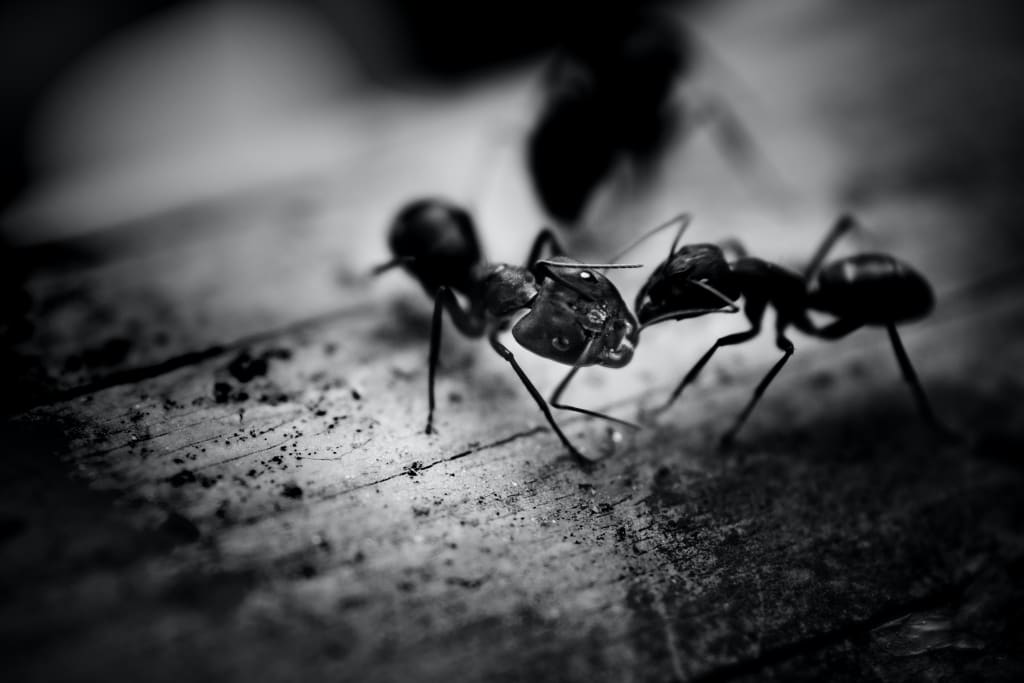
In the grand symphony of Earth's biodiversity, few organisms orchestrate their existence with the precision and complexity of ants. Beyond their diminutive size lies a world of remarkable diversity, spanning over 12,000 identified species, each with its own unique adaptations and behaviors. These small yet mighty creatures have sculpted the landscapes of our planet for millions of years.
Ant species range from the industrious leaf-cutters in South America to the nomadic army ants of Africa. The leaf-cutters, for instance, have perfected the art of agriculture, cultivating fungi within their nests as a vital food source. In contrast, army ants embark on nomadic journeys, exhibiting cooperative hunting strategies that allow them to overwhelm even the largest of prey.
Despite their diversity, ants share common traits that define their societal structures. Colonies, often numbering in the thousands or millions, form the epicenters of their existence. These colonies are intricate, with each member assigned specific roles. From foragers and soldiers to nursemaids and queens, the collaborative efforts within the colony are awe-inspiring.
Ants, while generally harmless to humans, do possess defensive mechanisms. The bullet ant, with its excruciating sting, serves as a potent reminder of the power these tiny insects wield. However, the majority of ants are more preoccupied with maintaining the delicate balance of their colonies through meticulous nest construction, foraging for food, and defending against potential threats.
Nests, the architectural marvels of the ant world, come in various forms. Underground tunnels, constructed chambers in rotting wood, or elaborate structures suspended from trees — each serves a specific purpose. Weaver ants, found in Asia and Australia, demonstrate an extraordinary ability to use silk produced by their larvae to weave leaves together, creating hanging nests that defy gravity.
Ants not only protect their colonies but also play a vital role in ecosystem dynamics. Their insatiable appetite for smaller insects regulates populations, preventing unchecked proliferation of potential pests. However, this delicate balance can be disrupted by invasive species. The Argentine ant, for instance, has become a global invader, outcompeting native ants and altering ecosystems in its wake.
The longevity of ants on Earth is awe-inspiring. Fossil records date their presence back to the Cretaceous Period, over 100 million years ago. This longevity speaks to their adaptability and resilience, traits that have allowed them to navigate the ever-changing landscapes of our planet.
In addition to their biological significance, ants have also captivated human imagination and inspired scientific inquiry. Researchers study ant colonies to gain insights into complex systems, cooperative behaviors, and optimization strategies. Ants' ability to solve problems collectively, allocate resources efficiently, and adapt to changing environments offers valuable lessons in fields as diverse as robotics, computer science, and organizational management.
Moreover, ants are the unsung heroes of soil health. Their burrowing activities enhance aeration and water infiltration, contributing to soil fertility. They also aid in the decomposition process by scavenging on dead insects and other organic matter, playing a vital role in nutrient cycling.
In conclusion, the world of ants is a mesmerizing tapestry woven with cooperation, adaptability, and architectural ingenuity. From the diversity of species to the collaborative efforts within colonies, ants showcase the intricate dance of life on Earth. As stewards of ecosystems, their presence influences the delicate balance that sustains life, offering profound insights into the interconnectedness of all living things. Whether in their natural habitats or as subjects of scientific inquiry, ants continue to play a multifaceted role, reminding us of the vast complexity and wonder that defines the natural world. Their enduring presence on Earth is a testament to their remarkable adaptability and resilience, and they stand as living monuments to the intricate interplay between species that shapes our planet.
About the Creator
Lewis Nguyen
Passionate about the art of writing and the magic of words.
As an author, I seek beauty in stories and want to share my experiences, thoughts and emotions through each page.
I believe that every knowledge can be a door to a hidden world.
Enjoyed the story? Support the Creator.
Subscribe for free to receive all their stories in your feed.
Comments
There are no comments for this story
Be the first to respond and start the conversation.