
America’s Quiet Masterpieces: Places That Take Your Breath Without Asking
Where mountains, deserts, and coastlines write poetry without words

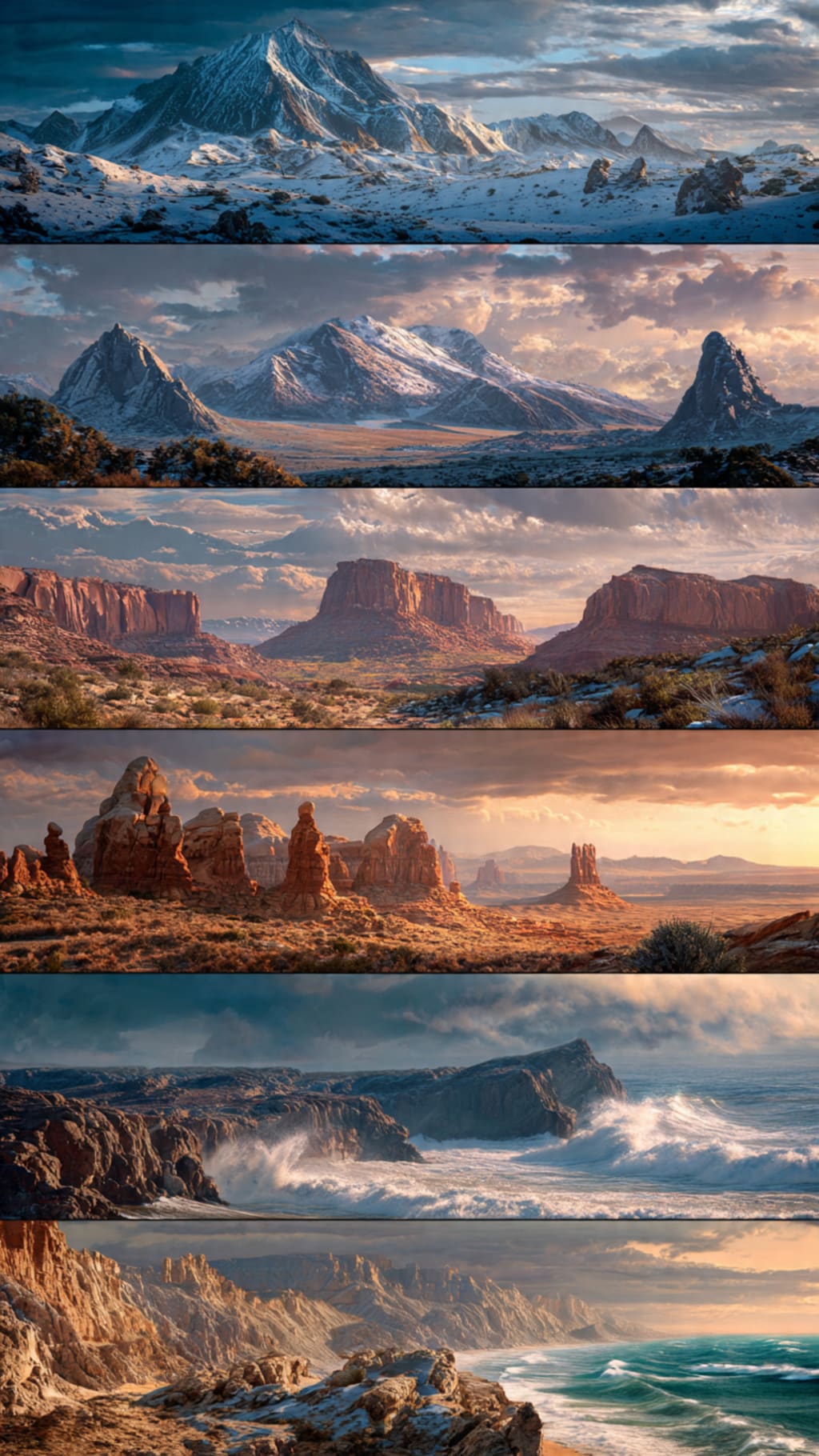
Elena packed one bag, a notebook, and her grandfather’s old map. He’d drawn it himself, with coffee stains and pencil notes in the margins: “Grand Canyon at sunrise = God’s amphitheater. Zion when it rains = the earth singing. Big Sur at dusk = where the sky learns to be quiet.” He never saw them. He died the winter she turned twenty. She was twenty-eight now, and the map was soft at the folds from being opened too many times. “America’s beautiful places” he’d written on the cover. Not the famous ones only. The quiet ones too. Her first stop was Utah. Zion. She arrived after a storm, boots muddy, hair still wet. The canyon walls were red and wet and they looked like they were bleeding color. Water fell from the cliffs in a thousand thin ribbons. It didn’t roar. It sang. High, clear notes that bounced off stone and settled in her chest. Elena sat on a rock and opened the notebook. She couldn’t write words. She just drew the shape of the sound. A ranger walked past and stopped. “First time?” “First time listening,” she said. He smiled. “That’s the only way it works.” Two weeks later she was in Arizona. The Grand Canyon at 5:43am. Cold bit her fingers but she didn’t zip her jacket. She wanted to feel it. The sky lightened from black to ink to blue, and the canyon revealed itself layer by layer, like someone pulling back curtains. It wasn’t beautiful because it was big. It was beautiful because it was old. A billion years of river and wind and patience, stacked. Elena thought of her grandfather’s hands, how they shook near the end but still held hers steady. Patience, stacked. She wrote: “We think beauty is about seeing. It’s about waiting.” In California, Big Sur gave her fog. The Pacific crashed against cliffs below her, and the fog rolled in like a breath the ocean was holding. For an hour she couldn’t see the water. Just white, and the sound of waves she had to imagine. Then the fog lifted for sixty seconds. The sun cut through, hit the water, and turned it to glass and fire. Then it was gone. That was enough. A woman beside her whispered, “It always does that. Waits till you stop trying to capture it.” Elena nodded. Her phone stayed in her bag. She drove through Nevada next, because the map had a tiny star next to Great Basin National Park and her grandfather’s note said “Stars remember you here.” He was right. At 9,000 feet there was no town light for miles. The sky didn’t look like a sky. It looked like depth. Like if she fell she’d fall up. She lay on the hood of her car and counted meteors until she lost track. The universe was not quiet. It was just that humans talked too much. Montana came in autumn. Glacier National Park. The lakes were so clear they looked like mistakes. Elena dipped her hand in Lake McDonald and the cold shot up her arm. Underwater, the stones were every color. The mountains reflected perfectly, and for a moment she couldn’t tell where the real world ended and the reflection began. A loon called across the water. One note, long and lonely, and it made the whole valley feel bigger. She thought about calling someone. Telling them. But beauty like this didn’t fit in a phone call. It fit in silence. It fit in being there. Her last stop wasn’t on the map. Her grandfather had left the last page blank except for one sentence: “Find the place that finds you.” She found it in Maine. Acadia, in October. The wind came off the Atlantic sharp and clean. Pine trees bent but didn’t break. Waves hit the rocks at Thunder Hole and the sound was so deep she felt it in her ribs. The leaves were red and gold and they fell without hurry. Elena sat on the edge of a cliff with her legs dangling and opened the notebook. She didn’t draw. She didn’t write. She just listened. Mountains, deserts, coastlines. They weren’t writing poetry for her. They were poetry, whether she was there or not. Her grandfather knew that. He’d given her the map not to show her places, but to teach her how to be quiet enough to be changed by them. On the drive home, she stopped at every small pull-off. A field of wheat in Kansas that moved like water. A roadside creek in Colorado where the stones were round and patient. A sunset in New Mexico that didn’t look real but was. America’s beautiful places didn’t ask for attention. They waited for it. And when you gave it, they gave you back something harder to name. Perspective, maybe. Or peace. Or just the reminder that you were small, and that being small was okay. Elena mailed the notebook to her brother with no letter inside. Just the map, now with her own notes added in blue ink beside her grandfather’s pencil. She didn’t need to explain. He’d understand when he opened it. Beauty, she learned, isn’t a destination you reach. It’s a way of paying attention. And once you start, the whole country becomes a story
About the Creator
Enjoyed the story? Support the Creator.
Subscribe for free to receive all their stories in your feed.
Comments
There are no comments for this story
Be the first to respond and start the conversation.