
Amazing facts about sloths
Seven amazing facts about sloths.
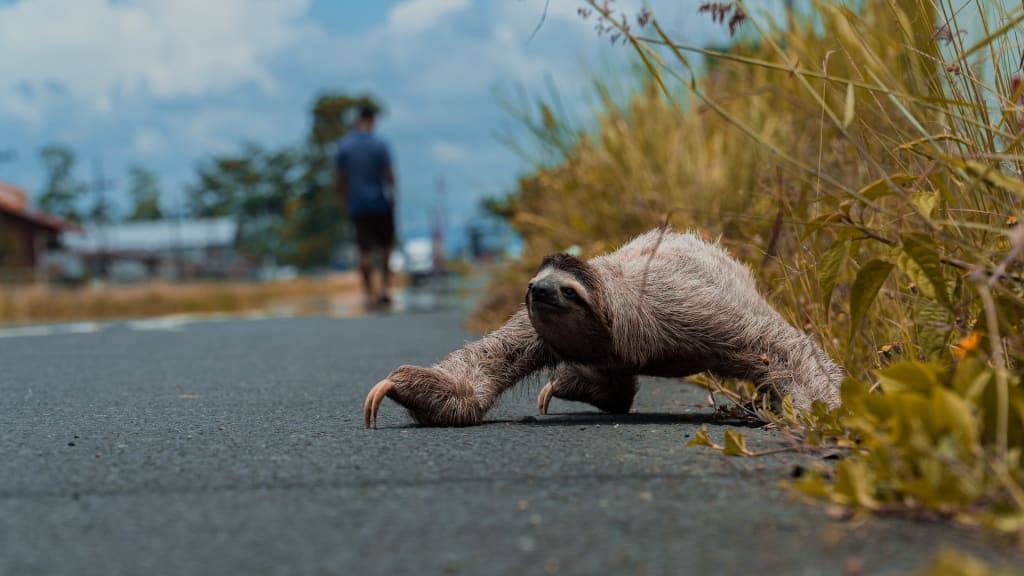
In the tropical forests of Central and South America is where sloths make their home. They bear resemblance to monkeys with their lengthy arms and shaggy fur, but in actuality, they are related to armadillos and anteaters. Their length ranges from 2 to 2.5 feet (0.6 to 0.8 meters), and their weight can vary from 8 to 17 pounds (3.6 to 7.7 kilograms), depending on the species.
The arboreal creatures referred to as "sloth" are known to slumber up to 20 hours each day. Even during their periods of wakefulness, they exhibit very little movement. Their lethargy is so extreme, in fact, that their fur is prone to being colonized by algae.
The amazing seven facts about sloths include their slow-moving nature, their multiple habitats, and more. These creatures may seem slow moving, but there's much more to them than meets the eye. Here are seven amazing facts about sloths that you might not know
Fact one – Sloths excel in swimming. Despite their usual upside-down tree-hanging habit, sloths have impressive swimming abilities. Their lengthy and dense fur provides them with exceptional buoyancy, which allows them to effortlessly navigate through water. Additionally, they can hold their breath for a duration of up to 40 minutes and can reduce their heart rate to conserve oxygen.
Fact Two – sloths only go to the bathroom once a week and when they do, they climb all the way down to the forest floor to do their business. This behavior is actually quite risky for the sloth as they're more exposed to predators on the ground that they're able to get the job done quickly and then haul themselves back up into the safety of the trees
Fact three – Sloths harbor a distinct ecosystem on their fur. It may seem unbelievable, but sloths provide a habitat for a plethora of organisms such as moss, algae, and even minuscule insects in the nooks and crannies of their hair. Due to their sluggish movements, this ecosystem can flourish without disruption. Scientists even speculate that the sloth's ecosystem could unlock new medicines or other significant breakthroughs.
Fact 4 – Sloths possess the ability to rotate their heads almost 360 degrees, akin to the impressive feat demonstrated by owls. This is made possible by the exceptional flexibility in their necks, which enables them to survey their environment without any bodily movements. This is particularly beneficial for an animal that spends a significant amount of time suspended upside down.
Fact 5 - Sloths possess great skill in camouflaging themselves with their shaggy fur and sluggish movements. Though they may appear vulnerable, sloths are indeed experts in blending in with their surroundings. Their fur boasts a greenish-brown hue that seamlessly merges with the foliage and branches of their forest habitat. Additionally, their leisurely pace enables them to blend in even more intricately.
Fact 6 – Sloths are efficient with their energy and not lazy. Despite common belief, sloths have adapted to their surroundings in a way that conserves energy. Their slow metabolism requires less frequent eating, and their slow movements further conserve energy. Thus, if you spot a sloth sleeping in a tree, do not mistake it for laziness, but rather a display of energy efficiency.
Fact 7 - Two types of sloths exist: two-toed and three-toed. Two-toed sloths are bigger and more energetic than their three-toed counterparts. They can also pivot their feet, which enables them to hold onto branches better. Three-toed sloths, on the other hand, are smaller and more gentle. They don't possess the same foot dexterity as two-toed sloths, but they compensate for it by being able to swivel their heads.
Both types of sloths are fascinating creatures. It is amazing to consider the way they have evolved to adapt to various niches in their environment, nearly encircling them completely.
About the Creator
Abubeker Kedir
Enthuastic writer
Enjoyed the story? Support the Creator.
Subscribe for free to receive all their stories in your feed.
Comments
There are no comments for this story
Be the first to respond and start the conversation.