
All Creatures Great and Small
The long and the short of it

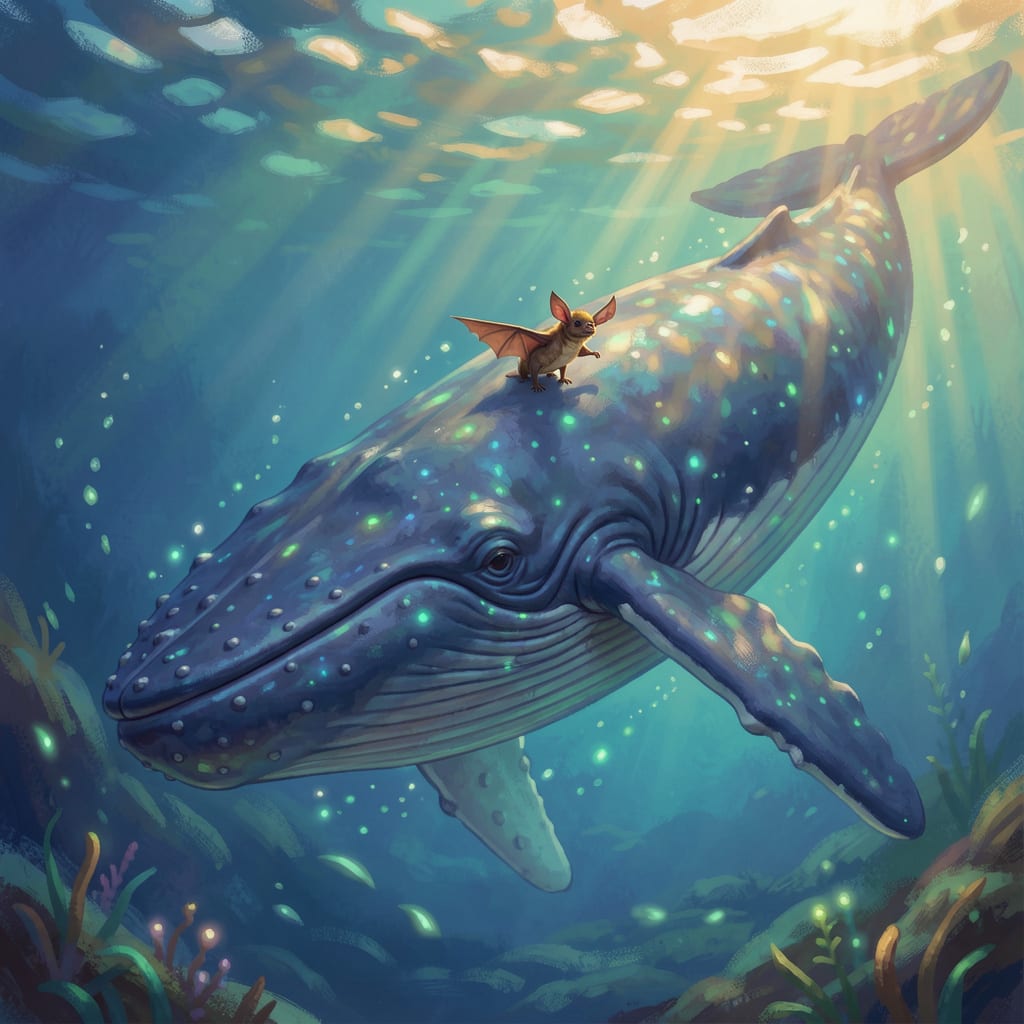
You probably know that there are five main classes of vertebrate animals – mammals, birds, reptiles, amphibians, and fish. Nature is so amazing. The diversity is incredible. Do you know the biggest and smallest in each class?
No, read on...
Mammals. There are some truly large mammals. You are probably thinking of an elephant or rhinoceros. An adult male elephant, for example, can weigh 10,000 to 15,000 pounds (4,500 to 6,800 kg). It is not the largest, however; that title goes to the blue whale. It is easy to forget that whales are mammals, not fish, because they live in the oceans.
They are also the largest animals ever known to have lived on Earth. They can reach lengths of up to 100 feet (30 meters) and weigh up to 200 tons (190–200 metric tons). Their tongue alone weighs as much as an elephant.
At the other end of the scale is the smallest mammal. By weight, the smallest is the Etruscan shrew. It weighs about 1.2 to 2.7 grams (0.24 ounces) and is 3 to 5 cm long, excluding its tail. Its heart beats up to 1,511 times per minute.
The smallest (by size) is the bumblebee bat. This tiny creature lives only in Thailand and Myanmar. It measures 29 to 33 mm (1.14 to 1.29 inches) and weighs around 2 grams (0.8 ounces).
Birds. The largest bird is the common ostrich, which can stand up to 2.75 metres (9 feet) tall and weigh up to 156 kg (344 lbs). Ostriches can’t fly. The largest flying bird is the Andean condor. This bird of prey weighs up to 15 kg (33 lbs) and has a wingspan of 3.1 to 3.3 metres. It glides on powerful mountain winds and can stay in the air for hours without flapping its wings.
The ostrich can't fly, but it can run fast. It sprints up to 45 mph (72 km/h) and can keep a steady pace of over 30 mph (48 km/h).
The smallest bird is the bee hummingbird. It is only about 5.5–6.0 cm long and weighs 1-2.5 grams (0.2–0.5 ounces). Their wings beat 80 times per second (and up to 200 times per second during courtship displays). Sadly, they are classified as near-extinct due to habitat loss.
Reptiles. The largest reptile is not a snake, thank goodness. It is the saltwater crocodile. Adult males usually grow to 5 meters (16.4 feet) and weigh more than 450 kilograms (990 pounds). Some rare ones can reach 7 meters (23 feet) and weigh about 2,000 kilograms (4,400 pounds).
The saltwater crocodile has the highest recorded bite force. It has been measured at 3,700 pounds per square inch (PSI) (roughly 16,460 Newtons). A hippopotamus has a bite force of 2,000 PSI and a human a meagre 162 PSI.
The largest snake, if you are interested, is the reticulated python. It can grow up to 8–10 meters (26–33 feet).
The smallest known reptile in the world is the nano-chameleon. These little guys are only 13.5 mm long from snout to tail base. Adult males are about 21.6 mm long. That is about 0.5 inches, or 0.9 inches including the tail. Adult females are slightly larger, reaching about 28.9 mm in total length.
They are brown and don’t change colour like larger chameleons. They fit comfortably on the tip of a human finger or are about the size of a sunflower seed. They are also potentially endangered due to habitat loss and deforestation.
Fish. The smallest fish is a tiny carp. It lives in the acidic peat swamps of Indonesia, specifically in Sumatra and Bintan. Mature females measure about 7.9 mm (0.31 inches), and males reach up to 9.8 mm. These tiny fish live in water that has a pH of only 3.
Finally, the largest fish? The whale shark holds that title. They measure 12 to 18 meters (40 to 60+ feet) long and can weigh 20 to 40 tons (more than 41,000 pounds).
What's fascinating about these giants of the sea is that they feed on the smallest elements of the sea: plankton, krill, and fish eggs. Juvenile whale sharks eat about 21 to 22 kg of plankton each day. Larger adult whale sharks can eat even more, depending on how much prey is around.
I have had the pleasure of swimming with whale sharks on two or three occasions. It is the most surreal experience. They are truly gentle giants. If you ever get the opportunity, take it. It is one of those things you do that will flash past you in the final minutes of life.
Words of warning, though. You’ll spend the next day picking thread krill (their favourite food) out of your hair, swimwear, and other places we won’t mention. They seem to stick to you like glue.
Nature is truly amazing.
Till next time,
Calvin
About the Creator
Calvin London
I write fiction, non-fiction and poetry about all things weird and wonderful, past and present. Life is full of different things to spark your imagination. All you have to do is embrace it - join me on my journey.
Enjoyed the story? Support the Creator.
Subscribe for free to receive all their stories in your feed. You could also become a paid subscriber, letting them know you appreciate their work.
Comments
There are no comments for this story
Be the first to respond and start the conversation.