
Agricultural Carbon Sinks: The Role of Straw Charcoal Machines
Environmental and Agricultural Benefits

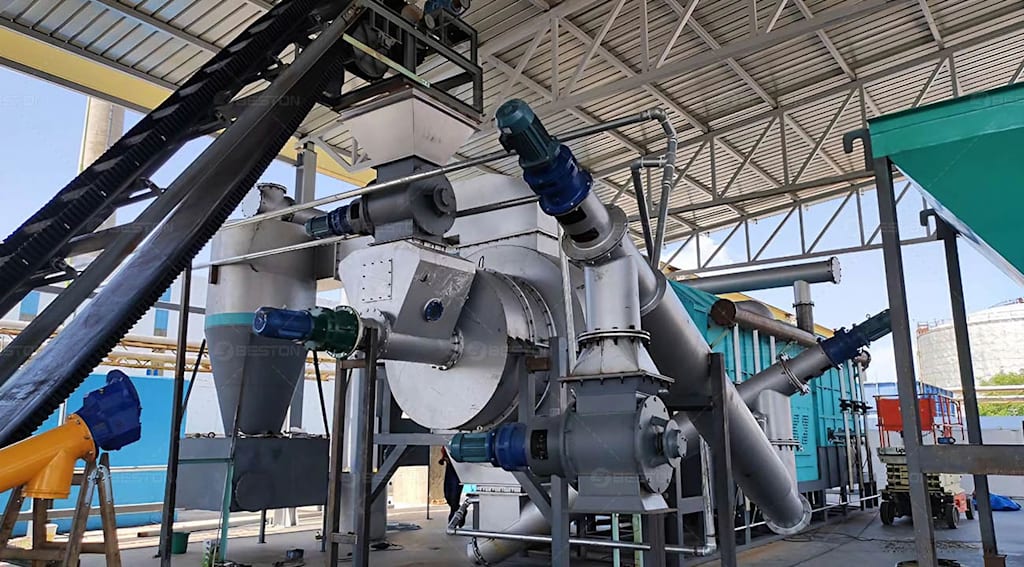
As countries work toward carbon neutrality and sustainable agriculture, increasing attention is being given to agricultural carbon sinks. Farmland has enormous potential to capture and store carbon, helping offset greenhouse gas emissions while improving soil health and crop productivity. Among the many carbon sequestration technologies available today, biomass carbonization has emerged as one of the most practical and scalable solutions.
A straw charcoal machine plays an important role in this process by converting agricultural residues into stable biochar. Instead of allowing crop straw to decompose or be openly burned, farmers and biomass recycling companies can transform it into a valuable carbon-rich material that stores carbon for decades or even centuries.
What Are Agricultural Carbon Sinks?
Agricultural carbon sinks refer to farming practices and technologies that remove carbon dioxide from the atmosphere and store it in plants, soil, or agricultural products.
During photosynthesis, crops absorb carbon dioxide and convert it into biomass. However, after harvest, large amounts of straw, stalks, and other residues are often burned or left to decompose naturally, releasing much of the stored carbon back into the atmosphere.
By converting crop residues into biochar through carbonization, a significant portion of that carbon can remain locked in a stable form rather than returning to the carbon cycle.
Why Straw Is a Valuable Biomass Resource
Every year, agriculture generates enormous quantities of crop residues, including wheat straw, rice straw, corn stalks, cotton stalks, and other biomass materials.
These residues are renewable, widely available, and often underutilized. In many regions, open-field burning remains a common disposal method, causing air pollution and wasting valuable biomass resources.
A straw charcoal machine provides an environmentally friendly alternative by converting these residues into biochar while recovering energy from the carbonization process.
This approach supports both waste reduction and resource utilization.
How a Straw Charcoal Machine Produces Biochar
A straw charcoal machine operates under oxygen-limited conditions, heating biomass at high temperatures to trigger carbonization rather than combustion.
During the process, volatile compounds are released as combustible gases and vapors, while the remaining solid material becomes biochar with a high fixed-carbon content.
Modern machines are designed with automatic feeding systems, continuous carbonization, intelligent temperature control, and gas recycling technology. Many systems reuse the combustible gases generated during carbonization as heating fuel, reducing external energy consumption and improving overall efficiency.
The result is high-quality biochar with stable physical and chemical properties suitable for agricultural applications.
Biochar Improves Soil Quality
One of the greatest advantages of biochar is its ability to improve soil performance.
Its porous structure increases soil aeration while improving water retention, making farmland more resilient during dry conditions. Biochar also enhances nutrient retention by reducing fertilizer loss through leaching.
In addition, biochar provides a favorable habitat for beneficial soil microorganisms, promoting healthier root development and improving long-term soil fertility.
As soil quality improves, crop productivity may also increase while reducing the need for chemical fertilizer inputs.
Long-Term Carbon Storage
Unlike fresh crop residues that decompose within months or years, biochar remains highly stable in soil.
The carbon contained in biochar is resistant to microbial decomposition, allowing it to remain stored for hundreds or even thousands of years under suitable conditions.
This long-term carbon storage makes biochar one of the most effective carbon removal technologies currently available for agriculture.
As governments and businesses expand carbon reduction initiatives, biochar projects are increasingly recognized for their contribution to permanent carbon sequestration.
Supporting Carbon Credit Projects
The growing voluntary carbon market has created additional opportunities for biomass carbonization projects.
When biochar is produced using sustainable biomass and applied according to recognized standards, project developers may qualify for carbon credits by demonstrating measurable and verifiable carbon removal.
A modern straw charcoal machine provides consistent operating conditions and stable biochar quality, making it easier to satisfy certification requirements.
In addition to revenue from biochar sales, carbon credits can create an important secondary income stream, improving the overall profitability of agricultural recycling projects.
Environmental Benefits Beyond Carbon Storage
The environmental advantages of straw carbonization extend beyond carbon sequestration.
Replacing open-field burning with controlled carbonization significantly reduces smoke, particulate matter, and harmful air pollutants.
The process also lowers methane emissions that would otherwise occur during natural biomass decomposition.
Furthermore, recycling agricultural waste into biochar supports the circular economy by transforming low-value residues into valuable agricultural inputs.
This integrated approach benefits farmers, local communities, and the environment alike.
Economic Opportunities for Rural Areas
A straw charcoal machine not only contributes to environmental sustainability but also creates economic value.
Farmers can generate additional income by supplying agricultural residues that might otherwise be discarded. Biochar producers can sell their products to agricultural companies, landscaping businesses, horticultural operations, and environmental restoration projects.
At the same time, the development of biomass carbonization facilities creates employment opportunities in biomass collection, transportation, equipment operation, maintenance, and product distribution.
These activities support rural economic development while promoting sustainable agriculture.
Future Outlook
As countries continue to strengthen climate policies and invest in low-carbon agriculture, demand for biochar is expected to grow rapidly.
Technological improvements are making straw charcoal machines more energy-efficient, highly automated, and capable of continuous industrial production. Better process control also improves biochar quality and increases carbon sequestration efficiency.
Combined with expanding carbon credit markets and increasing interest in regenerative agriculture, biomass carbonization is likely to become an increasingly important component of future agricultural development.
Conclusion
Agricultural carbon sinks are becoming a vital strategy for addressing climate change while improving soil health and farm productivity. By converting crop residues into stable biochar, a straw charcoal machine transforms agricultural waste into a valuable resource that supports long-term carbon storage, reduces air pollution, and enhances sustainable farming.
As biochar markets continue to expand and carbon removal becomes more valuable, straw carbonization technology will play an increasingly significant role in building a circular, low-carbon agricultural economy.
About the Creator
Bestonpyrolysis
Engaged in waste plastic/tyre/rubber recycling, oil sludge treatment, biomass recycling, sewage sludge management and paper recycling…
https://bestonpyrolysisplant.com/
Enjoyed the story? Support the Creator.
Subscribe for free to receive all their stories in your feed.
Comments
There are no comments for this story
Be the first to respond and start the conversation.