
Advanced Pyrolysis in Sustainable Waste Tire Management
Transforming Liability into Resource
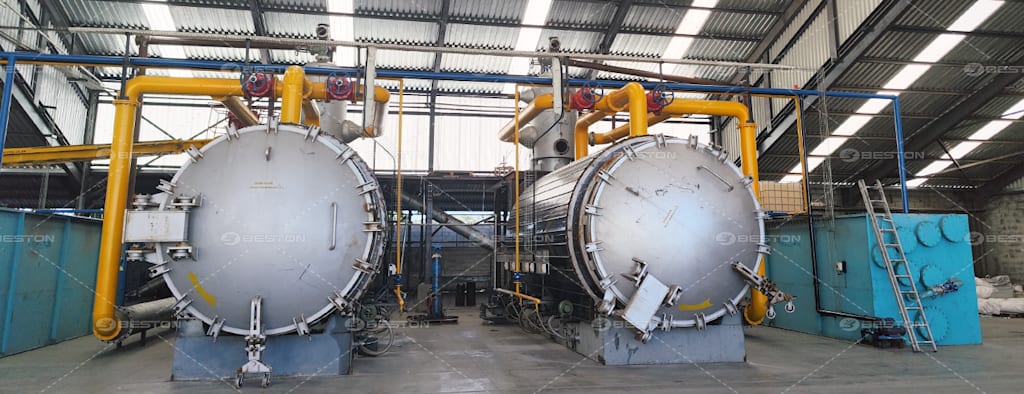
The exponential accumulation of end-of-life tires (ELTs) represents one of the most pressing environmental challenges of modern urbanization and global logistics. Driven by expanding vehicle fleets and historically inadequate recycling infrastructure, billions of non-biodegradable rubber structures are discarded annually. Traditional disposal methods—namely landfilling and open-air burning—impose severe ecological penalties. Landfilled tires occupy immense volume, resist natural degradation for centuries, and create ideal breeding grounds for disease vectors. Meanwhile, uncontrolled combustion releases highly toxic atmospheric pollutants, including dioxins, furans, and heavy metals, while generating hazardous pyrolytic oil runoff that contaminates local soil and groundwater matrices.
To mitigate these risks, modern waste management must transition from linear disposal models toward advanced thermochemical recovery. By treating discarded tires not as municipal waste but as complex polymer feedstocks, industrial-scale recovery facilities can extract high-value chemical commodities and clean energy, effectively bridging the gap between environmental remediation and economic viability.
Thermodynamic Depolymerization: Mechanics of Scrap Rubber Pyrolysis
At the core of sustainable elastomeric recycling is pyrolysis—the thermal decomposition of organic matrices in an oxygen-depleted reactor chamber. Within a specialized tyre oil plant, scrap rubber undergoes carefully regulated cross-link cleavage, breaking down long-chain vulcanized polymers into lower-molecular-weight hydrocarbon fractions. This thermochemical process yields three distinct product streams: condensed liquid hydrocarbons, high-surface-area solid carbonaceous char, and non-condensable synthetic gas (syngas).
Achieving optimal performance and maximizing high-quality liquid yields requires meticulous process engineering:
- Thermal Gradient and Residence Time Control: The reactor must maintain highly precise internal temperature zones, typically optimized between 450°C and 550°C. Deviations from this optimal thermal window can trigger secondary cracking, which inadvertently converts valuable liquid fractions into lower-value non-condensable gases or excessive solid char.
- Feedstock Conditioning and Homogeneity: Raw ELT streams must undergo mechanical preprocessing, including rigorous de-beading (steel wire extraction) and shredding into uniform rubber crumbs. Standardizing particle sizes eliminates internal thermal insulation effects, ensuring rapid, uniform heat transfer throughout the bed material.
- Atmospheric Integrity: Maintaining a strictly anaerobic environment inside the reactor vessel is mandatory to prevent combustion, isolate volatile organic compounds (VOCs), and ensure the purity of the recovered carbon and hydrocarbon phases.
Industrial Applications of Recycled Pyrolysis Derivatives
The outputs of industrial tire depolymerization serve as direct substitutes for virgin, fossil-derived raw materials, driving resource conservation across multiple heavy industries.
Liquid Hydrocarbons (Pyrolysis Oil)
The primary liquid fraction recovered from the condensation system is a dense, high-energy hydrocarbon fluid. Characterized by a high gross calorific value (~40-44 MJ/kg), this oil functions as an eco-efficient alternative to conventional heavy fuel oil (HFO) or diesel in industrial boilers, kiln systems, and electrical power generation plants. Ongoing advancements in fractional distillation and hydrotreatment are successfully lowering moisture, acidity, and sulfur concentrations, upgrading this crude pyrolysis fluid into premium maritime fuels and sustainable chemical feedstocks.
Recovered Carbon Black (rCB)
The solid residue remaining post-pyrolysis is upgraded via milling and pelletization into recovered Carbon Black (rCB). Unlike virgin carbon black, which requires the intensive combustion of fossil crudes, rCB generation boasts a significantly lower carbon footprint. This material is widely reintegrated into low-rolling-resistance rubber compounding, technical mechanical goods, masterbatch plastics, and as an infrastructure modifier in asphalt and concrete formulations.
Recirculated Syngas
The non-condensable gas fraction, rich in methane (CH4), hydrogen (H2), and light hydrocarbons, is captured and routed through a gas-cleaning train. Instead of being flared off, this clean syngas is immediately diverted back to the reactor's furnace burners. This closed-loop thermal integration minimizes or completely eliminates the requirement for external fossil fuels during steady-state plant operations.
Environmental Integrity and Advanced Emission Control Systems
Modern pyrolytic processing is explicitly designed to meet and exceed stringent global environmental standards, ensuring that waste conversion does not translate into secondary localized pollution.
To ensure absolute environmental compliance, state-of-the-art facilities install multi-stage flue gas cleaning trains. Alkaline scrubbers systematically neutralize acidic gases such as sulfur dioxide (SO2) and hydrogen chloride (HCl). Simultaneously, high-temperature thermal oxidizers or catalytic afterburners break down trace volatile organic compounds (VOCs) and nitrous oxides (NOx) prior to atmospheric discharge. Furthermore, by capturing the carbon bound within the tire structures and upcycling it into durable industrial commodities, this closed-loop paradigm achieves significant net carbon-equivalent offsets compared to conventional linear waste disposal paths.
Engineering Paradigms for Maximizing Plant Efficiency
Transitioning from batch processing to continuous, automated operations is essential for long-term commercial and ecological viability. Continuous pyrolysis plants rely on highly sophisticated, multi-zone horizontal rotary reactors equipped with automated screw-feeding and continuous carbon discharge mechanisms.
Advanced multi-point sensor arrays track real-time thermal gradients, pressure variables, and gas composition metrics. By feeding this data into centralized programmable logic controllers (PLCs), the system automatically self-adjusts heat input and material residence times to match shifting feedstock qualities. Implementing aggressive preventive maintenance protocols alongside automated anti-fouling scraping mechanisms prevents internal carbon scaling within the condensers, thereby preserving maximum heat transfer efficiency and ensuring uninterrupted, safe operations.
Conclusion: The Horizon of Autonomous Sustainable Tire Upcycling
As global circular economy regulations tighten and the demand for low-carbon manufacturing supplies intensifies, thermochemical tire recycling is solidifying its position as an indispensable pillar of industrial sustainability. Future innovations will center on precision catalytic pyrolysis to tailor specific hydrocarbon yields, in-line oil purification systems, and advanced post-treatments designed to match the properties of virgin carbon black. By deploying these highly engineered, closed-loop depolymerization frameworks, modern industry can systematically eradicate the global tire waste crisis—successfully transforming a persistent environmental liability into a highly profitable, sustainable resource matrix.
About the Creator
Enjoyed the story? Support the Creator.
Subscribe for free to receive all their stories in your feed.
Comments
There are no comments for this story
Be the first to respond and start the conversation.