
A Hantavirus Outbreak at Sea: What We Know About the Hondius Cluster
Three deaths, five confirmed cases, and the only hantavirus that travels between people

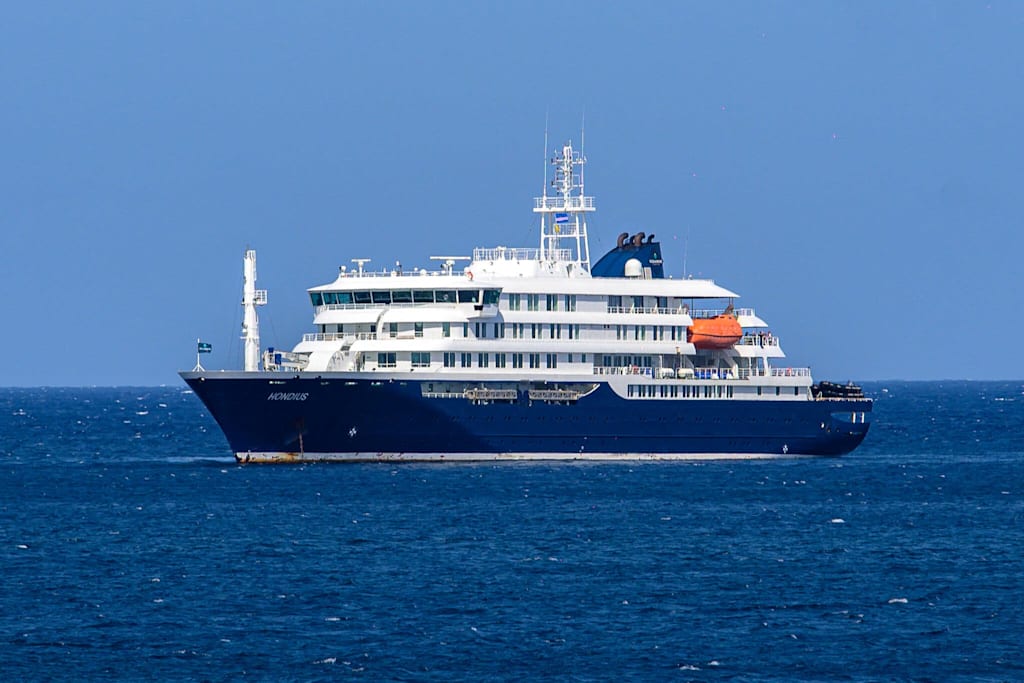
Hantaviruses, as a class, are quiet pathogens. They live in the urine, droppings and saliva of wild rodents; they cross to people through the air of contaminated rooms, attics, sheds and rural cabins; and with one well-documented exception they do not pass from one person to another. The exception is the Andes virus, a hantavirus strain native to the long-tailed pygmy rice rats of Patagonia, and the reason a Dutch expedition ship called the MV Hondius is, in early May 2026, the most closely watched vessel in the South Atlantic. Three of its passengers are dead. Five infections have been confirmed by laboratory PCR, four more are listed as suspect, and the contact-tracing fan now reaches at least a dozen countries across three continents. The case count moves day to day; an independent live aggregator at hantavirus.one has been keeping the running picture, sourced from the WHO, ECDC, CDC and PAHO bulletins as they post.
What follows is a calm walk through what is known, what is suspected, and what the public-health agencies are still trying to find out.
The voyage
The MV Hondius left Ushuaia, Argentina, on 1 April 2026 on a route the operator, the Vlissingen-based Oceanwide Expeditions, calls a Polar to Tropics crossing. From the Beagle Channel the ship was to steam northeast through the southern latitudes, call at Tristan da Cunha and Saint Helena, refuel at Ascension Island and again at Praia in Cabo Verde, and finish at Tenerife in the Canary Islands. About 150 people were aboard. Eighty-eight were passengers, drawn from twenty-three nationalities, with the largest contingents holding Spanish, French, British and American passports. Fifty-nine were crew, mostly Filipino. The vessel itself was six years old, ice-strengthened, registered to the Netherlands, and by the standards of expedition cruising a clean, well-run operation.
The first illness
On 6 April, five days out, a Dutch passenger came down with fever and gastrointestinal symptoms. By 11 April he was dead. His wife, who had attended him through the worst of it, fell ill on a similar trajectory and was evacuated by tender at Tristan da Cunha; she died in a Johannesburg hospital on 26 April. A German woman in her sixties followed at sea, on 2 May. The clinical pattern was the one that doctors who have read the hantavirus literature already know. A few days of fever and what looks like food poisoning. A short window of apparent improvement. A sharp pivot into pneumonia, acute respiratory distress and shock. The case-fatality rate of hantavirus pulmonary syndrome runs between thirty and sixty percent in published series. On the Hondius, three of nine identified cases have died, which is on the steeper side of that curve.
The virus
There are more than thirty hantaviruses in the medical literature, and they go by names most readers have never had reason to learn: Sin Nombre, Bayou, New York, Black Creek Canal, Seoul, Dobrava, Puumala. They share a route. A rodent reservoir sheds virus in waste; the virus aerosolizes when the contaminated material dries and is disturbed; a person breathes it in. From there the lung tissue does its quiet, leaky work, and the patient either survives or does not. With one exception, that is the whole story.
The exception is the Andes virus. It is the only hantavirus where person-to-person transmission has been documented, and even then only inside a narrow set of conditions. The first such description came out of Bariloche, in southern Argentina, in 1996: a clinician found that close caregiving contacts of confirmed cases were themselves becoming sick, in a way the prevailing rodent-only model could not account for. The work that followed in Chile, the United States and Argentina has put a thin but real number on it. In sustained close contact (a household, a small clinic room, a shared cabin) the secondary attack rate sits at roughly two to three percent. It is not influenza. It is not measles. It is, however, enough that a closed cabin on a ship carrying one or two undiagnosed cases for several weeks is not an academic question.
The index case
The leading hypothesis among Argentine and Dutch epidemiologists is that the index passenger contracted the virus before he ever boarded. The Dutch couple had spent four months on a road trip through Chile, Uruguay and Argentina, much of it outdoors, much of it in rural lodgings of the kind the long-tailed pygmy rice rat (Oligoryzomys longicaudatus) frequents at night. They were birdwatchers. The hantavirus incubation period runs from one to six weeks. The dates fit cleanly.
The ports
What followed is the part of the story that public-health agencies prefer to call "logistical." The ship's first port of refuge was Tristan da Cunha, a British overseas territory of about 250 inhabitants, where the local administration allowed the medical evacuation of the gravely ill wife and refused to put any other passenger ashore. Saint Helena reportedly declined a landing. Ascension Island took fuel and supplies but kept the human contact at arm's length. Praia, the capital of Cabo Verde, accepted three patients on 6 May under WHO coordination but did not let the rest of the ship's company leave the decks. The Canary Islands, which were the original endpoint, balked. Fernando Clavijo, the regional president, said publicly that he would not endanger his islands' population by accepting the vessel. The Spanish national government overruled him. The Hondius is, at this writing, expected to dock in Tenerife inside the next forty-eight hours. The medical containment plan that will receive it is being negotiated in real time among the Spanish health ministry, the WHO Europe office and the ship's flag state.
The contact-tracing dragnet
In epidemiological terms, a cruise ship is an unusually clean problem. Manifests are short. Cabin assignments are recorded. Excursions are logged. Once the WHO formal cluster notice was published on 4 May (Disease Outbreak News number 599), the agencies in the home countries of departed passengers had something concrete to work on: name, nationality, port of departure, dates of cabin sharing, dates of shared transport from the ship onward. Five U.S. states (Arizona, California, Georgia, Texas and Virginia) are now monitoring returning travelers. Health systems in Singapore, Canada, the United Kingdom, France, Switzerland and the Netherlands have publicly confirmed that they have done the same. The PAHO Region of the Americas had already reported 229 cases of hantavirus and 59 deaths during 2025, with a regional case-fatality rate near 26 percent; the Hondius cluster sits on top of a baseline that has been rising in Argentina since the middle of last year, in step with land-use changes and rodent-population shifts that researchers there have been flagging for two seasons.
The arithmetic of the risk
The standing risk assessment from WHO is that the global public-health risk from this event is low. The European Centre for Disease Prevention and Control's independent reading is that the risk to the EU/EEA is very low. The U.S. CDC has used "extremely low" to describe domestic risk. The math behind those phrases is straightforward and worth holding in mind. This particular hantavirus does spread between people, but only across a narrow set of conditions, and the secondary attack rate is small. The ship's manifest is finite. Most of the at-risk contacts are now under active surveillance. The case-fatality rate is severe, but the dispersion ceiling is low. None of which is to say the case count will not move; given the four-week incubation window, more cases are likely. It is to say that the Hondius outbreak, however gripping the geography of it, sits well inside what public-health systems were built to handle.
What travelers should know
For someone reading this on a phone in an airport, or back home tracking a relative who flew home from Tenerife, the practical questions reduce to a short list. Hantavirus does not spread by routine close proximity, by sharing public space, by handshakes, or by aerosol transmission of the influenza or coronavirus type. The Andes strain of hantavirus, which is the one that does jump between people, requires sustained close contact: a household, a hospital bedside, a small cabin shared for many days. Returning Hondius passengers are being asked to monitor for fever, body aches, gastric symptoms or unexplained shortness of breath for six weeks from the date of disembarkation. Treatment, if it comes to that, is supportive: ICU-level oxygenation, careful fluid management, attention to capillary leak. There is no licensed vaccine. There is no specific antiviral with strong evidence behind it. What the medical literature has continued to say since the first descriptions of HPS in the Four Corners region of the United States in 1993 is that the single most consequential factor in survival is how early the patient gets to a hospital that knows what it is looking at. The clinical window is narrow. The recognition window is narrower.
The lesson, such as it is
The lesson the Hondius is teaching, if it is teaching one, is geographic. This hantavirus has, until now, been a regional pathogen. Argentina, Chile, southern Brazil, the corner of South America where the long-tailed rice rat lives. What the ship has demonstrated is that the regional pathogen will travel as far as the regional traveler does. Yellow fever taught the Atlantic that lesson in the seventeenth century. Influenza taught the Pacific in 1918. SARS-CoV-2 taught the world in 2020. The vector here is no longer the rat. The vector is the itinerary, and the itinerary now reaches everywhere a ship can sail.
About the Creator
Enjoyed the story? Support the Creator.
Subscribe for free to receive all their stories in your feed.
Comments
There are no comments for this story
Be the first to respond and start the conversation.