
A Day to Highlight Another Disaster
World Rhino Day - September 22

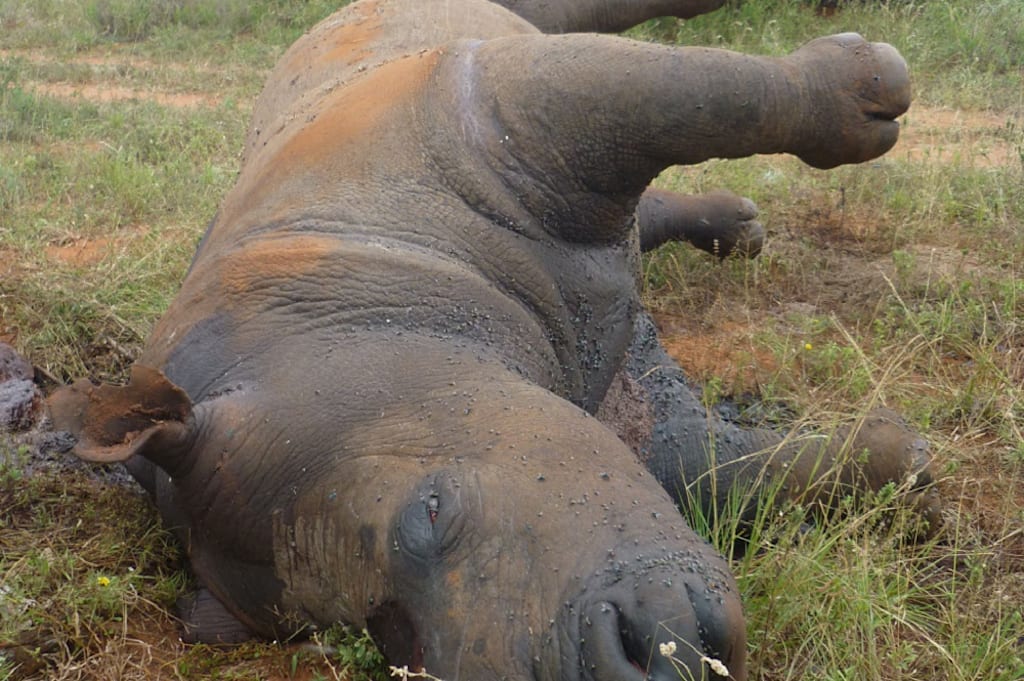
There are five rhino species in the world. Zoos might have a few rhino species, but probably not all five. Rhinos are quite rare nowadays. Your chances of seeing these amazing creatures in the wild are pretty low now. Here are the latest population numbers (2024):
White rhinos are near threatened. About 10,080 mature individuals are left, and their numbers are declining. One subspecies, the northern white rhino, has just two individuals left. Both are female because the last male died in 2018.
Greater one-horned rhinos are listed as vulnerable. About 2,100 mature individuals are left, but their numbers are growing.
Black rhinos are critically endangered, with around 3,124 mature individuals remaining.
Sumatran rhinos are critically endangered. Only about 30 mature individuals are left, and their numbers are falling.
Javan rhinos are critically endangered. Only about 18 mature individuals remain in the wild, but their population is stable.
A pretty sad story.
World Wide Fund for Nature (WWF) in South Africa started World Rhino Day in 2010. The following year it became global. World Rhino Day is celebrated every year on September 22. It raises awareness of all five rhino species and the urgent need to protect them.
You may think that an animal weighing over 5,000 pounds (more than 2,267 kilograms) does not need protection. People made that assumption about elephants for years. Rhinos are the biggest land mammals after elephants. But their populations are declining. Their greatest enemies?
All of this is due to mankind. Habitat destruction and even worse poaching are to blame. Poaching of rhinos is big business. Just like elephants, they have been mercilessly hunted for their horns. A horn can sell for tens of thousands of dollars per kilogram. This price often makes rhino horn more valuable than gold or cocaine on the black market.
Rhino horn has been used in Chinese medicine for more than 2,000 years. It has been used to treat fever, rheumatism, gout, and other disorders. Rhino horn treats many problems. It has been used for snakebites, hallucinations, and typhoid. It has also been used for headaches, carbuncles, vomiting, food poisoning, and “devil possession.” The success rate is questionable.
A rhinoceros horn is not actually bone and is not attached to the animal's skull. It’s a dense mass of keratin that continues to grow throughout the animal’s life, just like our hair and nails. It is chemically complex. It contains several amino acids with sulphur. These include cysteine, tyrosine, histidine, lysine, and arginine. It also includes mineral salts such as calcium carbonate and calcium phosphate.
Rhinos do not use their horns for fighting and defence. They can also slash and gouge with the long, sharp incisors and canine teeth in their lower jaw.
Dehorning rhinos is an effective way to protect and conserve the species.
On average, it has reduced rhino poaching by 78% across African reserves. Conservationists say it's a great emergency safety measure. But it's also a costly, temporary fix, not a permanent fix. Rhino horns grow back because the tissue at their bases keeps producing keratin. The animal doesn’t feel any pain.
The second problem is habitat destruction. As in many parts of the world, the growing human population requires more land. Forests and grasslands are cut down. This makes room for crop fields and grazing land for livestock. This demand also drives the expansion of housing, towns, and cities.
A special “call to arms” day could raise awareness of these animals and help protect those that remain.
On a parting note, here are five interesting facts about rhinos:
- A group of rhinos is called a crash. I am guessing that is what you get if you come across a group of them.
- The word rhinoceros combines two Greek roots: rhino (nose) and ceros (horn).
- An adult white rhino can produce as much as 50 pounds of dung per day! A male’s dung smells different from a female’s. A female's dung in oestrus gives off a different odour than a female's dung when she isn't in oestrus. Multiple, often communal dung deposits are known as middens. Rhinos use them to mark territory, and often pile the dung up with their horns.
- White rhinos aren’t white and black rhinos aren’t black. They are both grey.
- African rhinos have a symbiotic relationship with oxpeckers, also called “tick birds”.
- In Swahili, the oxpecker is called ‘askari wa kifaru’, which means “the rhino’s guard”. The oxpecker eats ticks and insects on the rhino. When it senses danger, it raises an alarm alerting the rhino to danger.
Happy Rhino day.
Till next time,
Calvin
An entry for Mikeydred's unofficial September challenge:
About the Creator
Calvin London
I write fiction, non-fiction and poetry about all things weird and wonderful, past and present. Life is full of different things to spark your imagination. All you have to do is embrace it - join me on my journey.
Enjoyed the story? Support the Creator.
Subscribe for free to receive all their stories in your feed. You could also become a paid subscriber, letting them know you appreciate their work.
Comments
There are no comments for this story
Be the first to respond and start the conversation.