
A 12,000-Yuan House in the Woods: What the Videos Leave Out
Cheap homes, mushrooms, and cats are real. So are the heating debt, the 130-kilometer hospital drive, and the people who leave.
Xiaokui parked her tricycle at the morning market and bought two jin of potatoes. The market opens at seven and closes at twelve. After twelve, there is nowhere in town to buy vegetables.
Her apartment is 50 square meters, south-facing, furnished, 12,000 yuan. The main street is a three-minute walk downstairs. Almost every building on that street has a for-sale notice on it. Some windows still have the fu character the last owner pasted up. The red paper has faded to pinkish white. The corners curl. When the wind blows, they rustle.
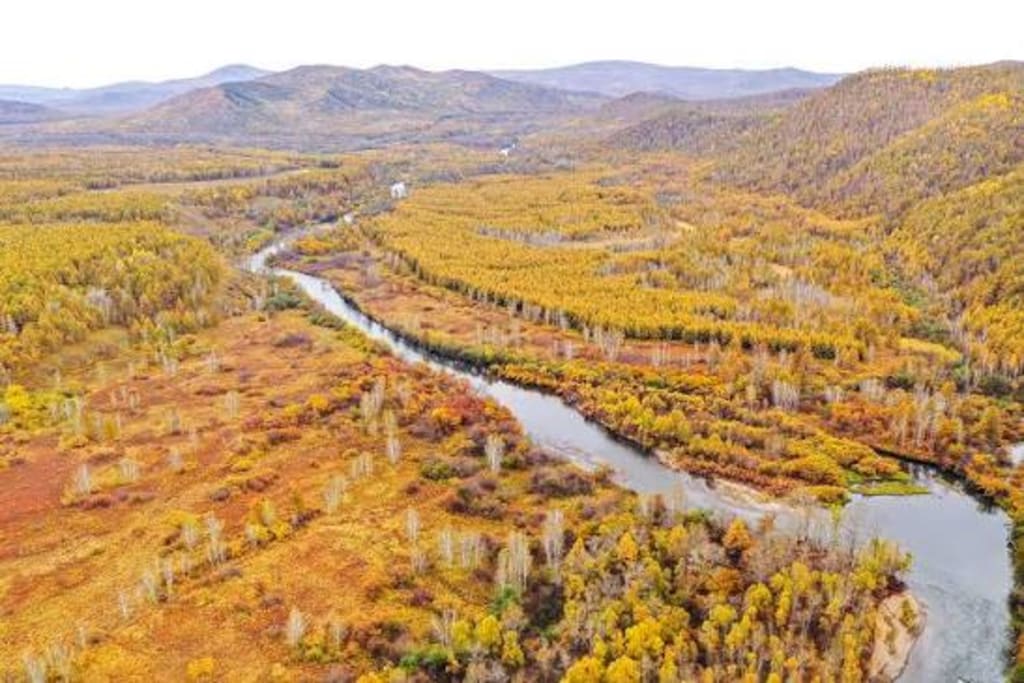
Yitulihe sits in the northern part of the Greater Khingan Range in Inner Mongolia, under Yakeshi. In the 1950s, the forestry bureau opened, and the town became an industrial center. At its peak, the forestry bureau, the railway, and the machinery factory employed enough people to support nearly 60,000 residents. After 1998, the railway sub-bureau closed and the machinery factory went bankrupt. In 2015, commercial logging of natural forests stopped. Loggers put down their chainsaws and became forest rangers. The people left. The houses stayed.
Most of these buildings went up more than thirty years ago as forestry bureau housing or private builds. They run 50 to 60 square meters, with a few over 70. Many sit empty. The secondhand stock is huge. Local residents act as agents. They post one-take videos online and list the price, orientation, floor, furniture, and appliances. They charge about 2,000 yuan to handle paperwork and transfer ownership, then mail the property certificate. Local agents say more than a hundred out-of-town buyers come each year and pay in full.
Xiaokui worked in Beijing for fifteen years. In 2025, she paid 12,000 yuan for a 50-square-meter apartment. She paid another 35,000 yuan for a 90-square-meter courtyard house with nearly 1,000 square meters of open land in front and back. She rents out her Beijing apartment and lives on the rent. Her monthly costs run 500 to 700 yuan. She grows vegetables in the yard, picks mushrooms and wild fruit in the mountains, and gets around by tricycle. In winter she stockpiles food and keeps cats, dogs, and chinchillas. She says this is the happiest she has been in her thirty-odd years.
She bends down and sets the potatoes in the tricycle bed. Half a bag of cat food is already there. A yellow dog lies beside the tricycle, tongue out, panting.
A post-90s woman from Chaoshan, Guangdong, moved to Yitulihe six years ago. She bought her house for 28,000 yuan. She lives with two cats. She watches clouds and mountains. She hikes with friends, picks wild daylilies, takes them home, blanches and steams them, packs them in portions, and freezes them. Someone asked if she missed home during the holidays. She said she had cut off family ties long ago. This is home.
A woman from Guangxi chose another small town in the Northeast. Her house has five vegetable plots in front and back. She clears a little each day. The plot by the door is mostly planted. She kept a few quails, then chickens, ducks, and geese.
Short videos edit these lives into one template: cheap house, vegetables, mushrooms, cats and dogs, clouds. Light music. Captions about escaping the rat race, early retirement, Shangri-La. In the comments, someone writes that for 12,000 yuan, you cannot lose much.
A house is not separate from the town around it.
Winter in Yitulihe drops to minus 49 degrees Celsius. Heat runs for eight months. Snow falls at the end of September. Ice and snow melt in May. The heating fee is 1,400 yuan a year. That number sounds small. The trouble is the old forestry housing. Many buildings use a series pipe system. One main pipe runs through every unit. There are no separate valves. If one household stops heating, the pipes freeze and burst. The whole building’s pipe network can be ruined. Repairs in that cold cost hundreds of thousands. So in these buildings, whether you are in town or not, whether you live there or not, you cannot suspend heating. You pay the full fee.
Xiaokui says a neighbor has not returned for years. The heating fees keep adding up. A notice on the door says more than 8,800 yuan is owed. She thinks: wait two more years, and the heating debt will pass the price of the house.
The notice lifts at one corner in the wind. The number is printed clearly. More than 8,800. The asking price is 12,000.
Medical care is another wall. The town has a basic health center. For anything serious, you drive more than 130 kilometers to Yakeshi. For more, you go to Hulunbuir. Winter blizzards close roads often. A sudden illness at night means a long transfer in bad conditions.
Parcels often do not reach town. You go dozens of kilometers to Yakeshi for transfers. The morning market runs from seven to twelve. After that, no shop sells vegetables. Tricycles are the main transport. After heavy snow, moving around is hard. Mushrooms and vegetables belong to June through September. The rest of the year, you stay indoors.
Jobs are almost nonexistent. Fewer than 3,000 people live in town, mostly forestry workers and elderly residents who stayed. There are no private companies, no internet jobs, no offices. Service jobs are few and pay little. Finding work in town to support yourself is not realistic.
Xiaokui did not move there to work. She rents out her Beijing apartment and uses the rent to cover forest town costs. The Chaoshan woman has savings or online income. The Guangxi woman is in no hurry, clearing a little each day. They did not go to Yitulihe to earn a living. They bring outside income and live in Yitulihe.
Hegang went viral a few years ago. Hundreds of young people rushed there. Local agents estimate about 60 percent of out-of-town buyers sell and leave after two or three years. They cannot handle the winter. They have no income. The town’s quiet wears them down. The videos stop matching the winter. They sell at a loss. A house bought for more than 10,000 goes for 7,000 or 8,000. Travel and transfer fees are gone.
Yitulihe is smaller and colder than Hegang. Winter lows reach minus 49 degrees Celsius. Heat lasts eight months. Medical care, parcels, and jobs are scarce.
The agent’s phone rings again. He opens a one-take video. A 50-square-meter apartment, south-facing, furnished. He taps forward. The buyer is in Beijing, just off work, packed into the subway.
About the Creator
Jin
Writer of reamstories
https://reamstories.com/jin
Enjoyed the story? Support the Creator.
Subscribe for free to receive all their stories in your feed. You could also become a paid subscriber, letting them know you appreciate their work.
Comments
There are no comments for this story
Be the first to respond and start the conversation.