
7 Exceedingly Rare Astronomical Event Before 2100
Unique Astronomical Event in the Next 100 Years

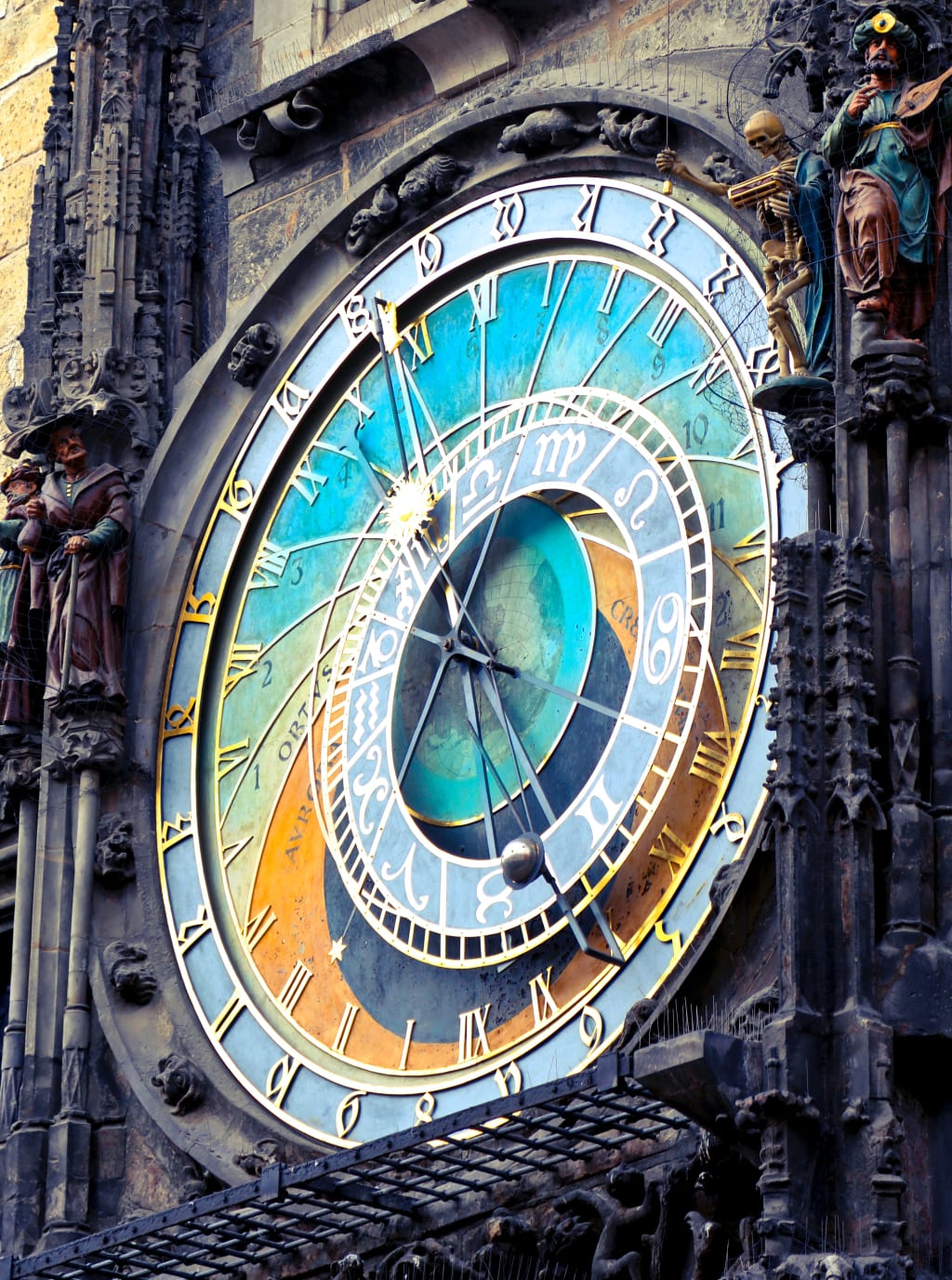
Unique Astronomical Events in the Next 100 Years
Currently, everything in the universe is moving steadily and predictably. Thanks to complex mathematics, we can predict what the night sky will look like for hundreds of years. That's why astronomers have created calendars of unique astronomical events. Let's explore the most fascinating astronomical events awaiting us in the next 100 years.
1. 2029: Asteroid Apophis
Our Solar System is teeming with various asteroids, ranging from small pebbles to massive mountain-sized boulders, many of which come alarmingly close to Earth. In 2029, one such asteroid is expected to fly close to us, known as 99942 Apophis.
This asteroid is quite sizable, with a diameter of approximately 1,200 feet, and NASA discovered it in 2004. Initially, it was considered one of the most hazardous objects orbiting the Sun. This is because, on April 13, 2029, it will come incredibly close to colliding with Earth. Even its name, Apophis, is quite ominous, named after the ancient Egyptian deity of chaos and destruction, a giant serpent symbolizing disorder.
However, scientists assure us that despite this alarming proximity, the asteroid will not actually collide with Earth. Instead, it will pass by us at a distance of about 20,000 miles. While this is closer than the Moon and even some NASA satellites, there is fortunately no collision risk. The event itself will be quite spectacular, as Apophis will be visible in the sky without the need for a telescope. If you happen to miss it for any reason, don't worry, as it will return in 2068 and once again pass near Earth.
2. 2029: The Darkest Lunar Eclipse of the Century
A lunar eclipse occurs when the Moon is completely within Earth's shadow. Sometimes, during such events, the Moon appears bright red, which can be somewhat eerie. However, this happens because red rays can easily penetrate our atmosphere. Lunar eclipses, unlike solar ones, are relatively common. Typically, the closer the Moon is to the center of Earth's shadow, the darker the eclipse is.
According to scientists, on July 26, 2029, we will witness one of the darkest lunar eclipses in the last hundred years. This eclipse will last approximately one hour and 42 minutes, with the entire event, from the moment Earth's shadow touches the Moon until the satellite emerges, lasting about 3 hours and 40 minutes. The event will be best viewed in South America, so consider booking your tickets now!
3. 2040: Parade of Planets
The parade of planets is a moment when all the planets in our Solar System align. Of course, they won't form a perfectly straight line, but it will still be an impressive sight. Some planets, like Jupiter and Venus, can be clearly seen even in large cities with the naked eye. During the parade of planets on September 8, 2040, all the planets will align according to NASA's predictions. So, stock up on telescopes and get ready to witness this unique event.
4. 2052: The Brightest Super Moon of the 21st Century
The Moon's orbit isn't perfectly round. Our natural satellite orbits Earth in an elliptical path, resulting in two points: the farthest (apogee) and the closest (perigee). However, due to the dynamic nature of space, some perigees can be closer than others. During these times, we observe what's known as a Super Moon, where the Moon appears significantly larger and can be up to 30% brighter than usual. The darker the rest of the sky, the more brilliant the Moon appears.
On December 6, 2052, we will witness the closest and brightest Super Moon of the entire 21st century. Our beloved satellite will be as much as 17,000 miles closer to us than usual. This is an event that will be hard to miss.
5. 2060: The Brightest Comet
Comets are dusty remnants of space objects that traveled through the universe thousands of years ago. There are thousands of them in our Solar System alone. When a comet approaches the Sun, it heats up and starts emitting gases and dust, resembling a small star with a large, fuzzy gas cloud and a beautiful long tail, all of which create a stunning view. We can even observe such comets with the naked eye.
Comet 15p/Finlay, named after its discoverer, will visit us on October 27, 2060. We've known about this since the 19th century. What's particularly cool is that it will be one of the closest comets to approach Earth in the last hundred years, passing by at a distance of just 4.6 million miles. The view is sure to be breathtaking.
6. 2084: Earth Eclipse
One of the most exciting events in the 21st century is the Earth eclipse. Unfortunately, we won't be able to observe it from Earth; it can only be seen from Mars. Earth and the Moon will pass in front of the Sun, creating bright silhouettes. The last time this happened was in 1984. This event is called a planetary transit, similar to a solar eclipse but involving other planets instead of the Moon. On November 10, 2084, there might be people on Mars who can witness Earth passing in front of the Sun. Whether or not that happens, we'll still be able to see footage of this event from space.
7. 2100: The North Star Will Be Closest to True North
The North Star, known for guiding sailors for centuries, isn't perfectly aligned with the North Pole. This is due to Earth's axis not being fixed but slowly moving in space. This movement is called precession, causing the North Star to gradually change its position in the sky. However, on March 24, 2100, the North Star will finally appear directly above true north on our planet. Afterward, it will slowly move away again and return only after 26,000 years. This is a rare event but one worth waiting for. Unfortunately, it will be somewhat bittersweet, as the North Star is gradually shifting, and in about 2,000 years, it will be completely replaced by another star, Gamma Cephei. So, the 2100 event will be a meaningful farewell performance of the North Star.
These are the calendars of unique and fascinating astronomical events for the next 100 years. To witness many of them, you won't even need to purchase a telescope, as they will be visible to the naked eye. Just make sure you survive until then, and they will be awe-inspiring events to observe, especially considering that some of them are once-in-a-lifetime occurrences. Be sure not to miss them!
About the Creator
Enjoyed the story? Support the Creator.
Subscribe for free to receive all their stories in your feed.
Comments
There are no comments for this story
Be the first to respond and start the conversation.