
The Most Dangerous Propaganda Never Tells You What to Think
How images, silence, and implication influence millions of people.


We are so deep in a media literacy problem that people don’t even really understand what media literacy means.
Most people think media literacy means identifying fake news.
It doesn't.
Media literacy is comprehension. It's context. It's understanding symbolism, implication, framing, and everything that isn't said out loud.
It's reading between the lines.
We've become so dependent on having everything explained to us that if something isn't stated in black and white, people assume it doesn't exist.
That's why books are becoming less subtle.
That's why so many movies and television shows feel the need to explain every emotion, every motivation, every plot point.
Audiences increasingly expect everything to be spelled out for them.
Media literacy is also a key component of being able to correctly decipher propaganda because propaganda is almost never spelled out.
The best propaganda doesn't order you around.
It doesn't point a finger and tell you what to think.
It creates an environment where the desired conclusion feels like common sense.
By the time you arrive at the conclusion, you're convinced it was your idea all along.
That's what makes it powerful.
If you can recognize what's being implied not just what's being said you become much harder to manipulate.
Take the rise of the "trad wife" aesthetic.
Over the last four years, social media has been flooded with carefully curated online image that repeatedly presents domestic life as effortless, beautiful, and endlessly fulfilling.
Perfect makeup.
Perfect kitchens.
Homemade bread.
Children who never seem to interrupt the aesthetic.
Everything looks peaceful.
Everything looks easy.
Watch enough of that content, and eventually it stops feeling like content.
It starts feeling like reality.
Then one day a nineteen-year-old influencer tells millions of girls to skip college because being a wife is a better career path.
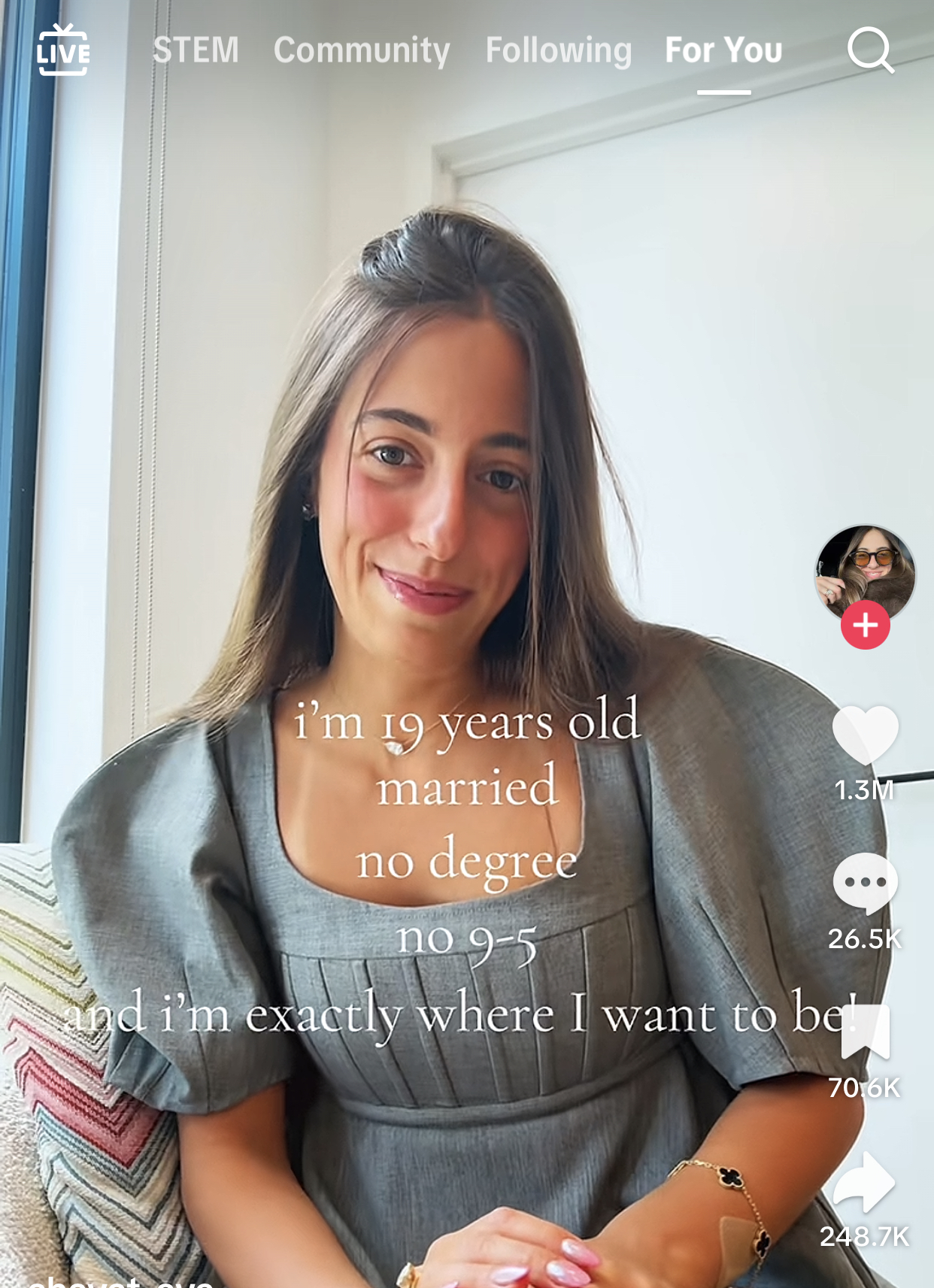
People act shocked.
I'm not.
Ideas like that don't appear overnight.
They're introduced gradually until they feel normal.
That's why I find the conversation around Nara Smith so interesting.
Recently, creator Nara Smith went on an interview and addressed accusations that she promotes "trad wife" culture, explaining that she is actually a working mother and that responsibilities in her household are shared with her husband.
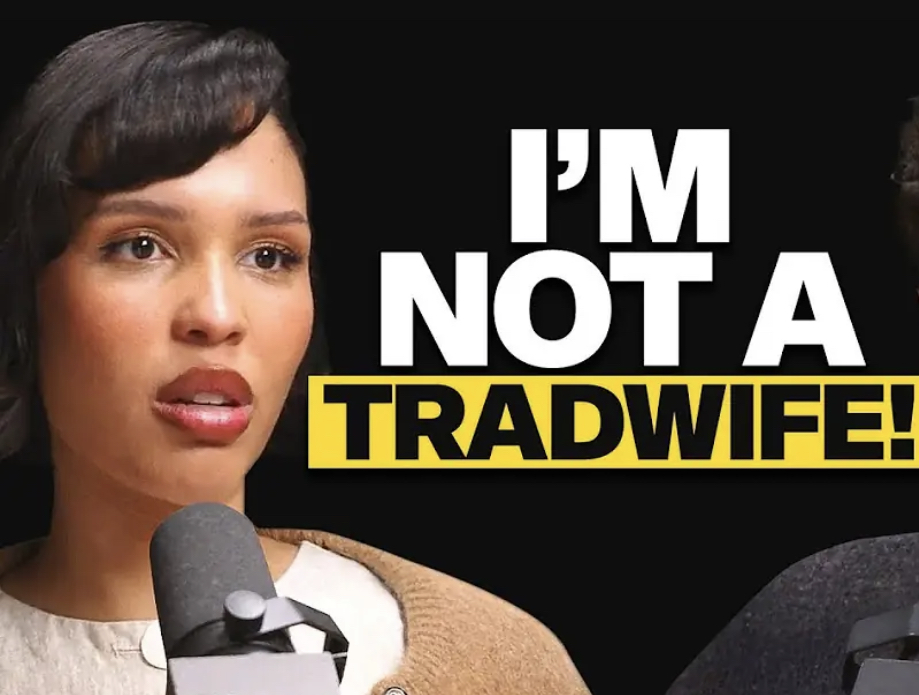
When she finally addressed the criticism, everyone focused on what she said.
I was paying attention to everything she didn't have to say.
Media literacy isn't just listening.
It's observation.
It's noticing that someone whose brand has been built around ultra-feminine dresses suddenly appears in jeans and a long-sleeved T-shirt.
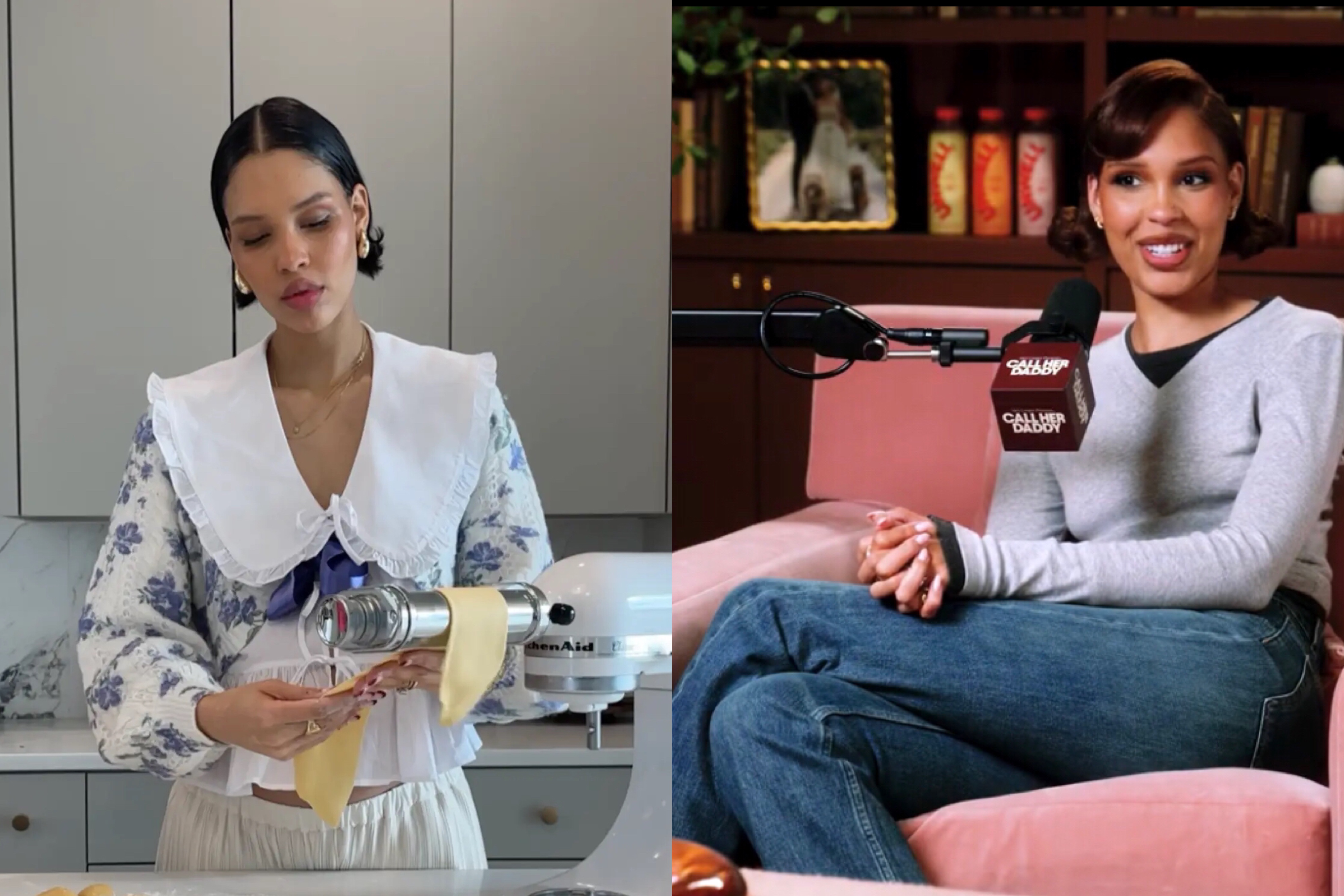
Noticing that the soft whisper disappears and is replaced by a confident, direct speaking voice.
None of those choices are accidental.
Presentation is part of the message.
Always.
For years, her content sold an image of effortless domesticity.
Not because she literally told viewers, "Quit your job."
She didn't have to.
The visuals did the talking.
That's the part people miss.
Images persuade just as effectively as words.
Maybe even more.
She didn't show the meetings.
She didn't show the business side.
She didn't show the nannies, the production, or the work that comes with running one of the biggest social media brands in the world.
What viewers saw was a beautiful woman making everything from scratch while holding a baby in an immaculate kitchen.
That image tells a story whether the creator narrates it or not.
Years later, when the conversation changes, it's easy to say, "I never told anyone to do that."
Technically, that's true.
But media literacy isn't only about listening to what people say.
It's about asking what their content consistently communicates.
Which brings me to the defense that always seems to surface in these debates.
People have become obsessed with intention.
“She never said that.”
“You’re reading too much into it.”
That’s missing the point entirely.
Let's give someone every benefit of the doubt. Let's assume they genuinely had no idea their content could contribute to harmful messaging.
That still doesn't erase the harm.
"I didn't know" has never been a magic spell that makes consequences disappear.
If you accidentally break the law because you didn't know it existed, you're still the one who broke it.
Ignorance might explain what happened.
It doesn't undo what happened.
The same principle applies online.
If millions of people walk away from your content with the same harmful impression, eventually the conversation has to move beyond, "Well, I never literally said those words."
We're not talking about someone with fifty followers.
We're talking about people whose platforms reach millions.
People who build careers and fortunes on influencing culture.
If I discovered that millions of people believed I was promoting an ideology I fundamentally disagreed with, I wouldn't wait years to clear it up.
I'd address it immediately.
I'd be direct.
I'd say, "Absolutely not. That is not what I believe, and I don't want anyone using my platform to justify those ideas."
Because when your name becomes attached to harmful rhetoric, silence doesn't feel neutral.
It feels like plausible deniability.
And plausible deniability has become the internet's favorite escape hatch.
But media literacy exists precisely to close that hatch.
It asks us to look past the words that were spoken and pay attention to the message that was consistently delivered.
Because once you start noticing what is left unsaid, the story becomes much harder to deny.
About the Creator
Cindy🎀
Conversational true crime storyteller 🩸 | K-pop album reviews and 💿Poet on the side 📝
Enjoyed the story? Support the Creator.
Subscribe for free to receive all their stories in your feed.
Comments
There are no comments for this story
Be the first to respond and start the conversation.