
The Lord of the Rings
And the failings of nostalgia

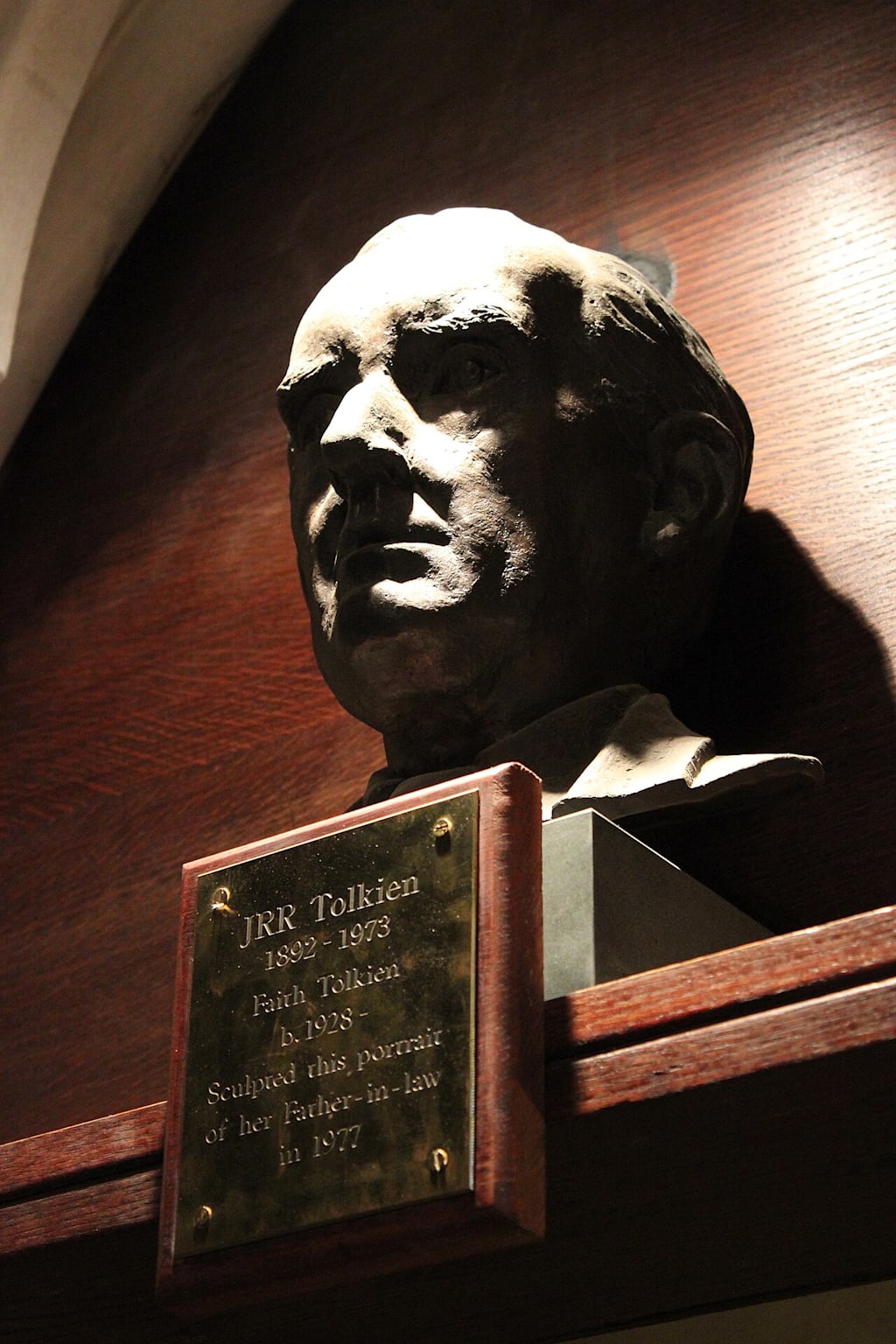
It’s nearly impossible to mention “fantasy” and not invite images or scenes from Tolkien’s works: conjured up to the forebrain like a puff of magic smoke from Gandalf’s pipe.
Tolkien achieved immortality through his written works, especially through his epic series “The Lord of the Rings”.
It’s only a small exaggeration to say that Tolkien literally birthed the modern fantasy genre— from mithril to balrogs to grandfatherly wizards, many elements that are seen as his inventions have found a place in a wealth of varied media, all inspired by the realm of Middle Earth.
Sometimes it’s almost an intrusion— both mental and social. How often have you seen people, trapped within the grips of one particular fandom take up their own metaphorical swords against the fandom of another?
Arguments pitting one story against another…. Silly!
There’s a territoriality that saturates many fan communities, driving people to associate with their preferred work as a sort of alliance— complete with loyalties that must be defended and dividing lines which must not be crossed.
Fan-boy combativeness.
This bizarrely competitive spirit is especially pervasive among fans of Tolkien’s works, who seem to hold Tolkien’s world as sacred and somehow worthy of strange, vehement keyboard crusades.
You can see this combativeness rear its ugly head whenever a fan of a “competing” fantasy work mentions their appreciation of that competing work within sight of a Tolkien nerd. And you’ll see it in special clarity whenever a fantasy author takes pride in their work that doesn’t seem to pay “proper” deference to Tolkien’s work.
George RR Martin stands as an obvious example.
I must be clear: I have never read Game of Thrones, nor have I watched the series. I started on book one back when it was becoming a sensation. At first I liked the white walker intro. I liked the dire wolves. I liked the Tyrion character… but I began to lose interest in Westeros fairly quickly when it began to feel sort of like a medieval soap opera. Then, I think around 50 pages in, I gave up completely… the final straw for me was the incest sub plot which felt clumsy and gratuitous.
Having no real knowledge of the lore of GRRM’s fictional world I can’t offer any valid critique of his work, though it seems obvious he must have a remarkable talent to captivate such a broad audience.
But why did I bring him up, in a critique of LotR?
Because GRRM once stated that one of his characters, (Jaime Lannister) could defeat one of Tolkien’s characters (Aragorn son of Arath0rn) in a 1v1 sword fight.
When GRRM said this, LotR fans across the globe were immediately and profoundly outraged.
I should have said, “some LotR fans…” because I’m a pretty big fan of the LotR universe, and I wasn’t even a little bit bothered by GRRM making that claim.
So it obviously wasn’t all of us.
But a particularly vocal subset did not hesitate at all to launch themselves into keyboard battles to defend the honor of a fictional character.
Honestly, that shit gave me the ick.
I mean… Tolkien wrote Aragorn as the hero of his story, not the hero of GRRM’s story. And while it came across as kinda weird and neck-beardy for GRRM to explicitly state that his character could beat a beloved fantasy hero from a totally separate universe, it’s pretty obvious that he has the authority to say whatever he wants about his own characters.
To me, the weirdness came from LotR fans speaking with just as much authority on a hypothetical match up about which we have literally zero authority.
Don’t get me wrong, there are LotR fans who know Aragorn’s abilities to the letter. I mean there are whole academic studies focused on Tolkien and his works.
Readers have poured over his lengthy texts, even going so far as to learn his fictional languages and major in “Tolkien Studies” at the collegiate level.
Yes, that’s a real thing.
Thing is, and forgive me for stating the obvious but, nobody alive today is JRR Tolkien.
So in a silly battle between two conflicting fictional universes, only one creator behind these works is still alive to make definitive statements on who would win a hypothetical duel between characters, and that’s GRRM. Nobody else has the authority to contest his claim from a hard and fast cannon standpoint. GRRM is the God of Westeros. If he says his character could mop the floor with Aragorn, we kind of have to trust him on that.
But ultimately who gives a fuck what he says because Westeros isn’t any more real than Middle Earth. Neither Lannister nor Aragorn can actually draw a sword, let alone swing it around, so I guess fans can just believe whatever they want or whatever gives them the most comfort.
But why do LotR fans get so… invested?
Well, highly dedicated fans will tell you that the universe which Tolkien dreamed up is so expansive and rich that it feels nearly biblical or at least: historical.
It’s easy to get lost in the Lore of the Rings.
That is to say: in Tolkien’s world the cultures and factions and mythic story arcs all blend together to create an overarching narrative which achieves a sort of mythos— often the expanded works are referred to as Tolkien’s “Legendarium”.
My first exposure was through reading the Hobbit as a little kid, a charming book which Tolkien wrote for his children, incorporating comforts and thrills which appeal to young listeners. This story feels like it was built from a collection of bedtime stories.
I then read The Lord of the Rings in middle school, and at the time I fell so in love with it that I lost interest in all other reading, thinking (and saying) that no other book could compare. I tried other fantasy mainstays, (Narnia, Redwall, Harry Potter, and The Wheel of Time) but I gave up each series well before their conclusions. To me these felt they lacked the depth that LotR offered.
That was my excuse anyhow. Nothing else captured my interest the same way Tolkien’s works did.
So I read his Silmarillion (a story which features the in universe legends and myths that make up the ancient history of Midlr Earth) and found myself… very bored.
I really only completed it out of a sense of duty, and a feeling that as a fan of LotR, I owed it to Tolkien to “like” everything he had ever written.
But I didn’t like it, not really.
Of course there were parts I enjoyed. But…
Well.
The thing reads like a history text book. Or like a sacred text. When I turned each page, that didn’t feel anything like entertainment, it felt like academic research.
No fun!
But there are people, I suppose they are better fans than I, who swear by the Silmarillion— who see it as not only worthwhile but essential.
And as boring as I found it I will admit I was impressed by the by both the depth and scope of Tolkien's undertaking.
I mean, the guy invented a fully fleshed out history to supplement the stories he started for his kids.
What a writer! And what a dad.
I could never.
But he sure did.
He created a fictional world that inspired generations of writers, creators, and make-believers.
Ever play dungeons and dragons? Ever play a sword and sorcery based RPG?
Ever read or watch any other fantasy epics?
If you answered yes to any of those questions, please offer a moment of gratitude to Tolkien, as the literary grand-daddy to many of those pieces of entertainment.
To this day, Tolkien’s stories are the gold standard against which modern fantasy tales and wizardly stories are weighed.
Whether that comparison is invited or abhorred it is something we will surely continue to see.
GRRM may have the authority to declare his character an even better swordsman than Aragorn. But the fact that he felt the need to comment and compare his character to Aragorn kind of proves the point— a point which many a Tolkien fan has sighed: “Tolkien did that first.”
When it comes to literary mechanisms in the fantasy genre, Tolkien is sometimes blindly credited by fans, even for elements which he did not invent,
For example: if you were to head to a Tolkien fandom forum and mention JK Rowling’s invention of horcruxes I would fully expect some Tolkien fan to push their glasses higher up on their nose and tell you that actually the idea of a Dark Lord surviving his own bodily death by putting some of his soul into an artifact comes from Tolkien’s character Sauron putting some of his spirit into the One Ring… but this particular plot device definitely existed in folk tales and legends that existed long before Tolkien’s writing. Take for example the Slavic tales of Koschei the Deathless, which featured this sort magical immortality thing hundreds of years before the LotR was put to paper.
Of course it’s natural to celebrate a creative works originality, but no work exists in a vacuum.
It’s no secret that Tolkien himself drew direct inspiration from already existing stories, especially the Norse Volsung Saga, in which he held a scholarly interest. At Oxford he taught courses on these materials and he even penned a modern retelling of some of these stories: “The Legend of Sigurd and Gudrun”.
Of course, as a big fan of Tolkien’s works, I own a copy. Having read this title I can note significant similarities between these tales and Tolkien’s Legendarium: both narratives feature: dragon hoards and the theme of greed, elves and dwarves, cursed gold rings, grieving characters who seek their own demise in funeral pyres, a tone that emphasizes genealogy and generational trauma, orphans of royal blood who are raised by elves and who inherit shards of mythical swords belonging to their ancestors which must bow be reforged somewhere along their quest.
Now I’m not noting any of these similarities to accuse Tolkien of unoriginality.
I’m merely trying to emphasize the thought that all good stories draw on a knowledge base of preexisting tales or concepts, even though these are creatively spun and interwoven in ways that feel brand new.
So when people act like Tolkien invented wizards, elves, and dragons, that gives me pause. Especially if they condescend towards other fantasy authors or demean their works.
Of course there are many characters, cultures, and plot points in the LotR which are entirely original to Tolkien, but people dismissing modern takes on the fantasy genre as unoriginal because they use elements of story telling which are familiar because of Tolkien’s work is silly, considering just how much of Tolkien’s imagination came from stories that had already been told for centuries.
Still, we must give Tolkien his dues.
The man definitely had an expert knowledge in many Germanic and Norse mythologies and folktales— and he had a wealth of experience in his own life as a soldier, academic, and father. His real achievement was in dedicating his formidable talent as a thinker and a writer to invent a tale that feels almost as broad and cohesive as the real world.
Tolkien reinvented the concept of fairy stories— blended with folk legend— and made this genre accessible and entertaining for a wider, non academic, modern audience.
In so doing, he achieved his own sort of legend as a story teller, a status which guarantees the immortal legacy of his work.
Now, I say all of this quite deliberately, to declare I’m a big fan of the man’s work. I really am a big admirer of his, and have been since my childhood.
He was clearly a certain sort of genius, a master linguist, well learned and and dedicated to his craft.
His legacy is well earned, and I in no way intend to diminish his achievements in the field.
But what I’m about to say is going to rankle some of my fellow fans:
The Lord of the Rings is overrated.
I know! To Tolkien admirers this is blasphemy.
But… please meet me on these three basics: 1) no creative work is perfect, 2) we can love a particular work despite its imperfection, and 3) we are allowed to critique the flaws of a beloved work and this in no way dishonors the creator or diminishes their achievement.
Please bear these three basics in mind, and if you’ll allow me I’ll apply some critique to the first book I ever fell in love with: The Lord of the Rings.
Why do I say the LotR is overrated? Well this statement comes from me feeling at odds with the more diehard fans.
As much as I love Tolkien’s stories, I think it’s ridiculous and harmful to treat them or him as objects of worship.
I think fandom should be honest, and if it isn’t honest it’s just zealotry.
Maybe it’s possible to literally love everything about a creative work… but I kind of doubt it.
As a lover of the arts, especially the literary arts, I think it’s important to be honest with ourselves as far as the interplay between a creative work and ourselves as the recipients of these works.
In a way, speaking plainly and honestly about shortcomings, flaws, or even failings lends a greater authenticity and legitimacy to our appreciation of any given work.
Now, I’m not a zealot for the Lord of the Rings. It I used to be!
As I said before: I went through a period where I wouldn’t read anything else, because nothing seemed to measure up to Tolkien. At that time I hadn’t seen the flaws, my eyes were kinda glazed over and I guess I was in awe.
But the veneer of adoration seemed to crack when I read the Silmarillion.
Again, Tolkien’s undertaking in writing that piece was MASSIVE. But…. It was also pretty self-obsessed. Kind of the definition of masturbatory writing.
Like yeah, bro. We get it, you have the full genealogy of every character plotted out, so and so begot so and so and so on and so forth.
Ok?
Did any of that deep lore really need to be thought up, let alone published?
I felt like Tolkien really just lost himself in his own world, and I’m torn between admiring him for it and feeling a little repulsed by the degree to which he took his make believe so seriously.
After reading the Silmarillion I had such a sour taste in my mouth I kind of swore off fantasy all together and started reading horror.
I started where many people start: Stephen King’s stuff.
He made me feel things I’d never felt in any of Tolkien’s stories— a sense of pacing, a sense of darkness, a sense of wrongness and thrill.
His characters felt flawed and therefore more relatable and more real— less like legends or archetypes and more like humans.
For the first time since falling in love with the Lord of the Rings I realized there were other forms of writing out there that could deliver a different sort of depth.
Tolkien had lore depth, King had emotional depth.
At this point I still idolized Tolkien and felt a powerful sense of nostalgia for his stories and characters.
But:
I cursed myself for elevating Tolkien to the exclusion of other authors.
I wondered: what else was I missing!
I began to read a ton, and discovered some new favorites, especially Cormac McCarthy and James Baldwin.
Their writing held more grit, more terror, more social awareness, more realism.
And again, in my mind I still held Tolkien as a master of his craft.
When I had a son of my own, I decided to read The Hobbit and the Lord of the Rings aloud to him.
And…. He loved them!
He fell in love with them the same exact way I did, letting himself get lost in a deep lore world of magic and myth that ultimately felt pretty safe!
But me? As the reader?
Let’s just say I was very disappointed, not by Tolkien but by my memory of Tolkien.
I held him up in my mind as this literary god, and I held his stories as the ultimate— a sort of shimmering perfection.
But that’s because nostalgia carries a terrible distortion, it really goes far beyond rose tinted glasses.
I found LotR at the exact right age to adore it.
I reread it at the exact right age to wrinkle my nose and recoil from its sweetness.
Rereading as an adult with a harder, colder, and more realistic view of the world I found myself rolling my eyes every other page at the saccharine flavor of a fairytale that feels all too safe and rosy.
I know, Tolkien’s world has danger, evil, and monsters. Some characters die, others carry scars forever.
But the main characters are entirely noble. Their conflicts aren’t internal, they are resolved to do and be good.
For that matter, evil in the LotR is cartoonish, in its extremity. Two dimensional.
And there’s never any real fear that evil won’t be defeated. Tolkien’s whole narrative preaches the inevitability of good prevailing, because evil undoes itself.
That’s not the way of the world, here trillionaires exist and genocides go unchecked. Our dragons simply grow in power and wealth— while scumbag war profiteers have the audacity to name their dark tech companies after Tolkien’s inventions (Palantir, Anduril, etc.)
But my critique isn’t all the heady cloud of ideological disconnect.
I’ll end this critique by saying :
Back when I read Tolkien’s stories aloud to my son, I had to skip all the poems because I found them unbearable.
What used to resonate with me, now falls flat.
One of the top comments on that video is a comparison between LotR and Harry Potter!
It’s all make believe, and what resonates with one doesn’t have to resonate with another.
About the Creator
Sam Spinelli
Trying to make real art the best I can, never Ai!
Help me write better! Critical feedback is welcome :)
reddit.com/u/tasteofhemlock
instagram.com/samspinelli29/
Enjoyed the story? Support the Creator.
Subscribe for free to receive all their stories in your feed. You could also become a paid subscriber, letting them know you appreciate their work.
Comments
There are no comments for this story
Be the first to respond and start the conversation.