
The architecture of tension
Between love and obligation

The story never fails in the middle.
That would be easier.
People understand collapse when it looks like collapse. A weak ending. Flat dialogue. Characters who stop breathing on the page. But this story does not break cleanly enough to diagnose. It lingers. It watches. It keeps becoming more alive the closer I get to abandoning it.
Which is probably the real issue.
The working title changes constantly. The Absence of Touch. What Stayed. The Hunter. Once, briefly, Obligations. That last one frightened me enough to close the document for nearly four months.
Because the story is not actually about romance.
It only wears romance the way some women wear perfume over smoke.
The visible plot is simple enough: a woman spends years almost loving someone she can never fully have. Not because either of them are technically unavailable. That would make the story cleaner. Easier. This is worse than that.
They are attainable in theory.
Just not survivable in reality.
He enters her life quietly. No dramatic collision. No cinematic recognition. He simply remains. Steady in a way that begins reorganizing the emotional climate around him. He notices things. The exhaustion in her shoulders. The way she stops speaking when overwhelmed. When she is lying about being fine.
Especially that.
And because he notices, she begins noticing him noticing.
That is where the story starts becoming dangerous.
Nothing truly happens between them for most of the novel. This is intentional and also the reason it refuses to finish. Modern stories rely too heavily on consummation, as though desire loses value unless someone eventually removes clothing beneath emotionally significant lighting.
But the power here was always in the lingering.
The almost.
The unbearable length of restraint.
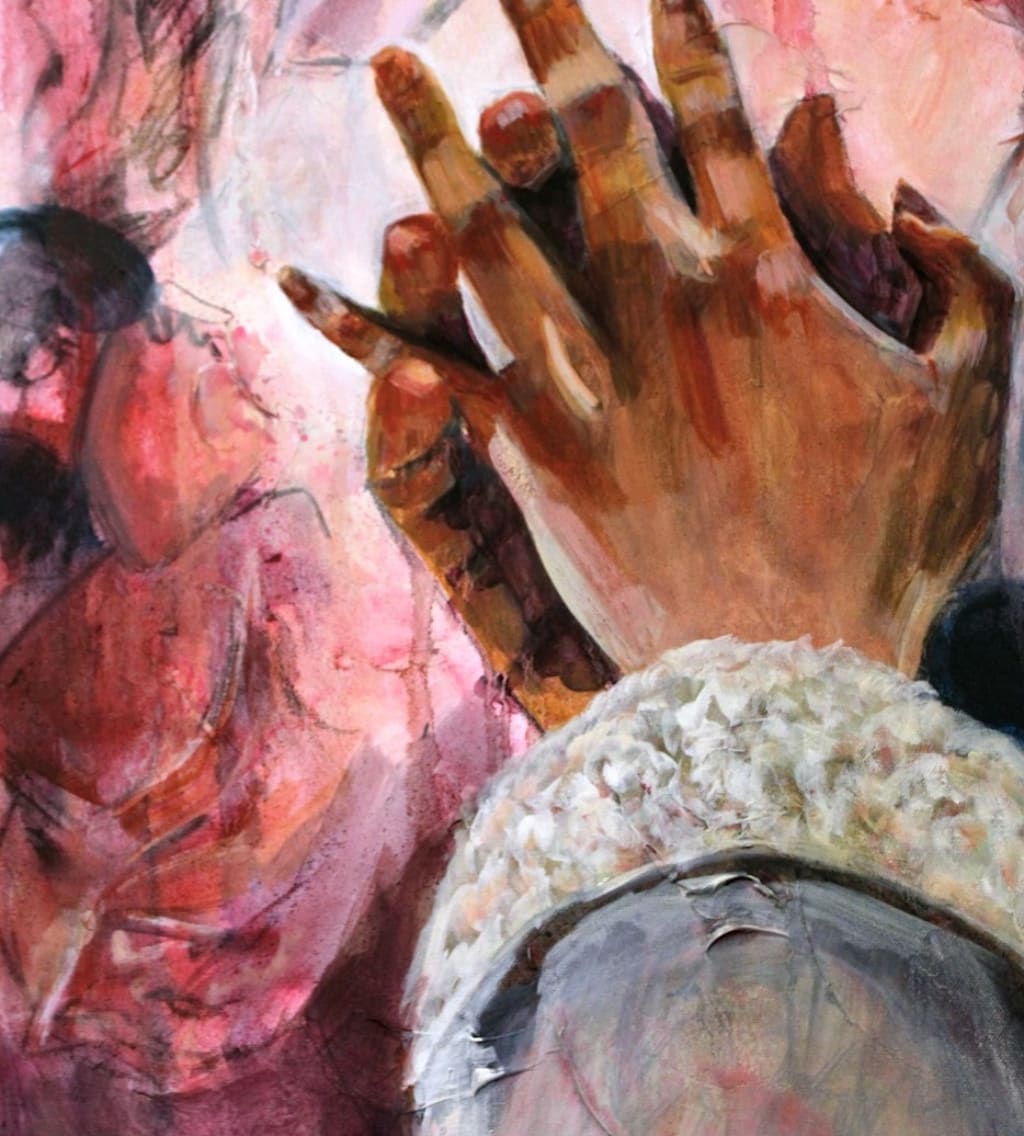
He fixes things around her house sometimes. Gates. Broken latches. A trailer light once. Always with the same quiet focus that makes her irrationally aware of his hands. She feeds him coffee because hospitality is safer than honesty. Their conversations drift too long. Pause too heavily. Every interaction feels accidentally intimate in ways neither of them directly acknowledges.
At one point, he reaches past her to grab something from a shelf and says “Sorry” softly against the side of her hair without actually touching her.
That moment currently occupies eleven pages.
Which I realize sounds insane until I explain that the story operates almost entirely on emotional pressure instead of action.
The tension is the action.
That is also why the story will probably never fully come together.
Because I cannot convince myself the ending matters as much as the wanting.
Wanting is alive.
Attainment is logistical.
The deeper truth underneath the story is one I do not entirely know how to write without accidentally confessing too much about myself:
obligations disguised as love tend to last longer than love itself.
The woman understands this instinctively because obligation built most of her emotional vocabulary before tenderness ever arrived cleanly enough to trust. She learned early that people stayed when they needed something from you. Stability. Help. Caretaking. Silence. Understanding.
Need is measurable.
Need has chores attached to it.
Need survives exhaustion because somebody still has to feed the animals, answer the phone, clean the kitchen, hold the family together while everyone else falls apart privately.
Love is less reliable.
Love disappears.
Obligation lingers.
So when this man enters her life and asks for nothing from her except presence, the entire structure of the story destabilizes. Not because he rescues her. He does not. The story is careful about that. Rescue narratives are usually just dependency wearing prettier language.
No, the danger is that he sees her outside of usefulness.
And she does not know how to survive being seen that gently.
There is a scene midway through the draft where they stand outside after everyone else has gone inside for the night. Nothing happens. Literally nothing. He leans against a truck. She talks about weather because she cannot tolerate the silence anymore. Somewhere nearby a screen door closes. He looks at her for one second too long before saying, “You don’t always have to carry everything yourself.”
That line destroyed the entire manuscript for me.
Because after that, every version of the story became dishonest.
If she lets herself move toward him fully, the tension dies. The story loses the ache that made it worth writing in the first place. But if she continues refusing him forever, readers assume the point is tragedy.
It is not tragedy.
It is recognition.
Recognition stretched so tightly it becomes almost erotic.
That is the actual engine of the story.
Not touch.
Awareness.
The feeling of being emotionally approached by someone patient enough not to force arrival.
I think that is why the manuscript remains unfinished. Because every possible ending feels smaller than the longing itself. Smaller than the suspended moment before something happens. Smaller than his hand resting near hers on a truck console while neither of them moves for reasons both obvious and impossible to explain aloud.
The story keeps circling the same question without answering it:
What if the most powerful part of love is not possession, but permission?
Permission to linger.
Permission to remain unfinished inside another person.
Permission to be seen without immediately being consumed.
Every draft eventually dissolves into atmosphere. Weather gathering over fields. Her standing at the sink rereading a text that says almost nothing. Him arriving to help with something that technically does not require helping. Tension moving slowly through the house like heat before a storm.
At some point I realized the story was no longer about whether they would touch.
It was about how long human beings can survive wanting something they suspect would alter them permanently if it ever fully arrived.
I still do not know the answer.
Neither do they.
So the story remains there instead.
Breathing quietly.
Half-finished and feverish.
Like a porch light left on for someone who may never actually come up the drive, but who has already changed the house simply by being expected.
About the Creator
Taylor Ward
From a small town, I find joy and grace in my trauma and difficulties. My life, shaped by loss and adversity, fuels my creativity. Each piece written over period in my life, one unlike the last. These words sometimes my only emotion.
Enjoyed the story? Support the Creator.
Subscribe for free to receive all their stories in your feed.
Comments
There are no comments for this story
Be the first to respond and start the conversation.