Screenplay
Stranger Things Season 5, Episode 4— Review & Analysis
Episode 4 is one of the most psychological episodes of the season. Every character is fighting not only monsters, but also their own fears, memories, and inner worlds. Through Will and Max especially, the show explores a powerful theme:
By Ceyda Uztosun11 months ago in Critique
Stranger Things Season 5, Episode 3— Review & Analysis
Episode 3 builds the emotional core of the season. The show focuses on vulnerable children, parents carrying old guilt, and the thin line between what is seen and what is hidden. This episode develops both the characters and the growing danger in a very balanced way.
By Ceyda Uztosun11 months ago in Critique
Stranger Things Season 5, Episode 2 — Review & Analysis
1. Opening Scene & Immediate Tension Episode 2 starts with a pretty wild moment: the Demogorgon finally shows itself to Mrs. Wheeler, and she realizes that Holly wasn’t just imagining things. The scene is loud, chaotic, and honestly more emotional than I expected.
By Ceyda Uztosun11 months ago in Critique
Stranger Things Season 5, Episode 1 — Review & Analysis
1. Opening & Atmosphere The season opens with a nostalgic scene: Will, the Demogorgon, and the iconic “Should I Stay or Should I Go”… It’s a direct callback to Season 1. Right after that, the breakfast scene brings back Hawkins’ familiar warmth. But the calm doesn’t last long; the town is completely sealed off and under military control.
By Ceyda Uztosun11 months ago in Critique
The Sequel Stumbles (But does not Falter)
Jon M. Chu's conclusion to his ambitious two-part adaptation of the Broadway phenomenon arrives with considerable fanfare but delivers decidedly mixed results. Released on November 21, 2025, "Wicked: For Good" runs 2 hours and 17 minutes and picks up immediately where its predecessor left off, following Elphaba's exile and Glinda's ascension to Ozian celebrity. While the film has proven commercially successful—opening to $150 million domestically and setting a record for Broadway adaptations—the critical consensus suggests a marked decline from the original's magic.
By Parsley Rose 11 months ago in Critique
What Mel Gibson’s Apocalypto Really Reveals About Women’s Struggles in Islamic Cultures
You watched Apocalypto (2006) by Mel Gibson. On the surface, it is a story of tribal conflict, rituals, and choices that don’t feel like choices at all. But now imagine that the entire narrative is a metaphor for your own internal understanding of how the world works — where every location represents a feeling (danger, safety, comfort, trust, anxiety, calm, horror), and every character embodies one facet of your personality (what you believe in, how you think rationally, how you act, what dominates you internally, how you doubt, how you fear, how you elevate yourself).
By monkey_floor11 months ago in Critique
Report on the Rumor of a Fire at the Grand Egyptian Museum
Report on the Rumor of a Fire at the Grand Egyptian Museum In recent days, news spread rapidly claiming that a major fire had broken out at the Grand Egyptian Museum, located near the Giza Pyramids. These reports caused widespread concern across media platforms and social networks. However, official authorities later confirmed that these stories were false and that the museum remains fully operational, with no incidents reported. This report explores what actually happened, how the authorities handled the rumors, and why verifying news before sharing it is essential. When the rumor first began to circulate, social media platforms were flooded with photos and videos allegedly showing flames and smoke rising from the museum’s roof. Some posts claimed that valuable artifacts had been damaged, while others suggested that the supposed fire had delayed the museum’s official opening. These images caused panic among Egyptians and archaeology enthusiasts worldwide, as the museum is considered one of the most significant cultural projects of the 21st century. Within hours, the responsible authorities released official statements denying the claims and clarifying that the circulating images were either fabricated or taken from unrelated, older incidents. Officials emphasized that the museum’s safety and security systems operate around the clock and that its advanced fire protection technology functions efficiently. They also confirmed that all archaeological artifacts are completely safe and that no part of the building suffered any harm. Despite the official denial, the rumor continued to circulate on some pages for a while, prompting many people to question why such false news spreads so easily. Media experts suggest that the rapid spread of misinformation today is often driven by artificial intelligence tools capable of generating highly realistic fake images and videos. They note that people are naturally drawn to shocking or emotional stories and may share them impulsively without verifying their authenticity. Meanwhile, staff members at the Grand Egyptian Museum explained that the facility is equipped with one of the most advanced fire detection and suppression systems in the region, as well as a detailed emergency response plan. The entire site is under constant surveillance through modern camera systems, making it virtually impossible for any fire to occur without being immediately detected and contained. It is worth noting that this is not the first time such rumors have appeared. Back in 2018, a small incident occurred during the museum’s construction phase when some flammable materials caught fire in an external work area. The minor blaze was quickly extinguished without any injuries or damage to the structure or artifacts. Experts believe that images from that old event were later reused and falsely presented online as recent evidence of a new fire. The Grand Egyptian Museum is one of the largest museums in the world dedicated to ancient Egyptian civilization. It houses more than one hundred thousand artifacts, including the complete collection of the young pharaoh Tutankhamun. The museum also symbolizes international collaboration between Egypt and various global partners in the fields of culture and archaeology. Consequently, any rumor concerning this monumental institution attracts significant local and international attention. This incident highlights the critical importance of media literacy and public awareness. False news can harm a nation’s reputation, disrupt public confidence, and even affect tourism—a key sector that relies heavily on trust and stability. When fake stories about major cultural institutions spread, they can mislead the public and undermine the credibility of official communication channels. For this reason, both citizens and media organizations must work together to combat misinformation by sharing only verified and credible information. Fact-checking should always be the first step before reposting or commenting on any trending story, especially those related to national heritage or public safety. Only through collective responsibility can societies protect the truth and preserve their cultural image before the world. In conclusion, the reports claiming that a fire occurred at the Grand Egyptian Museum were entirely false. The museum has not experienced any fire or damage in recent times and continues its preparations to become one of the most important museums globally, showcasing Egypt’s ancient history through cutting-edge technology. This incident serves as a powerful reminder of the dangers of misinformation and the need for vigilance and verification in the digital age.
By America today 12 months ago in Critique
The Man on Fire: A Story of Love, Sacrifice and Redemption
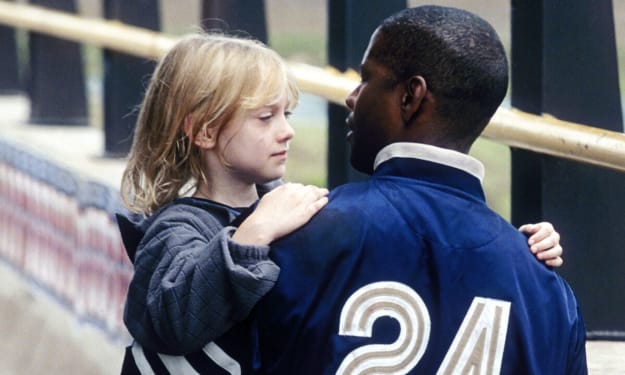
The Man on Fire, released in 2004 by Tony Scott and starring Denzel Washington, is much more than just an action film. It is a poignant dive into the twists and turns of the human soul, where violence mixes with raw emotion and redemption takes shape in the simplest gestures. But at the heart of this gripping thriller, what stands out above all is the unique relationship that develops between bodyguard Creasy and young Pita, a kidnapped girl. Creasy, this solitary character, bruised by life, is initially presented as a cold, distant, almost irreducible man. A former CIA agent, he has left behind a dark past and withdrawn into himself, like a suit of armor, with obvious resignation. His heart seems to have been destroyed by the horrors of the world and he hides it behind an apparent indifference. But Pita, this little girl full of life and innocence, will succeed where everyone else has failed: she will give him back the will to live. There is something deeply human about this relationship. At first, Pita seems like just a mission for Creasy. He is paid to protect her — it is a business. But as the days go by, a sincere, almost familial bond develops between them. Creasy begins to smile, little by little, something he has not done in a long time. Pita offers him the most precious thing: a reason to fight, a reason to feel, a reason to love again.The film beautifully plays with this contrast between Creasy's coldness and Pita's warmth. With each smile from the girl, with each burst of laughter, Creasy becomes a little more human. The moments shared between them are not only moving, they are also disarmingly simple. Creasy is not an indestructible superhero — he is a man who, through contact with Pita's innocence and joy of life, begins to rediscover his humanity. It is in this dynamic that The Man on Fire finds its strength and beauty — in showing how an encounter, however improbable, can turn a life upside down. But as is often the case in such stories, this development is doomed to inevitable tragedy. The film's end is marked by a sacrifice, the Creasy's. Faced with Pita's desperate situation, whose fate is sealed by a ruthless criminal group, Creasy, true to his role as protector, is willing to give his all. In a final act of courage, he chooses to sacrifice himself so that Pita can be reunited with her mother. His sacrifice is more than just a heroic act. It symbolizes the character's redemption, the cleansing of his sins. Creasy dies but in death, he finds peace, having done everything in his power to give this little girl a chance at a better life. This sacrifice is all the more poignant because it is motivated by love but also by the realization of the importance of life. Through Pita, Creasy realizes that life is not just about violence and revenge but about moments of grace, tenderness and hope. It was Pita who showed him what life was really about. It was she who awakened him, who pushed him to believe again that there was something beautiful in this devastated world. The final scene, where Creasy dies, his eyes full of peace, is all the more heartbreaking because he has achieved a form of redemption. He has given Pita back not only her freedom, but also a part of himself that he had lost. The richness of this film also lies in its underlying message: life, however broken, can be repaired through acts of love and sacrifice. In a world where selfishness and violence seem to dominate, The Man on Fire reminds us that hope, compassion, and the ability to sacrifice for others remain fundamental human values. Creasy, despite his violent past, becomes an example of redemption through his ultimate act of sacrifice for a person he didn't know for long but whom he learns to love deeply. Finally, Denzel Washington's masterful performance gives the film undeniable emotional power. His performance not only impresses with action but also touches the heart, revealing the many facets of a man who, through the love of a child, manages to rise from the ashes. The film reminds us that, even in the darkest moments, a spark of light can change the course of a life.The Man on Fire is not just a gripping action film — it is an emotional and human exploration of sacrifice, redemption and love. Creasy and Pita's relationship reminds us that sometimes it is the smallest things — a smile, a gesture of tenderness — that can mend a broken heart. And in a world too often marked by violence, this message of hope and reconciliation is needed more than ever.
By Baptiste Monnet12 months ago in Critique
I rewatched Twilight: Breaking Dawn Part 2
The Twilight Saga: Breaking Dawn Part 2 (2012) serves as the conclusion to the massively popular franchise based on Stephenie Meyer's novels. Directed by Bill Condon, the film attempts to provide closure to the supernatural romance while delivering the spectacle audiences expected from a franchise finale. However, its execution reveals both the strengths and significant weaknesses that defined the series.
By Parsley Rose about a year ago in Critique