Manuscript
Countdown to Pearl Harbor: The Twelve Days To The Attack
Countdown to Pearl Harbor: The Twelve Days To The Attack by Steve Twomey I really wasn’t expecting much of this read; I grabbed it while I was at Pearl Harbor because how could I not get a book while I was there?
By Matthew J. Fromm10 months ago in Critique
Why Capitalism is not a Form of Government
Hey guys, welcome back to another educational rant with minimal research involved. Today's topic is about how there are no true forms of government besides anarchy and capitalism, and why it works so well. This topic is also an example of a much more basic concept of how organized systems maintain themselves long term.
By Talented Jester11 months ago in Critique
AI Usage Controversy. AI-Generated.
Disclaimers: 1. This article is written in cooperation with an AI tool, particularly Gemini. Although this article is not entirely written by a person. It was still fact checked and revised by one. Every sentence and idea is an intended part of this article even if the original content was not made by the author.
By Talented Jester11 months ago in Critique
I rewatched Twilight: Breaking Dawn Part 2
The Twilight Saga: Breaking Dawn Part 2 (2012) serves as the conclusion to the massively popular franchise based on Stephenie Meyer's novels. Directed by Bill Condon, the film attempts to provide closure to the supernatural romance while delivering the spectacle audiences expected from a franchise finale. However, its execution reveals both the strengths and significant weaknesses that defined the series.
By Parsley Rose about a year ago in Critique
An Honest Review on "Mom"
I recently finished watching "Mom" for the second time, and if anything, I appreciated it even more on the rewatch. This show masterfully balances laugh-out-loud comedy with genuine emotional depth, making it one of those rare sitcoms that can make you cry and laugh within the same episode.
By Parsley Rose about a year ago in Critique
Finally Sat Down to Watch Midsommar (2019)
Ari Aster's 2019 film Midsommar represents an ambitious and polarizing entry in contemporary horror cinema. Following his acclaimed debut *Hereditary*, Aster crafts a folk horror experience that deliberately inverts the genre's visual conventions while exploring the dissolution of a toxic relationship against the backdrop of a Swedish pagan festival. The result is a film that is simultaneously beautiful and disturbing, meditative and visceral, earning both ardent admirers and vocal detractors.
By Parsley Rose about a year ago in Critique
Beauty in Black Season 2: Power, Money, and Chaos Are Back on September 11, 2025!
Okay, friends, grab your snacks and a comfy chair, because Beauty in Black Season 2 is almost here, on September 11, on Netflix. It promises even more drama, intrigue, and jaw-dropping moves than the first season. Yes, like before, there’s plenty of time to soak in the chaos, bringing the signature mix of charm and edge.
By Sara Yahiaabout a year ago in Critique
The Gift of Insight
The Gift of Insight How Constructive Critique Builds Growth, Confidence, and Mastery Sasha adjusted the light above her easel, squinting at the canvas that had consumed her weekend. The colors felt right. The brushstrokes were bold. Still, something about the composition felt... off. Art school had taught her technique. What it hadn't prepared her for was the silence that followed when she finished a piece. Friends gave her polite praise. Her social media posts gathered likes, but no substance. What Sasha needed wasn’t approval—it was perspective. So when her mentor, Miguel, offered to give her feedback, she hesitated for only a second before accepting. Miguel had a reputation. He wasn’t cruel, but he was honest. Students often joked that a Miguel critique left you thinking harder than an exam. But those same students returned to him again and again, their skills sharper each time. They met in his small studio the following afternoon. Sasha leaned her canvas against a brick wall, trying not to fidget. Miguel looked at the painting for a long moment. Then he smiled. “You’ve got great energy here,” he began. “Your use of contrast draws me in, and that layering in the background—it’s working well.” Sasha exhaled. Praise felt good. But she waited, sensing more was coming. “Now,” he continued, “can I show you something?” She nodded. Miguel picked up a small mirror and held it in front of the painting. “When you look at your piece in reverse like this, do you notice how the left side feels heavier?” Sasha tilted her head. He was right. The composition, once vibrant in her eyes, now seemed lopsided. She had been so close to it, so invested, that she hadn’t seen the imbalance. “That’s one of the hardest things about creating,” Miguel said gently. “We get attached. But critique helps us step outside ourselves. It’s not about tearing down—it’s about seeing clearer.” As they talked through other parts of the piece—color temperature, line direction, emotional tone—Sasha began to scribble notes. Miguel never told her what to fix. He asked questions, offered observations, and left space for her to make her own decisions. By the end of the session, Sasha didn’t feel defeated. She felt empowered. --- The next few weeks, she made a point to invite more critique—from peers, professors, even her younger brother, who, to her surprise, had a sharp eye for visual storytelling. What changed wasn’t just her art—it was her attitude. She began to separate herself from her work. A critique wasn’t a personal attack; it was a generous offering. Each comment, even the ones that stung at first, carried insight. When given respectfully and received openly, critique became a conversation—one that made her better. One afternoon, she watched a fellow student, Cara, struggle through a harsh group review. The feedback, though valid, had been blunt. Cara looked deflated, her voice tight as she defended each choice. Sasha waited until the session ended, then approached her. “I’ve been there,” she said gently. “Want to grab coffee and talk through your piece again? Just you and me?” Cara agreed, and over warm mugs and quiet conversation, Sasha offered the same approach Miguel had used with her—encouragement first, then thoughtful questions, observations, and space to reflect. When they returned to the studio later that week, Cara’s piece had transformed. “You helped me actually hear the critique,” she told Sasha. “I didn’t feel like I had to defend myself. I felt like I could explore.” --- By the end of the semester, Sasha’s work had reached a new level of depth and clarity. She still had doubts—what artist didn’t?—but now she welcomed feedback. She even started a small critique circle, built on trust, kindness, and curiosity. What she had feared—judgment, rejection—had turned out to be the very thing that pushed her forward. Critique, she realized, was not a test of worth. It was a tool for growth. Like pruning a plant, it might seem harsh in the moment, but it made room for stronger, fuller bloom. And in that spirit, every time she picked up a brush, she did so not with fear, but with confidence—knowing that insight, when given with care and received with openness, was one of the greatest gifts any creator could receive.
By Muhammad Saad about a year ago in Critique
Tunisian Man Sentenced to Six Months in Jail for Refusing to Listen to President's Speech
In a development that has sparked serious concerns among human rights activists and international observers, a Tunisian citizen has been sentenced to six months in prison for refusing to listen to a televised speech by President Kais Saied. The unusual and controversial sentence, handed down by a local court, has once again brought Tunisia's declining state of freedom of expression under the spotlight. According to the citizen’s lawyer, Adel Saghir, the case began when the man, already incarcerated on a separate charge, declined to watch or listen to a presidential address broadcasted on national television. This occurred within a local prison facility, during a news bulletin that featured live coverage of President Saied's activities. The Case and the Charges The incident came to light when one of the man’s fellow inmates reported his refusal to prison authorities. An investigation followed, and the prisoner was later charged under Article 67 of the Tunisian Penal Code, which traditionally deals with offenses against the head of state. However, perhaps sensing the political sensitivity of invoking this article, the court eventually dropped the original charge and sentenced him under public decency laws instead. According to the court's reasoning, refusing to listen to the president’s speech amounted to “indecent behavior in public” and “setting a poor example for society.” The verdict, Saghir claims, was politically motivated, despite attempts to frame it as a non-political issue. The modification of charges was allegedly done to avoid labeling the case as one of political repression or a direct attack on freedom of thought. > “The authorities did not want this to be seen as a political punishment, so they shifted the charge to a vague violation of public decency,” said the lawyer. “But everyone knows the real issue was the refusal to comply with what they consider a show of loyalty to the president.” What Happened in Prison? The man was reportedly in a provincial detention facility, where he was serving time for a prior, unrelated case that had recently concluded. During the airing of the president’s speech, when asked to watch the broadcast, he refused, saying he had no interest in the president’s activities or speeches. It is also reported that he may have made disrespectful comments about the president during that time, which further fueled the legal response. Human rights NGO Tunisia League for Human Rights confirmed that the man had completed his sentence in the earlier case and was on the verge of release. His family had been preparing for his return home. However, this new charge blocked his release, resulting in yet another prison term. According to the NGO, “The man did not commit any criminal offense in a conventional sense. He merely expressed disinterest in a political figure’s speech. The decision to imprison him again is not only unjust—it is alarming.” Broader Context: Tunisia's Shrinking Civic Space Since his controversial power grab in 2021, President Kais Saied has been widely criticized for eroding democratic norms in Tunisia. He dissolved parliament, took control of the judiciary, sidelined political opponents, and passed a new constitution via referendum—moves seen by critics as steering Tunisia toward authoritarianism. Many Tunisian and international observers believe that this latest incident is emblematic of a broader pattern of silencing dissent. Journalists, civil society leaders, and now even ordinary citizens are increasingly finding themselves under threat for expressing views that do not align with the official narrative. > “This is not just about one man refusing to watch a TV broadcast,” said a regional expert on North African politics. “This is about a regime that sees any form of indifference or criticism as a threat to its legitimacy.” A Deal with Italy and Political Anger There is an additional layer to this story. The individual reportedly expressed anger toward President Saied over a recent agreement signed with Italy, which involves cooperation on the deportation of undocumented migrants. The man had previously been deported from Italy after residing there illegally. However, under the new agreement, returning to Tunisia may carry criminal consequences, further complicating the lives of many former Tunisian migrants. This agreement, hailed by some European governments as a breakthrough in controlling migration, has faced criticism inside Tunisia for being exploitative and dangerous for returning citizens. The convicted man’s comments against the president, as per his lawyer, were partly fueled by this personal frustration and political disagreement. International Reaction and Human Rights Concerns Human rights organizations in Tunisia and beyond are calling for the immediate release of the man and a re-evaluation of laws that criminalize nonconformity or dissent. They warn that such actions risk setting a dangerous precedent, where even silence or disinterest can become a punishable offense in an authoritarian system. > “Punishing someone for not watching the president’s speech is a gross violation of personal liberty,” said a representative from Amnesty International. “This is not just repression—it’s absurdity, weaponized.” So far, there has been no official response from the Tunisian presidency or the Ministry of Justice regarding the incident. --- Conclusion This case highlights the increasing crackdown on freedom of expression and political neutrality in Tunisia. What may seem like a minor act of protest—refusing to listen to a televised speech—has led to a six-month prison sentence, underlining the extent to which civic space in Tunisia has deteriorated. As international pressure builds, many are watching to see whether Tunisia will uphold basic human rights—or continue its descent into political repression cloaked under legal formalities.
By Ikram Ullahabout a year ago in Critique
🎼 Music: The Language That Speaks When Words Fail . AI-Generated.
Have you ever listened to a song and felt like it was telling your story—without a single word? Music is a universal language, but not in the way we usually think of language. It doesn’t rely on grammar or vocabulary. Instead, it uses rhythm, melody, harmony, and silence to speak directly to our emotions.
By The Yume Collectiveabout a year ago in Critique
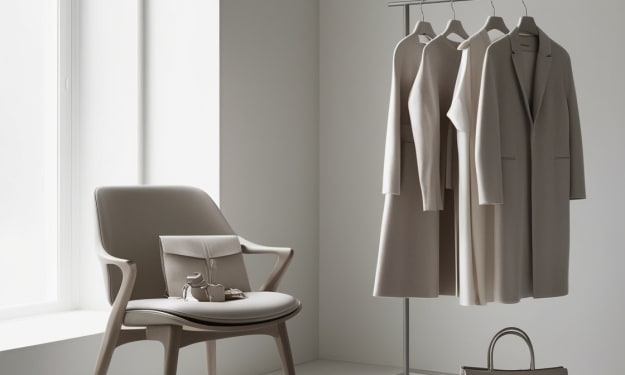
Why Everyone Suddenly Loves 'Quiet Luxury'—and Why It’s a Lie
In recent years, a new trend has quietly taken over the fashion and lifestyle world—something called “quiet luxury.” It’s become the buzzword on social media, the darling phrase in magazines, and a must-know term for influencers, designers, and shoppers alike. But what exactly is quiet luxury, and why has it gained such a sudden surge of popularity? More importantly, is it really what it claims to be, or is there something deeper beneath the polished surface?
By Muhammad Asimabout a year ago in Critique