Essay
Lingua ex machina
Peter Ayolov, Sofia University "St. Kliment Ohridski" Abstract This article examines the claim that language is not merely a product of human nature and evolutionary adaptation, but a force that, once constituted, begins to shape humans in its own image. Drawing on Elan Barenholtz’s Substack essay ‘Syntax is Dead! Long Live Syntax!’ and the University of Toronto discussion ‘The (Terrifying) Theory That Your Thoughts Were Never Your Own’, the text argues that language initially emerged as an adaptive coordination system but gradually detached from its biological origins through external memory technologies such as writing, print, audio, and video. With the advent of large language models, this autonomy becomes visible for the first time. Syntax appears not as an innate causal engine but as an emergent statistical shadow of predictive systems. Language, understood as an autogenerative informational system, now operates as a cultural and cognitive environment that produces meaning, belief, identity, and even metaphysical concepts such as God. In this sense, language does not reflect reality so much as organise it, creating human subjects through symbolic structures that precede intention and awareness.
By Peter Ayolov9 months ago in Critique
The African Diaspora and History of Rhetoric: Learning to Learn
"I don't see any American dream; I see an American nightmare." --Malcolm X, my hero When studying the history of rhetoric, many groups were excluded from participating in power and were used, abused, and written off as inferior. Even today African nations have not recovered from being exploited by European powers.
By SAMURAI SAM: Wild Wayne10 months ago in Critique
Catching Up
I know I have not been reading and commenting a lot these past couple weeks, but I have been reading and writing in my old-fashioned composition books and preparing some of those writings for here on Vocal. I have also been researching and writing my study books. I do have one wish for my subscribers here on Vocal.media.com and that is that everyone will have a great year. I do have a request and would like some follow-up on some of my older work and would you guys read or re-read my material and share your thoughts for I am thinking of putting together an anthology.
By Mark Graham10 months ago in Critique
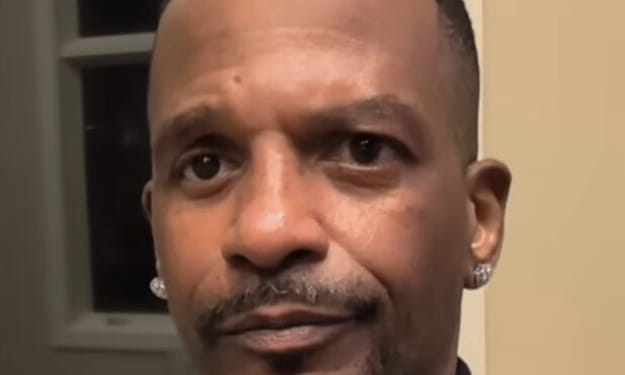
Charleston White Responds As Viral Report Suggests A Shooting Has Left Him In Critical Condition
In this age of fake news, poor AI generated content, and outlandish rumors, it’s hard to keep up with the truth. That’s why Charleston White declared his existence on social media.
By Skyler Saunders10 months ago in Critique
Nurses Strike in New York City Hospitals
**Nurses Strike in New York City Hospitals** A large-scale strike by nurses has taken place in New York City, drawing national attention to the challenges facing the healthcare system. Thousands of registered nurses working in major hospitals across the city decided to walk off the job after negotiations with hospital management failed to reach an agreement. The strike reflects deep concerns about working conditions, patient safety, and fair treatment for healthcare professionals who are considered the backbone of hospital care. The action is being described as one of the most significant labor movements in New York’s healthcare sector in recent years. Nurses argue that the issues they are fighting for are not only about their own rights, but also about the quality of care patients receive every day inside hospitals. **Why Did Nurses in New York Go on Strike?** The main reason behind the strike is chronic understaffing in hospitals. Nurses say they are regularly assigned too many patients at once, making it difficult to provide safe and effective care. Overcrowded shifts increase the risk of medical errors, delays in treatment, and emotional and physical burnout among nurses. In addition to staffing issues, nurses are demanding better wages, stronger health benefits, and improved protections against workplace violence. Many nurses report facing verbal and physical abuse on the job without sufficient security or institutional support. They believe hospital administrations have ignored these problems for too long. **Which Hospitals Are Impacted by the Strike?** The strike affects several major private and nonprofit hospitals across New York City, including large medical centers in Manhattan and the Bronx. These hospitals serve millions of residents each year and play a critical role in emergency care, surgeries, and long-term treatment. While some hospitals reached agreements with nurses before the strike began, others were unable to do so, leading to widespread walkouts. Despite the strike, hospitals remain open and operational, though services may be limited in certain areas. **What Are Nurses Demanding in the New Contracts?** Nurses are calling for enforceable safe staffing ratios to ensure that each nurse is responsible for a manageable number of patients. They are also asking for fair salary increases that reflect inflation and the high cost of living in New York City. Another key demand is fully funded healthcare coverage, so nurses are not forced to sacrifice their own health while caring for others. Additionally, nurses want stronger workplace safety policies, including measures to prevent violence and protect staff during high-stress situations in emergency rooms and intensive care units. **How Are Hospitals Responding to the Strike?** Hospital administrators argue that they are committed to patient care and financial stability. To maintain operations during the strike, many hospitals have hired temporary nurses and agency staff. Hospital leaders claim that some union demands could create long-term financial strain, but they have expressed willingness to continue negotiations. Hospitals have also implemented contingency plans to prioritize emergency services and critical care, while postponing some non-urgent procedures. **Will Patients Be Affected by the Strike?** While hospitals remain open, patients may experience longer wait times, especially for non-emergency services. Elective surgeries and routine appointments may be delayed as hospitals focus on urgent and life-threatening cases. Emergency departments are still operating, and patients are encouraged to seek care when necessary. Healthcare officials stress that patient safety remains a priority, even as staffing challenges continue during the strike. **What Is the Government’s Role in the Situation?** State and city officials are monitoring the strike closely. Government leaders have emphasized the importance of reaching a fair agreement that protects both patients and healthcare workers. Emergency measures have been discussed to ensure hospitals have the resources needed to continue functioning safely while negotiations are ongoing. The strike has also renewed political discussions about staffing laws, labor rights, and the future of healthcare funding in New York. **How Long Could the Strike Last?** The duration of the strike is uncertain. It could end quickly if both sides reach a compromise, or it could continue if negotiations remain stalled. Previous nurse strikes in New York have lasted several days, but the scale of this action means its impact could be longer-lasting. Both nurses and hospital administrators have signaled that talks may continue, leaving open the possibility of a resolution. **What Does This Strike Mean for the Future of Healthcare?** The New York nurses strike highlights broader issues facing healthcare systems across the United States, including worker shortages, burnout, and rising costs. Many see the strike as a turning point that could lead to stronger protections for nurses and better standards of patient care. For New Yorkers, the strike is a reminder of the essential role nurses play in hospitals and the importance of addressing the challenges they face to ensure a safer, more effective healthcare system for everyone.
By America today 10 months ago in Critique
Angry People Click More: The Economics of Manufactured Dissent
(Ideas from the book The Economic Policy of Online Media: Manufacture of Dissent, Routledge, 2024) Abstract This article examines the formula ‘angry people click more’ as a core logic of contemporary online media and as a structural transformation of propaganda in the digital age. It argues that the defining feature of the current attention economy is not only the circulation of misinformation, but the systematic deployment of openly implausible claims designed to provoke moral outrage and sustain profitable engagement cycles. The analysis links Oxford’s 2025 Word of the Year ‘rage bait’ to earlier lexical markers of epistemic crisis such as ‘truthiness’ and ‘post-truth’, and situates this trajectory against the older ‘manufacture of consent’ model of Herman and Chomsky. While classical propaganda in totalitarian and mass-media systems sought ideological unity through censorship and the Big Lie, the emerging Propaganda 2.0 model, articulated by Peter Ayolov, monetises anger by manufacturing dissent and deliberately populating the public sphere with absurd, polarising narratives. The article interprets this dynamic through the allegories of ‘The Emperor’s New Clothes’ and Václav Havel’s greengrocer, showing how the move from fearful silence to permanent online rage changes both the psychology and political economy of propaganda. Drawing on Evgeny Morozov’s critique of fake-news moral panics, Frances Haugen’s disclosures about Facebook, and the documentary The Social Dilemma, it concludes that anger has become a tradable asset and that blatant lying has shifted from an authoritarian instrument of control to a market mechanism in a global ‘free trade in slogans’.
By Peter Ayolov10 months ago in Critique
Countdown to Pearl Harbor: The Twelve Days To The Attack
Countdown to Pearl Harbor: The Twelve Days To The Attack by Steve Twomey I really wasn’t expecting much of this read; I grabbed it while I was at Pearl Harbor because how could I not get a book while I was there?
By Matthew J. Fromm10 months ago in Critique
Understanding the P. Diddy Controversy and the 50 Cent Factor
For over three decades, the name Sean "Diddy" Combs was synonymous with the pinnacle of American success. From the glitz of the "White Parties" in the Hamptons to the chart-topping dominance of Bad Boy Records, Diddy wasn't just a mogul; he was a gatekeeper of culture. However, by 2025, the music industry’s most polished facade finally cracked. What followed was a legal and social collapse so comprehensive that it transformed a global icon into a cautionary tale of power, ego, and accountability.
By Teodor Monescu10 months ago in Critique
"Challengers" Movie Review
Challengers is a triumphantly sexy cinematic rollercoaster ride, too incredulously fun not to watch. Tashi Duncan is played by Zendaya, the exceptionally emotive young movie star. Matched against her are two gorgeously nerdy-looking young players, Mike Faist as Art Donaldson and Josh O’Conner as Patrick Zweig. All three have the blessing of great chemistry whenever they spar across screen. Alongside their star qualities are bouncing timelines, demonstrating a lifetime of flagrantly competitive choices that create a trail of wasted potential and misguided lust. Director Luca Guadagnino really knows how to make a graceful yet scandalous picture. Trent Reznor and Atticus Ross's EDM score intensifies the thrill of tennis and prideful characters up to an eleven. After watching Challengers multiple times, I am forced to argue that all sporting events should henceforth take place at a fist-pumping rave. When first hearing about this movie, I thought the entire plot had been offered up within the two-minute trailer. Two friends like a tennis star. Tennis star has a career-ending injury. Tennis star picks blonde boy, and brunette boy is angry. Audience members think they have digested the full ingredients of the film before getting their soles sticky from the theatre floor. Yet, this new-age masterpiece is anything but a simple meal.
By Spider Black10 months ago in Critique