Art
Microsoft Azure Globally Down
On July 30, 2024, at approximately 13:13 UTC, Microsoft Azure & Microsoft 365 reported a global outage affecting a subset of its services. The issue resulted in timeouts and difficulties connecting to various Azure services worldwide. Multiple engineering teams at Microsoft were promptly engaged to diagnose and resolve the issue. The company acknowledged the problem and provided updates on the Azure status page.
By Shine b john2 years ago in Critique
The Latest Updates on the Upcoming "Knives Out" Sequel: "Wake Up Dead Man"
Fans of the "Knives Out" series have been eagerly awaiting news on the next release, and the wait is finally over. The title for the new movie has been announced as "Wake Up Dead Man: A Knives Out Mystery," and it promises to bring back the charm and wit that the series is known for. With Daniel Craig reprising his role as the brilliant detective Benoit Blanc, the new film is set to feature an exciting cast and intriguing storyline.
By Horace Wasmore2 years ago in Critique
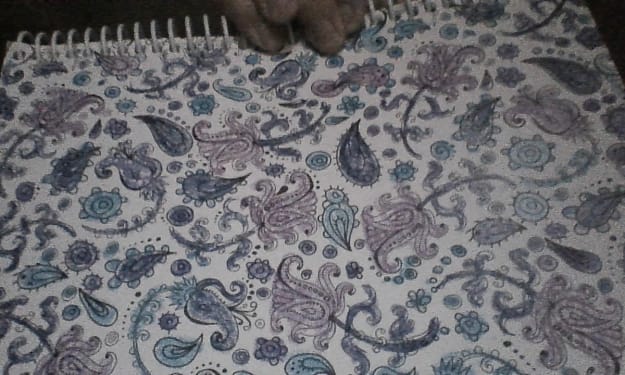
Paisley and Shapes
'Paisley and Shapes' is a color art of blues and purples. When I first saw this design, and I was not sure what I was going to do with it. I saw the circles and dots and what looked like little suns, and even the weird flowers, and it hit me shades of blues and some purple would look good and send thoughts of a cool or even a cold area. What do you think? Please share your comments.
By Mark Graham2 years ago in Critique
Fall
Here is a color art I entitled 'Fall' and I used crayons of autumnal colors of browns, reds, oranges, a little green since there are still some green at this time of year. I think I even put in some yellow. Fall is my favorite time of year and that is why I decided to 'color' this using fall colors for I was going to at the start depict a 'Spring' but for some reason I was thinking about something else that made me think Fall. Hope to see your comments and suggestions.
By Mark Graham2 years ago in Critique
Circle Flowers
Here is another crayon art piece that I stated above entitled 'Circle Flowers'. I used blues, green, pink, and a few other colors. The leaves are green that is the only way that I know these must be some sort of flower or flowers. I almost used my colored pencils and thought what if I colored each segment of each flower a different color, and then I thought that would be pretty but a lot of switching between colors. Also, I do not have that many different shades of colored pencils. Hope you like this one and please comment.
By Mark Graham2 years ago in Critique
Agricultural revolution
*The Great Transition: From Foraging to Agriculture* Welcome to the dawn of human history, where the journey of our species takes a significant turn. In this article, we'll explore the transition from foraging to agriculture, a shift that shaped the course of our societies, cultures, and relationship with the environment. *Foraging: The Early Days* Foraging, the primary source of food for early humans, involved gathering fruits, nuts, and grains, as well as hunting animals for protein. While this lifestyle had its challenges, fossil evidence suggests that foragers had healthier bones and teeth than agriculturalists. Additionally, foragers spent less time working and more time on art, music, and storytelling. *Agriculture: A New Way of Life* Agriculture, on the other hand, allowed for a controllable food supply and the ability to create food surpluses, which in turn supported the growth of cities and specialization of labor. However, agriculture also required significant environmental manipulation, such as irrigation and deforestation, and led to social changes like the emergence of patriarchy and inequality. *The Decision to Farm* Historians debate why humans chose to adopt agriculture, with theories ranging from population pressure to the desire for more food. Charles Darwin believed that agriculture was an accident, while others argue that it was a gradual process driven by the desire for more calories. *The Impact of Agriculture* Agriculture had a profound impact on human societies and the environment. It allowed for the growth of cities and the development of complex societies, but also led to environmental degradation, social inequality, and the emergence of diseases. Agriculture has had a profound impact on shaping the world as we know it today. Here are some ways in which agriculture has influenced the world: 1. Population Growth: Agriculture allowed for the production of surplus food, which in turn led to population growth and the expansion of cities. 2. Settlements and Civilizations: Agriculture enabled the establishment of permanent settlements, which eventually developed into complex societies and civilizations. 3. Social Hierarchy: Agriculture led to the emergence of social classes, with farmers, laborers, and landowners forming a new social hierarchy. 4. Trade and Commerce: Agricultural surpluses facilitated trade and commerce, connecting communities and cultures across regions. 5. Environmental Impact: Agriculture has significantly altered the natural environment through deforestation, irrigation, and land use changes. 6. Technology and Innovation: The need for more efficient farming practices drove technological innovations like the plow, irrigation systems, and crop rotation. 7. Cultural Developments: Agriculture influenced cultural practices, such as the development of festivals, rituals, and art related to farming and harvest cycles. 8. Economic Systems: Agriculture formed the basis of early economic systems, with agriculture-based economies eventually giving way to industrialization and globalization. 9. Political Structures: Agriculture influenced political structures, with agricultural societies often developing centralized governments to manage resources and infrastructure. 10. Food Security: Agriculture has played a critical role in ensuring food security, allowing societies to store and distribute food surpluses to mitigate famines and feed growing populations. agriculture has had far-reaching impacts on human societies, cultures, economies, and the environment, shaping the world as we know it today. *Conclusion* The transition from foraging to agriculture was a pivotal moment in human history, shaping the course of our societies, cultures, and relationship with the environment. By studying this period, we can gain insights into the processes that have shaped our world and the decisions that have irrevocably changed the course of human history. Join us next time as we explore the Indus River Valley civilization and the continued journey of human history.
By Ali bukhari2 years ago in Critique
Is Cybersecurity Boring or Fun? 🤔
In the realm of technology, the field of cybersecurity often sparks a lively debate: is it boring or fun? The answer to this question can vary wildly depending on one's interests, personality, and career aspirations. Let's delve into the different aspects of cybersecurity to better understand its appeal (or lack thereof).
By Tech Focus Pro2 years ago in Critique
Literature
What Makes Something Literary? The question of what makes a text literary has been debated by scholars and critics for centuries. While there is no straightforward answer, literary critics approach this question in different ways. In this article, we will explore the three big factors that determine what makes a text literary. Literature with a capital L vs. literature with a small l The term "literature" originates from Latin and means "the use of letters" or "writing." However, when it entered Romance languages, it took on an additional meaning - "knowledge acquired from reading or studying books." This definition suggests that literary texts provide knowledge and are worth studying. But what texts are worth studying? Canonicity One way to determine literary texts is through canonicity. A work becomes canonical when cultural institutions like schools, universities, or prize committees classify it as a work of lasting artistic or cultural merit. However, this approach has its problems. The Western canon has traditionally been dominated by white males, and inclusion in the canon does not guarantee lasting value. Descriptive Definition Another approach is a descriptive definition - "if you love it, then it's Literature!" However, this definition is too subjective and doesn't account for the historical context of emotional attachment to books. Intrinsic Qualities According to critic Derek Attridge, modern Western Literature is defined by three qualities: 1. Invention or inventiveness in the text 2. The reader's sense of the writer's unique vision 3. A sense of 'otherness' that pushes the reader to see the world differently These qualities focus on the text's style and construction rather than substance, suggesting that Literature can be about anything. Irony and Defamiliarization Some critics argue that irony and defamiliarization are essential to literary texts. Irony requires attentive reading, while defamiliarization forces readers to see the world differently. Roland Barthes' Definition Literary theorist Roland Barthes defines Literature as texts that offer more and different experiences than ordinary texts. Literature is neither entirely subjective nor reducible to intrinsic characteristics. Three Interrelated Factors What counts as Literature depends on three interrelated factors: 1. The world (expectations and cultural context) 2. The text (presentation and style) 3. The critic or reader (receptivity and interpretation) 4. Literature has the power to shape our brains in profound ways. Research has shown that reading literary fiction can: - Increase empathy and understanding of others' perspectives - Enhance cognitive function and memory - Develop critical thinking and analytical skills - Improve emotional intelligence and self-awareness - Expand vocabulary and language skills - Foster creativity and imagination - Provide a sense of connection and community - Offer a unique window into different cultures and experiences - Support personal growth and self-reflection - Even rewire our brains to think more critically and creatively! By engaging with literature, we can reshape our brains and broaden our understanding of the world and ourselves. So, keep reading and let literature shape your brain! Literature has played a vital role in the development of civilizations throughout history. It has: 1. Preserved cultural heritage: Literature has helped preserve cultural traditions, myths, and legends, passing them down to future generations. 2. Shaped values and beliefs: Literary works have influenced moral and ethical values, shaping the way people think and behave. 3. Recorded history: Literary accounts have served as historical records, providing insights into past events and societies. 4. Fostered empathy and understanding: Literature has promoted cross-cultural understanding, encouraging empathy and tolerance. 5. Inspired innovation: Literary works have inspired scientific, artistic, and technological advancements. 6. Provided a platform for social commentary: Literature has been used to critique social injustices, sparking reforms and progress. 7. Encouraged critical thinking: Literary analysis has developed critical thinking skills, essential for informed decision-making. 8. Supported language development: Literature has contributed to language evolution, enriching vocabulary and communication. 9. Provided a means of escapism: Literature has offered a healthy escape from the stresses of everyday life, promoting mental well-being. 10. United people across time and space: Literature has created a shared cultural experience, connecting people across centuries and geographies. In conclusion, literature has been a driving force in the development of civilizations, shaping cultures, values, and beliefs, while inspiring innovation and progress. Conclusion While there is no definitive answer to what makes something literary, these factors highlight the complexity of the question. The only way to experience Literature is to keep reading, and as long as there are avid readers, literary texts will continue to challenge, excite, and inspire us.
By Ali bukhari2 years ago in Critique
Butterflies
"Butterflies" is a page from an adult coloring book. I used crayons to fill in the designs. This could be a worksheet for preschool or kindergarten children or even could be used in a special education classroom. The children can count and match the colors of each butterfly. How many orange butterflies? How many blue butterflies? Count the antennas of all the butterflies. It could also lead to a nature/science lesson. Please comment.
By Mark Graham2 years ago in Critique
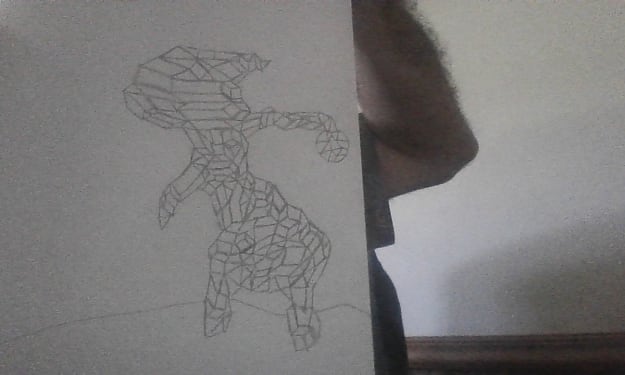
person
'person' is a pencil sketch that I did trying to show action of some kind. It is a sketch using my version of Cubism using cubes, squares, triangles and rectangles of various sizes. I see a person trying to throw a ball of sorts. I wonder what you see and I hope to read some comments that I would truly appreciate. I have more pictures and color art posted here on Vocal in ART and CRITIQUE. If you are interested in seeing more of my artwork I have published several coloring books and an art book at 'artwanted.com'.
By Mark Graham2 years ago in Critique