Art
LaLaLand: All That Jazz and Absolutely No Joy. Top Story - August 2026.
I wanted to love La La Land . In fact, for approximately five glorious minutes, I did. The film opens on a Los Angeles motorway, where an ordinary traffic jam explodes into colour, movement and music. Drivers climb out of their cars, dancers leap across bonnets and an entire gridlocked road becomes the stage for “Another Day of Sun.” It is bold, joyful and unapologetically theatrical. Here, at last, was a modern film musical that understood the sheer pleasure of the genre. It was not embarrassed by people bursting into song. It did not apologise for its choreography or try to disguise its sentimentality beneath layers of irony. It promised romance, spectacle and a little bit of magic.
By Millie Hardy-Sims2 months ago in Critique
The Favourite Certainly Wasn’t Mine
There are films you dislike because they are badly made. There are films you dislike because they are offensive, incoherent or completely devoid of artistic merit. Then there are films like The Favourite : films whose talent you can see, whose performances you can appreciate and whose critical acclaim you can understand intellectually—while still spending almost two hours wondering when you are finally going to be allowed to go home.
By Millie Hardy-Sims2 months ago in Critique
Sunflowers (1888). Top Story - July 2026.
I'd been in the National Portrait Gallery in London for an hour, and so far, I had seen a lot of paintings. Huge rooms filled with shire horses, fields of wheat, depictions of the Virgin Mary, and well-nourished Lords of Tudor courts.
By Matthew Smith2 months ago in Critique
The Silent Reunion
For years, the story of the royal family had been filled with distance, tension, and unanswered questions. Headlines spoke of disagreements, interviews revealed hidden emotions, and the world watched closely as relationships seemed to break apart piece by piece.
By Behind the Curtain3 months ago in Critique
My Superhero Universe
I've tried writing this so many times already. Not just the story itself, with all its plot points and characters and delicious little scenes that don't really make sense to anyone but me (at least not yet, unless/until it someday goes public...) but also the descriptions of it! Practicing a publication pitch; drafting a quick overview page or zine, to share with peers at cons or just get myself organized; blurbs and excerpts for my art website and noveling month profile; or like, what would that spiffy little elevator pitch be - for an idea that's so expansive?
By Ellen Stedfeld3 months ago in Critique
Don't Be Afraid To Do The Unusual Thing. Top Story - July 2026.
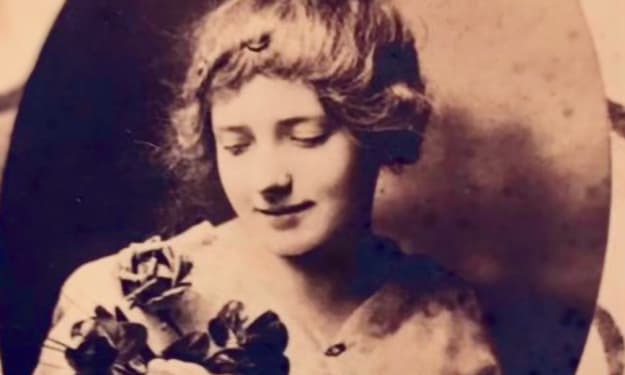
“Last saved 2 years ago”. That’s what my draft page says, though I know it’s actually been more like 3. This is a true story, about a real person who was born over 130 years ago. It’s the first piece that I ever started writing for Vocal Media, and it has been sitting in publishing limbo since the very first day I got the nerve to try and be a real writer on a public platform.
By Mama Magdalene3 months ago in Critique
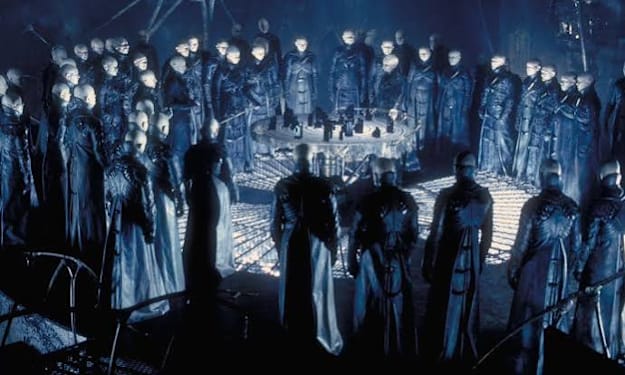
Why I Hate Being A Critic, or Why "Dark City" Sucks
One of the major problems with being a critic of any medium is the “cool yet problematic” piece. That is, that piece of art that has a lot of things going for it, but also has some pretty serious flaws. This can be a novel that has too much filler, a comic that ignores its own continuity, or even a painting where too much orange was used. The key is that the piece was otherwise a pretty awesome piece, but one or more elements ruin the whole thing.
By Jamais Jochim3 months ago in Critique
Inside Michael: When Artistic Vision Becomes Leadership
Recently, I went to see the film Michael with my girlfriend as a surprise — she has always been a devoted admirer of Michael Jackson. What I expected to be a simple cinema outing turned into something more reflective. To me, the film is not just a portrait of a global icon, it is an attempt to understand how artistic vision, when pushed to its limits, becomes a form of leadership. From the beginning, it reframes Jackson not only as a performer, but as a creative force driven by discipline, imagination and absolute control over detail. Fame is present but secondary. What matters is the architecture behind it. Imagination as foundation One of the most revealing aspects of the film is how it traces Jackson’s artistic identity through his influences. We see his fascination with Peter Pan, a symbol of eternal childhood and creative freedom. We also see his admiration for Charlie Chaplin, whose silent performances proved that emotion can exist without language. To me, these references are not decorative. They function like a blueprint for his artistic universe. The film suggests that Jackson’s creativity was never confined to music alone, it was built across disciplines: cinema, dance, theatre and visual storytelling. Leadership without hierarchy The film offers a different definition of leadership — one that has little to do with management or authority. Jackson leads through intensity, giving him a strong presence and an uncompromising demand for precision. During rehearsals, nothing is casual — everything is refined, repeated and reshaped until it reaches a very specific emotional and physical standard. This method produces excellence that reveals a world where “good enough” does not exist. The film also dismantles a common illusion — that genius is effortless. What we see instead is repetition, discipline, exhaustion, and constant self-correction. The discipline behind perfection Behind the spectacle, the film exposes what the audience never sees. Every movement, every transition and every sound is the result of countless adjustments. What appears spontaneous on stage is, in reality, the product of extreme preparation. This is where Jackson’s leadership becomes cultural rather than organizational. He does not simply guide a team — he raises the standard of an entire creative ecosystem around him. But the film does not ignore the cost. There is pressure in always being the reference point. There is weight in never being allowed to fall below your own legend. A fragile force What lingers most is the contrast between control and sensitivity. Jackson is portrayed as deeply emotional, sometimes vulnerable. Yet this fragility is not presented as weakness — it feels like the source of his artistic intensity. The film suggests that his creativity emerges precisely from this sensitivity: the ability to feel too much and to translate that excess into structured expression. This leaves us as the audience with an understanding at the center of his identity. — His discipline is shaped by emotion and shows his control born from vulnerability. In the end, Michael does more than revisit the legacy of Michael Jackson. It reframes him as a study in artistic leadership — one defined not by authority but by vision, obsession and the relentless pursuit of perfection. And it raises a quiet question: how far can creative leadership go before it becomes a burden as much as a gift?
By Baptiste Monnet3 months ago in Critique
The Novel That Bit Me. Honorable Mention in Not Quite There Yet Challenge.
Fir the Next Great (American) Novel challenge (which, despite the title, didnae actually huv tae be American), Ah hud two ideas an' two entries. Baith included Glasgow as almost a central character. One wis heavily inspired by Trainspotting by Irvine Welsh an' a real-life experience that happened many years afore Ah started writing.
By Paul Stewart3 months ago in Critique
Dead Air
It's just sitting there. A million ones and zeroes on a screen. Taunting me. Vocal asks that I share a story that never came together and do what I can to explain what I'm missing to make it work. I've read some of my fellow Vocalians' entries, trying to find a way to help me choose both what story and how to explain what's lacking.
By Alexander McEvoy4 months ago in Critique