

I have a story that has been sitting unfinished for years.
Not abandoned.
That would be easier.
Abandoned things have a certain honesty. You admit they failed, close the folder, place them somewhere quiet, and let them become part of the archive of who you were.
This one never allowed that.
It stayed.
The file remained on my computer, always transferred from one device to the next. New laptops, new folders, new attempts at organization. Somehow, every time I cleaned away what no longer mattered, I kept it.
The title changed twelve times.
The ending changed even more.
The problem was always the same:
I knew exactly how it began.
I had no idea what it wanted to become.
The opening scene was clear.
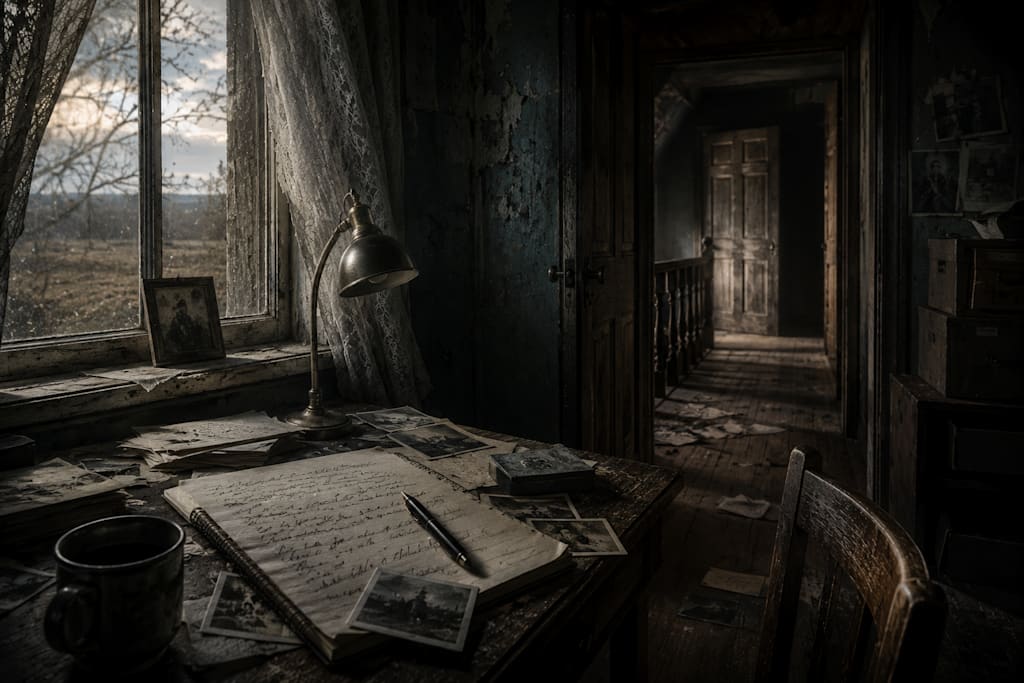
A man returns to the house where he grew up after twenty years away. His father has died. The house is empty except for a locked room at the end of the upstairs hallway.
Everyone in the family knows about the room.
No one talks about it.
The man finds old letters, photographs with missing faces, objects he remembers differently from how they appear now. Slowly, he realizes that the family secret was not something hidden from him.
He was the secret.
That was the idea.
A mystery about memory, identity, and the stories families create to survive.
I loved the atmosphere.
I loved the questions.
I loved writing the first fifty pages.
Then everything stopped.
Because eventually questions demand answers.
And my answers were never as interesting as the mystery.
Every explanation made the story smaller.
Was there a crime?
Too ordinary.
Was something supernatural happening?
Too expected.
Was the narrator unreliable?
Too familiar.
Every solution felt like closing a door I wanted to leave open.
The strange thing is that I knew the characters. I understood their fears. I knew what the old house smelled like after rain. I knew which floorboards made noise. I knew the color of the wallpaper in rooms that did not exist.
But I did not know the truth.
For a long time, I thought that was a failure of planning.
I believed a better outline would save it.
So I made timelines.
Family trees.
Character histories.
Pages explaining events that happened before the story began.
The more I explained, the less alive it became.
The mystery disappeared beneath information.
Eventually I realized the unfinished story was revealing my real problem.
I was trying to solve something that had been created to remain uncertain.
The part that worked was not the locked room.
It was the hesitation before opening it.
It was the moment when someone stands outside a door and understands that knowing the truth may not make anything better.
That was the story.
Not the answer.
The fear of the answer.
So why is it still unfinished?
Because I have never found the courage to leave it incomplete on purpose.
Readers expect doors to open.
They expect secrets to become clear.
They expect the final page to reward their patience.
And maybe they are right.
Or maybe some stories fail because we force them to become something they never promised to be.
The document is still there.
The man is still standing upstairs.
The hallway is still silent.
His hand is still near the handle.
For years, I have been trying to decide what waits behind that door.
Now I wonder if the real question is why I keep needing him to open it.
About the Creator
Alain SUPPINI
I’m Alain — a French critical care anesthesiologist who writes to keep memory alive. Between past and present, medicine and words, I search for what endures.
Enjoyed the story? Support the Creator.
Subscribe for free to receive all their stories in your feed. You could also become a paid subscriber, letting them know you appreciate their work.
Comments
There are no comments for this story
Be the first to respond and start the conversation.