
Life After Death Book Review: A Fearless Perspective on the Afterlife
The book written by Annie Besant in 1923 speaks openly of the eternity of the spirit
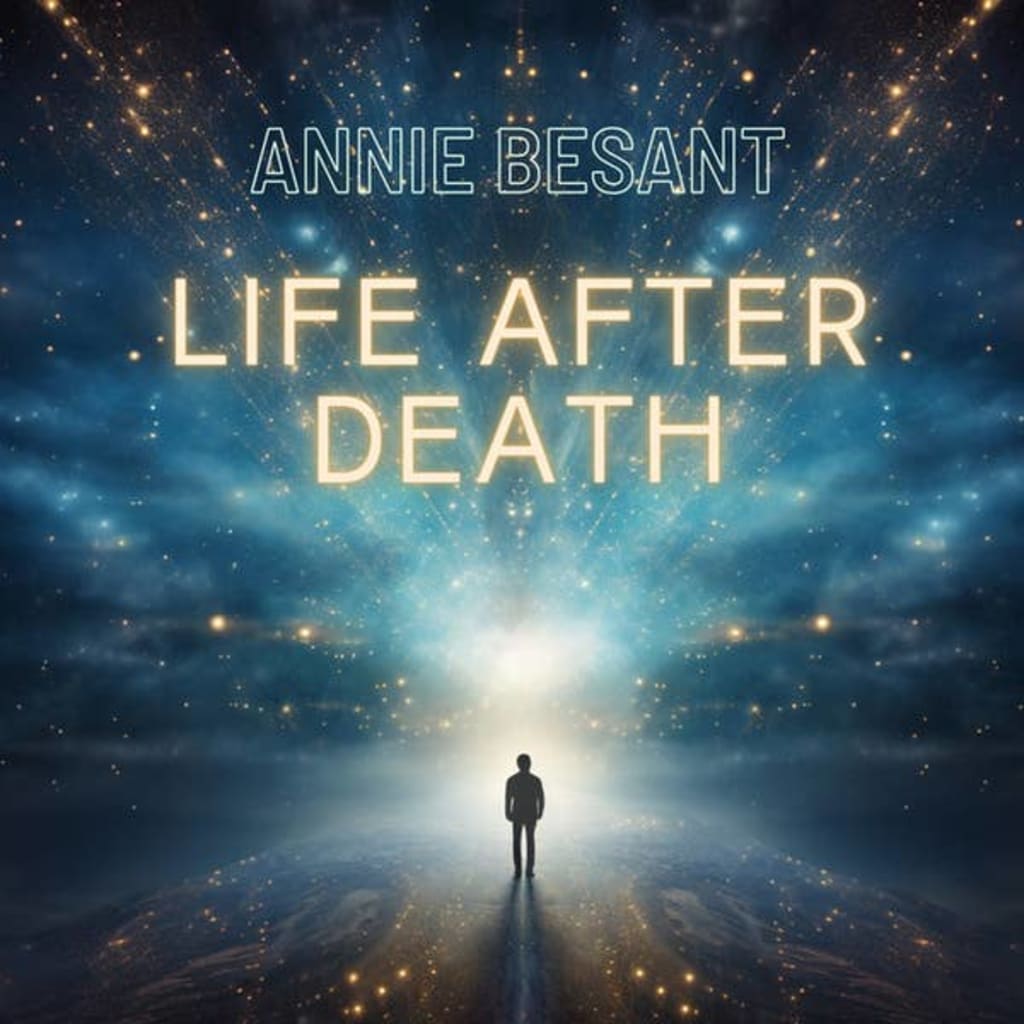
Life After Death is a book written by the British theologian and activist Annie Besant (1847-1933) that talks openly about the various forms of life that a spirit goes through after the human body dies. This book was published for the first time in 1933, when this topic was not as usual to be treated as it happens today, that there is more mental openness.
Life After Death is a foundational text within Theosophical literature that explores the continuity of consciousness beyond physical existence. Drawing from her deep involvement with the Theosophical Society, Besant presents death not as an end, but as a transition—a passage into other states of being.
The text is presented as a straightforward exposition of Theosophical teachings regarding life, death, and the afterlife. Besant writes with a blend of philosophical insights and spiritual wisdom, aiming to provide solace to those seeking to understand the mysteries of existence. The book offers a hopeful outlook on the eternal journey of the sou
The book delves into various aspects of the afterlife, including spiritual realms and karmic implications. Besant discusses the process of dying itself, describing how the "etheric body" separates from the physical body, accompanied by a "panorama" or life review that unfolds before the dying person in complete detail. This concept of a life review at the threshold of death is a distinctive feature of Theosophical teachings that Besant helped articulate.
An important portion of the work addresses the wheel of birth and death—the cycle of reincarnation that souls undergo. Besant explains how desires bind individuals to this cycle and outlines the path to liberation through control of the senses, meditation, and devotion.
Accurate description
A central concept in Besant's exposition is the "three worlds" through which the soul passes in its journey from birth to death and back to rebirth. She describes the physical world as the first of these, where the soul seeks happiness through bodily pleasures—a pursuit she argues ultimately leads to disappointment and suffering. The text explains how desires bind individuals to the cycle of reincarnation, and how liberation requires transcending these attachments through spiritual discipline.
Besant presents a compelling argument about how thoughts and actions in one life shape the character with which one is reborn. She illustrates this by contrasting two types of individuals: one who seeks all pleasure through the body, and another who finds greater satisfaction in emotional and intellectual pursuits. According to her framework, these different orientations determine the soul's experience after death and its subsequent rebirth.
According to Besant's Theosophical framework, this life review is intimately connected to the separation of the "etheric double" from the dense physical body. She explains that when the etheric double is extruded, the double itself is "rent in twain," and the whole of it could not be separated from the dense body without causing death. This separation process is accompanied by the unfolding of the life panorama.
While Besant's work represents a specific Theosophical perspective, the broader topic of life after death has been explored across many traditions. The search results reference Raymond Moody's Life After Life (1975), which pioneered the study of near-death experiences (NDEs) and sparked widespread interest in the subject. Moody's research collected accounts from individuals who had clinical death experiences and reported remarkably similar narratives, including out-of-body sensations, life reviews, and encounters with light. This scientific approach to studying deathbed phenomena contrasts with Besant's more purely philosophical and spiritual methodology.
Enduring relevance
Life After Death continues to be published in various formats, including audiobook editions, suggesting sustained interest in its perspective. Readers have noted that it serves as a valuable introduction to esoteric views on death and the afterlife, offering a framework for understanding how earthly actions influence post-mortem existence. The work remains relevant for those seeking a spiritual, non-dogmatic approach to contemplating mortality and the possibility of continued consciousness beyond physical death.
About the Creator
Ninfa Galeano
Journalist. Content Creator. LGBT+ perspective 🏳️🌈
Enjoyed the story? Support the Creator.
Subscribe for free to receive all their stories in your feed.
Comments
There are no comments for this story
Be the first to respond and start the conversation.