

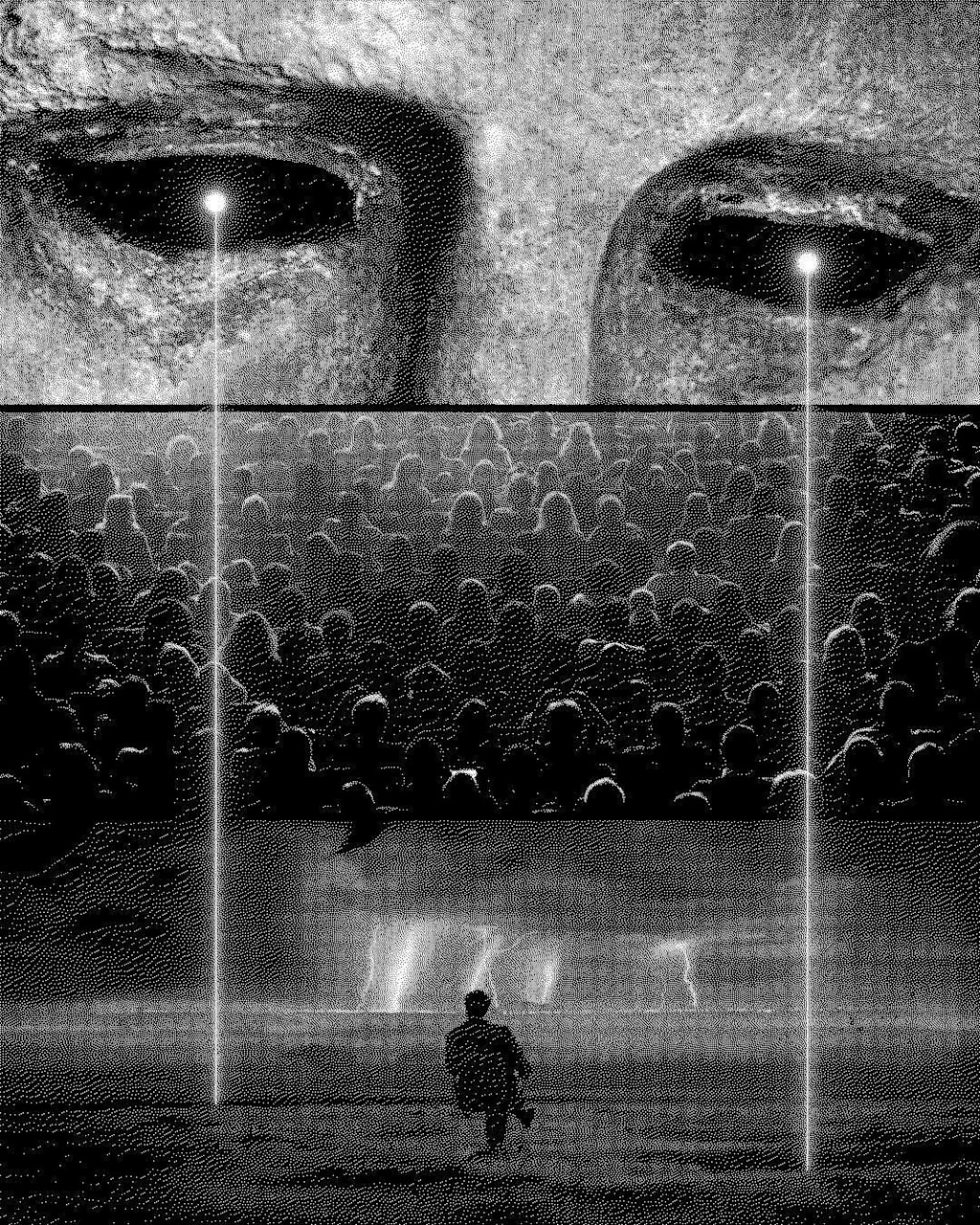
“The real voyage of discovery consists not in seeking new landscapes, but in having new eyes.” — Marcel Proust
━━━━━━━━━━━━━━
Author: Jason Thomas — aka Xxodia
━━━━━━━━━━━━━━
The Illusion of Open Doors
“How do you feel about the current state of immigration within the United States, as an immigrant yourself?”
Disillusioned — that is the cleanest word I can offer without decorating the wound.
Do not mistake me for cruel. My sympathy is intact; it is my innocence that has expired. I have learned that a nation can polish its welcome signs while dulling its listening. Eight years inside these borders have taught me a difficult literacy — how to read the shine separately from the structure. America, to me, has often felt like a brighter mirror of where I came from — same fractures, higher gloss. The glass is clearer; the cracks are not.
I arrived believing distance changes the nature of division. It does not. It refines it. It updates the language. It installs better branding. The same old isms still breathe here — they’ve just learned how to dress for broadcast. Xenophobia is discussed like weather now — trending, seasonal — but it is not new climate. It is bedrock pressure, tectonic and patient, present since the first anxious boundary was drawn and called safety.
There is a particular irony that hums beneath the anthem — a frequency you only hear when you have crossed water to stand still. A country authored by escape artists grows suspicious of escape. Descendants of flight build gates and call them order. The persecuted become archivists of permission. History does not repeat here — it rehearses with better lighting.
I walk the streets and feel the choreography of acceptance — conditional, procedural, documented. Smiles that scan. Policies that breathe in clauses. Humanity translated into paperwork weight. Worth measured in stamps and waiting rooms. Hope placed on hold with instrumental music.
And still — I do not run.
Because running suggests surprise, and I am no longer surprised. The infrastructure is working as drafted. The doors are not locked — they are filtered. The welcome is not false — it is formatted. You may enter, it says, provided you enter correctly. Provided your story fits the margins. Provided your struggle is legible to the system that files suffering by category.
We stand beneath one flag, yes — but unity at the fabric level does not guarantee unity at the pulse. Threads can touch without agreeing. Proximity is not harmony. A choir can share a stage and still sing alone.
I remain — watchful, sympathetic, disenchanted — taking notes inside the illusion, not because I hate the house, but because I finally see the beams.
━━━━━━━━━━━━━━
Custom-Fit Chains
“How do you feel about possibly returning to your home country”
Ready — that is the dangerous truth. Ready is not the same as willing. Readiness is a measured pulse; willingness is a surrendered one. If asked whether I could return to my country of origin, I would answer without tremor: yes. I have gathered enough language, enough discipline, enough interior scaffolding to survive the gravity I once escaped. Distance has been an education. Exile, a tutor with strict grading.
But readiness does not equal desire.
There are landscapes that raise you and bruise you in the same gesture. Mine did. To grow up as a third-class citizen inside a third-world economy is to be issued invisibility early — like a ration card for dignity. You learn the geometry of shrinking. You learn how to make your voice economical. You learn that potential is often treated as contraband unless it is exported. Those lessons burrow deep. They do not leave when you leave. They migrate inward and build small border checkpoints in the mind.
I have only recently begun dismantling them.
Healing, I’ve discovered, is not a sunrise — it is a slow audit. You inventory inherited fears. You challenge the customs officers stationed in your thoughts. You ask who authorized this limitation, this shame, this reflex to apologize for existing at full volume. Some wounds close; others renegotiate. But all of them remember their original address.
So yes — I could go back. I could stand again in the humidity of my beginnings and not collapse into the boy who learned to expect less. Knowledge has armored me. Experience has given me a second spine. I would not arrive empty-handed this time — I would arrive literate in systems, fluent in leverage, conscious of design.
And still — I do not want to return. Not yet.
Because here — inside this polished maze — I found my instrument. Purpose did not knock; it resonated. For the first time, my gift was not treated like excess noise but like signal. Recognition is a peculiar oxygen. Once breathed, it recalibrates your lungs. You realize how long you’ve been surviving on thin air.
This is the quieter side of the structure no one diagrams: attachment through affirmation. Not chains — calibration. Not force — fit. When a system names your talent, houses your voice, reflects you back with clarity, departure becomes psychologically expensive. Belonging — even partial, even conditional — is adhesive.
These are the custom-fit chains: not oppression, but placement. Not denial, but selective permission. You are free, the system says — and it even points to your seat.
I am not captive. I am aware. Awareness is heavier.
I stay — not because I am fooled, and not because I am finished — but because my work has finally found an echo here. And a voice, once echoed, is reluctant to return to rooms that taught it to whisper.
━━━━━━━━━━━━━━
The Hinge Between Order and Compassion
“What would a fair and humane immigration system look like to you — and what policy changes would make it a reality?”
I hear the question beneath the question. Not logistics — morality under pressure. Not law — conscience under fluorescent light.
They built a line and called it a border — first in ink, then in steel, then in fear — as if the earth itself had signed the document and notarized the dirt. As if geography consented to ownership. But the wind still crosses without a passport. Rivers do not present credentials. Light does not stop at inspection. Even the stars migrate season to season without detention — entire galaxies practicing open movement above detention centers with motion sensors and flood lamps.
We are the only species that criminalizes footsteps. The only one that prosecutes hunger as intent.
A mother carries a child across heat and rumor, across the mathematics of risk — not because policy failed on paper, but because reality failed at home. No one walks into uncertainty for recreation. No one abandons language, burial grounds, recipes, jokes that only work in one dialect — for paperwork. Migration is rarely ambition at the beginning. It is rupture first. Oxygen later. Dream last.
In conference rooms calibrated to comfort, her existence is translated into units: flows, burdens, surges, waves. Hydrology terms. Disaster nouns. Never her name. Because names collapse distance. Names make refusal heavier. Statistics are easier to deport than syllables.
The argument is framed as invasion when the truer word is exhaustion.
A fair system, to me, would begin with linguistic honesty. It would stop pretending that desperation is strategy. It would stop forcing suffering to audition for legitimacy — perform your trauma, show receipts of pain, translate your scars into acceptable formats. It would not require a person to prove they are broken enough to be treated whole.
But fairness is not the absence of structure. Doors matter. Order matters. A nation without process becomes a rumor, and rumors cannot protect anyone. Yet process without mercy becomes performance — paperwork as theater, justice as choreography, outcomes predetermined behind procedural curtains.
Law without mercy calcifies. Mercy without structure dissolves. Wisdom is load-bearing architecture between them.
A humane system would be built like triage, not like a moat. Urgency first. Vulnerability weighted. Contribution measured forward, not backward. It would not ask only, Where are you from? but also, What are you building? Who are you becoming? Who survives because you are here?
Because citizenship, at its highest resolution, is not ancestry — it is participation. It is stake. It is maintenance of the shared roof.
The soil does not care where your ancestors stood. Only whether you plant and tend.
Most migrants are not chasing luxury — this is the lie comfort tells itself to feel threatened. They are chasing normal: a predictable paycheck, a school day that ends safely, a night where the door lock is precaution, not prayer. The political debate is loudest among those who have never had to choose between homeland and heartbeat — never had to weigh nostalgia against survival and sign with their feet.
We keep asking, How many can we take? — a capacity question — while avoiding the moral audit: How many did the world break before they arrived?
A just policy would not be frictionless — but it would be friction with purpose. Transparent pathways. Timetables that do not devour decades. Vetting that measures risk without manufacturing despair. Enforcement aimed at exploitation networks more than exhausted families. Integration treated as infrastructure, not charity.
Because here is the structural illusion again: we claim to defend order while tolerating disorder where it profits us. Paperwork becomes a wall for the poor and a revolving door for the well-connected. Legality becomes purchasable speed.
Every wall eventually becomes a museum label. Every closed gate — a future apology plaque written by grandchildren with better vocabulary and softer certainty. Each generation believes its barricades are permanent until time migrates past them and renders them antique.
So my answer is not soft — it is engineered:
Build doors. Make them real. Make them visible. Make them openable within a human lifetime.
Do not run from compassion in the name of order. Do not run from order in the name of compassion.
Design the hinge.
Because history will not grade us on how fiercely we defended lines — but on how intelligently we handled people standing at them.
━━━━━━━━━━━━━━
The Guardrail of Conscience
“In an era where border control and humanitarian protection often clash, where should the ethical line be drawn?”
Not on the map. Maps are confident liars. They draw certainty where reality sweats.
The true border is a moral pressure point — where a nation’s obligation to its own meets humanity’s obligation to the vulnerable. Order stands on one side with its ledgers and oaths. On the other stands breath — unscheduled, undocumented, undeniable. Between them is conscience — overused, underfunded, frequently consulted, rarely obeyed.
We say the argument is about law. It is really about distance from suffering. How far away must a stranger’s fear remain before we call it policy instead of responsibility?
A state must guard its threshold — this is not tyranny; it is structure. A house without a door is exposure. But a door that never opens is theater. Security without moral permeability becomes ritualized refusal — procedure as camouflage.
Both extremes decay. Steel without mercy becomes sanctioned cruelty. Mercy without measurement becomes collapse. Ethics is not found in choosing a side — but in regulating force with proportion.
The line is not crossed when entry is denied. It is crossed when dignity is.
Not at the checkpoint — at the posture.
Detain if necessary — never degrade.
Refuse if required — never erase.
Screen — do not strip personhood.
Return — never to known terror packaged as paperwork compliance.
A nation may harden its borders. It must not calcify its heart. Because cruelty is not strength — it is administrative surrender of empathy.
Systems ask, Does this person qualify?
Conscience asks, What does this person endure?
Policy decides outcomes. Posture decides morality.
The ethical boundary is proportional: enforce without contempt, control without corrosion, limit without endangering life. Precision, not panic. Humanity, not theater.
Borders will move. Laws will rename themselves. Frameworks will update their vocabulary and keep their instincts. But one line must remain fixed:
The moment a system requires us to stop seeing the person in front of it — it forfeits its moral authority.
That is where the real border lies.
━━━━━━━━━━━━━━
The Comfort Loop
“What do you think is the most effective border ever built — the one at the edge of a nation, or the one inside a satisfied mind?”
The strongest wall is not poured in concrete. It is padded with convenience.
Control has evolved. It rarely needs to strike; it prefers to soothe. It does not silence — it distracts. The modern structure understands a deeper leverage: a comfortable citizen is easier to steer than a frightened one. Anxiety resists. Comfort complies.
We are given endless scroll instead of endless questions. Outrage in measured doses. Relief on demand. A curated storm that never floods the room. The system does not hide the cage — it furnishes it. Good lighting. Fast delivery. Personalized exits that lead back inside.
This is not conspiracy. It is incentive design.
When exhaustion is constant, reflection is expensive. When stimulation is infinite, introspection feels inefficient. So the deeper inquiries — about borders, dignity, belonging, proportional mercy — are converted into content cycles. Debates become episodes. Suffering becomes headline weather. Empathy becomes reaction, not practice.
The structure does not forbid moral thought — it fragments it.
You are allowed to care, briefly. Just not long enough to reorganize your life around what you discover.
Comfort becomes the loop: work, consume, recover, repeat. A treadmill marketed as freedom of movement. Even dissent is scheduled between obligations. Even conscience gets a notification window.
And I include myself in this indictment. No altitude of awareness cancels gravity. I too have chosen convenience over confrontation, fluency over friction, adaptation over accusation. The illusion is not imposed — it is co-authored.
This is why I do not run. Running is another loop if the pattern is unseen. Speed without awareness is just obedience in motion.
The deeper question is not whether the system restrains us — but whether it has learned to relax us into agreement.
When a structure can keep you comfortable enough not to look closely — it no longer needs high walls.
Only soft ones.
━━━━━━━━━━━━━━
Manufactured Opposition
“If resistance is loud, constant, and everywhere — why do you think so little actually changes?"
Because much of what we call opposition has already been processed by the system it claims to fight.
Every era produces dissent. This one packages it. Brands it. Monetizes its slogans and ships them overnight. Outrage becomes merchandise. Defiance becomes aesthetic. The system no longer fears rebellion — it licenses it, hosts it, schedules it between advertisements. You are free to protest, provided your protest remains economically compatible.
This is the quieter sophistication of modern control: absorption over suppression.
Arguments are sorted into teams like sports divisions. Moral complexity is flattened into jerseys. Once you are assigned colors, you stop asking structural questions and start defending tribal ones. Energy that could interrogate foundations is redirected into endless lateral combat. Citizen against citizen — while the architecture studies the noise and improves its acoustics.
We mistake volume for velocity. Noise for movement.
Even language is pre-approved terrain. The acceptable phrases circulate. The permitted angers trend. Step outside the script and you are not debated — you are categorized, then dismissed. Not refuted — filed. The filing is faster than the thinking.
I have learned to be cautious of any outrage that arrives pre-formatted. Any moral emergency that comes with merchandise and a comment template. Real conscience is rarely convenient and almost never coordinated.
This does not mean all protest is false — only that false protest is profitable.
True resistance is structurally expensive. It costs comfort, access, applause. It is often quiet at first — a private refusal before a public stance. It begins with disobedience at the level of perception: seeing clearly where you were instructed to react quickly.
The illusion prefers reaction. Awakening prefers examination.
So I ask again — if every side claims rebellion, who is interrogating the design?
Opposition that never studies the blueprint ends up reinforcing the building.
I do not run toward every banner anymore. I read the scaffolding behind it.
━━━━━━━━━━━━━━
Notes from Inside the Structure
“If you believe the system is engineered — where, exactly, is it installed?”
Closer than policy. Closer than borders. Closer than law.
In reflex. In preference. In the quiet bargains you make with yourself when no one is watching.
It is easy — indulgently easy — to critique architecture from the outside. Harder to admit how much of it you have furnished within. I have spoken of structure as if it were distant steel, procedural language, institutional posture. But the most efficient extensions are psychological. Portable. Self-maintained.
I have enforced limits no officer gave me. Reduced my voice without being ordered. Chosen safety over truth and called it timing. That is how structure scales — through internal volunteers.
So let me turn the instrument inward:
Where have I mistaken adaptation for authenticity?
Where have I called fear “strategy”?
Where have I defended a comfort that is quietly shrinking me?
No border patrol monitors these crossings. No judge records these denials. Yet they govern the territory of a life.
We speak of propaganda as broadcast — but the more durable form is rehearsal. The stories repeated privately: stay realistic, stay acceptable, stay in lane. The invisible curriculum of self-containment. I learned it early — as immigrant, as outsider, as applicant for belonging. Gratitude can become a leash if you are not careful with its length.
Yes, I found recognition here. Yes, I found purpose. Both are true. It is also true that I sometimes dilute my sharpest thoughts into palatable shapes. Not from force — from fatigue. The structure does not always demand silence. Often it requests moderation until the message loses voltage.
This is not confession for drama. It is calibration.
Because awareness that never indicts the self becomes performance — insight as costume.
So here is the harder question — not for the state, but for the reader:
What part of your confinement is externally imposed — and what part is internally renewed?
Until that audit is honest, every revolution is cosmetic.
These are my notes from inside the structure:
The locks are real.
Some of the keys are too.
And more than a few are already in our pockets — unused, because permission feels safer than freedom.
━━━━━━━━━━━━━━
Don’t Run — See
“What do you think would happen if we stopped trying to escape the maze — and start studying it?”
You notice the pattern was never hiding. Only your speed was.
Running is the system’s favorite choreography. Panic burns oxygen. Urgency blurs detail. The faster you move, the less you measure. And an unmeasured structure feels infinite — not because it is, but because it is unexamined.
I was taught, like most, to chase exits: better country, better status, better protection, better permission. Movement as salvation. Distance as cure. But distance only changes scenery. Structure travels well. It rebuilds wherever incentives outpace conscience and comfort outpaces clarity.
So I slowed down. I started reading beams instead of banners. Studying hinges instead of headlines. Watching where dignity bends first — that is always where truth enters the room.
I have written of borders, mercy, illusion, comfort, dissent — not as accusations thrown outward, but as instruments turned in the light. Because a moral life is not built by choosing the correct side of every argument. It is built by refusing to dehumanize — even when it is efficient, even when it is popular, even when it is legal.
Especially then.
You can enforce without contempt. You can belong without blindness. You can prosper without participating in erasure. But none of that happens at a sprint. Sight is a discipline. Conscience is a calibration, not a slogan.
Every system — national, economic, cultural — eventually faces the same quiet audit: did you protect function by sacrificing personhood, or did you engineer function around it?
That question does not arrive as thunder. It arrives as paperwork, posture, tone of voice, who you call “problem,” who you call “neighbor,” who you allow complexity.
I do not offer rebellion as a reflex. Nor obedience as a virtue. I offer attention.
Look longer. Name precisely. Measure morally. Refuse numbness.
Do not run toward outrage.
Do not run toward comfort.
Do not run toward easy certainty.
See.
Because once you truly see the structure — you stop being only its subject.
You become its witness.
━━━━━━━━━━━━━━
END
About the Creator
Jason Thomas
Go to sleep.
Enjoyed the story? Support the Creator.
Subscribe for free to receive all their stories in your feed.
Comments
There are no comments for this story
Be the first to respond and start the conversation.