interview
Interviews with professional footballers, coaches, owners, and anyone with insight into one of the most widely recognized sports in the world.
Philadelphia Eagles Jacket . AI-Generated.
A Jacket with a Story: A Legacy Passed Down in the Eagles Nation Unexpected Discovery at the Super Bowl Parade During the Super Bowl LIX victory parade in Philadelphia, celebrating the Eagles’ 2025 championship, graduate student and lifelong fan Amy Rannabargar spotted something unusual. Hanging on a lamppost near the iconic Philadelphia Museum of Art was not just any piece of clothing, but a Philadelphia Eagles Jacket that carried a story of its own. At first glance, Amy assumed someone had carelessly left the jacket behind in the excitement of the parade. But when she looked closer, she noticed a carefully taped note inside that turned this simple discovery into something extraordinary.
By David Binghamabout a year ago in Cleats
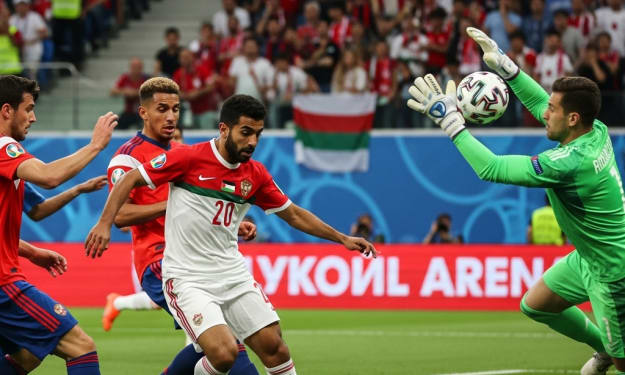
Russia vs Jordan: Stalemate in Moscow as Friendly Ends 0–0
1. Introduction: A Highly Anticipated Friendly On September 4, 2025, the Russian national football team welcomed Jordan for an international friendly at the iconic Lukoil Arena in Moscow. Fans, analysts, and football enthusiasts eagerly awaited this matchup, which provided both teams an opportunity to test strategies, integrate new players, and assess overall form ahead of upcoming competitive fixtures.
By KAMRAN AHMADabout a year ago in Cleats
Amari Cooper Retires Suddenly After Raiders Reunion
1. The Unexpected Exit In a move that sent shockwaves through the NFL community, Amari Cooper announced his retirement from professional football on September 4, 2025, just days after re-signing with the Las Vegas Raiders. The abrupt timing—less than a week before the Raiders’ season opener against the New England Patriots—left fans, teammates, and league analysts stunned.
By KAMRAN AHMADabout a year ago in Cleats
Beyond the Game: The Story Cleats Tell
M Mehran For most people, cleats are just footwear—shoes with studs or spikes, meant for traction on grass or turf. But for athletes, cleats are far more than that. They carry stories of hard work, dreams, victories, and heartbreak. A pair of cleats often becomes a silent witness to an athlete’s journey, soaking up sweat, mud, and sometimes even tears. When seventeen-year-old Marcus Delgado laced up his first pair of football cleats, he felt like he was stepping into a different world. Growing up in a small town where opportunities were scarce, the field became his sanctuary. His old sneakers had slipped on the grass too many times, holding him back during practice. But when his coach handed him a donated pair of cleats, Marcus felt the ground hold him steady for the first time. That stability wasn’t just physical—it was emotional. It gave him the confidence to sprint harder, tackle stronger, and believe he could compete. Cleats have always been more than tools. In sports like soccer, baseball, and football, they symbolize the commitment to the game. They represent countless hours of training, the discipline to push through fatigue, and the hope of a future where talent can change a life. Athletes often personalize their cleats with colors, initials, or quotes, making them part of their identity. For Marcus, his pair carried initials of his younger sister, a reminder that every step he took was also for her. In professional sports, cleats tell stories on an even larger scale. Consider soccer superstars who design their cleats to honor their countries, communities, or even social causes. In the NFL, there’s a tradition called “My Cause My Cleats,” where players customize footwear to raise awareness about charities close to their hearts. One player might have cleats painted to honor cancer survivors, while another might highlight social justice. These designs turn a piece of sports gear into a moving canvas of advocacy. But cleats aren’t just about symbolism—they reflect innovation. Over the decades, the evolution of cleats mirrors the evolution of sports themselves. Early versions were heavy leather boots, clunky and uncomfortable. Today, cleats are crafted with advanced technology: lightweight materials, molded soles, and precise stud patterns tailored for specific fields. Soccer cleats differ from football cleats; baseball spikes differ from lacrosse cleats. Each design is about maximizing performance while protecting the athlete. Behind these advances are stories of trial and error. In the 1966 World Cup, for example, the German soccer team’s victory was partly attributed to their cleats, which featured screw-in studs. When the rain turned the pitch into mud, they adjusted their cleats for better traction, while their opponents slipped and stumbled. It was a reminder that sometimes, equipment can change the outcome of history. At the grassroots level, cleats carry a different meaning. For many young athletes, owning a pair of quality cleats isn’t easy. They can be expensive, and families with limited resources struggle to keep up as kids outgrow their sizes. That’s why cleat drives and donation programs have become so important. A simple pair of secondhand cleats can open the door to participation in sports, giving children the chance to join a team, learn discipline, and dream bigger than their surroundings allow. Marcus experienced this firsthand. The donated cleats he wore during his first season became a turning point. With them, he performed so well that he earned a scholarship to a sports camp, where scouts noticed his potential. By the time he graduated high school, his cleats had been replaced with newer pairs, but he kept that first set tucked away in his closet, dirt still clinging to the soles. “They’re more than shoes,” he once told his sister. “They’re proof I didn’t give up.” Beyond the field, cleats have also entered fashion and culture. Limited-edition cleats designed by big brands often sell out within minutes, becoming collectibles. Some people never wear them—they display them like artwork. Others wear them casually, blurring the lines between sportswear and streetwear. Just as sneakers became a cultural icon, cleats are beginning to claim their place in the world of design. Still, at the heart of it, cleats belong to the field. They’re meant to dig into earth, to leave marks that fade with the grass but live on in memory. For every touchdown, goal, or home run, cleats were there—grinding, gripping, pushing. For every stumble, slide, and defeat, they absorbed the weight of disappointment, only to rise again the next day. As Marcus prepares for his college debut, he unboxes a brand-new pair of cleats, sleek and shining. They carry the promise of a future yet to be written. But on his shelf, his first pair still waits, battered but unforgotten. Together, they tell a story that every athlete understands: it’s not just about where the cleats take you, but about the journey they remind you of. In the end, cleats are more than footwear. They’re storytellers—silent, steadfast, and loyal. They don’t just carry athletes across fields; they carry dreams, struggles, and victories. And long after the game is over, when the roar of the crowd has faded, cleats remain, holding the echoes of every step taken in pursuit of something greater.
By Muhammad Mehranabout a year ago in Cleats
Contact for WhatsApp – The Modern Way to Stay Connected
cIn today’s digital world, there are countless ways to stay in touch, but if one app has truly transformed global communication, it is WhatsApp. It’s not just a messaging service — it’s a platform that brings people closer, no matter where they are in the world. Whether you want to chat with friends, hold a business meeting, or stay connected with family, WhatsApp has made everything simple and instant. 📌 Introduction to WhatsApp WhatsApp is a free messaging app that allows users to send text messages, images, videos, audio, and documents over the internet. All you need is a smartphone and an internet connection. Today, WhatsApp has become an essential part of everyday communication for millions of people worldwide. 📌 What Does “Contact for WhatsApp” Mean? When someone says "Contact for WhatsApp", it simply means they want to communicate with you through WhatsApp or share their number so you can connect easily. Nowadays, people often prefer WhatsApp over traditional phone calls because: It’s cost-effective Messages are delivered instantly You can connect anywhere in the world via the internet You can share images, videos, and files instantly 📌 Importance in the Business World For business owners, WhatsApp is an excellent tool. When you see "Contact for WhatsApp" on an advertisement, website, or social media post, it usually means customers can connect directly and quickly. Fast and direct customer support Easily share product or service details Take orders and send updates instantly Small businesses, freelancers, and large companies all use WhatsApp to connect with clients, making it a vital part of modern business communication. 📌 Benefits in Personal Life In personal relationships, WhatsApp is the easiest and cheapest way to keep in touch. If someone says "Contact for WhatsApp", it’s a sign they want fast, convenient communication. Talk to family members living far away Share pictures and videos instantly Celebrate special moments together, even from a distance 📌 Groups and Communities Another amazing feature of WhatsApp is the ability to create groups and join communities. This makes communication easier among multiple people at the same time. Family groups Business team groups School or college class groups These groups help people stay informed and connected without needing multiple messages or calls. 📌 Security and Privacy One of WhatsApp’s strongest features is its End-to-End Encryption. This means your messages are secure and can only be read by you and the person you send them to. So when you share your "Contact for WhatsApp," you’re choosing a safe and private communication platform. 📌 Easy to Use Using WhatsApp is simple: 1. Download the app 2. Register your phone number 3. Select a contact from your phone’s contact list 4. Send a message or make a call Whether you’re a teenager, a business owner, or a senior citizen, WhatsApp is user-friendly for all ages. 📌 Final Thoughts In today’s fast-paced world, "Contact for WhatsApp" is not just a phrase — it’s a sign of convenience, speed, and security in communication. Whether you want to strengthen personal bonds or expand your professional network, WhatsApp is the best choice. So the next time you see this phrase on a profile, post, or advertisement, know that it’s an invitation to connect in the simplest and most effective way possible.
By Sophia Graceabout a year ago in Cleats
The Life of a Pregnant Monkey – A Natural Journey of Motherhood
Monkeys, being some of the closest relatives to humans in the animal kingdom, display fascinatingly similar social behaviors and emotions. One of the most heartwarming and complex phases in a femaIle monkey's life is pregnancy. This period is filled with biological changes, emotional shifts, and maternal instincts that reflect the beauty of nature’s design. --- 1. Reproductive Age and Onset of Pregnancy: Female monkeys typically reach sexual maturity between the ages of 4 to 5 years. After that, they become capable of reproduction. The gestation period varies depending on the species but generally lasts between 5 to 7 months. Monkeys usually form bonds with dominant males for mating, and conception happens quietly within the social group. --- 2. Physical Changes During Pregnancy: A pregnant monkey undergoes several noticeable changes. Her abdomen gradually enlarges, causing some changes in her movement and agility. She tends to rest more than usual and increases her food intake to support the baby’s development. Interestingly, she may also seek out specific fruits and leaves that are rich in nutrients, guided by natural instinct. --- 3. Emotional Behavior and Group Support: During pregnancy, a female monkey becomes more cautious and often avoids unnecessary interactions. However, she is not alone. Female members of the troop, especially older ones who have experienced motherhood, often assist and support her. This social care plays a vital role in her emotional well-being and safety. --- 4. Choosing a Safe Birthing Place: As delivery time approaches, the pregnant monkey instinctively looks for a safe, quiet, and elevated spot, usually in thick trees. This location helps protect her newborn from predators and environmental risks. She spends much of her time alone in the final days, preparing for the moment of birth. --- 5. Birth and the Mother’s Love: When the baby is born, it immediately clings to the mother's body. The monkey mother instinctively licks and cleans the baby and allows it to nurse. The first few days are extremely critical as the baby is entirely dependent on the mother. She carries it close to her chest everywhere she goes, even while climbing trees and foraging. --- 6. Early Stage of Upbringing: The first six months after birth are crucial for the infant’s survival and growth. The baby monkey is constantly attached to the mother’s body. The mother provides warmth, milk, protection, and emotional security. Gradually, the baby starts observing the surroundings and mimicking the mother’s actions, which are essential for its learning process. --- 7. Deep Mother-Baby Bond: The bond between a monkey mother and her baby is deep and nurturing. She teaches her young how to eat, climb, play, and interact with others in the group. If the baby gets sick or injured, the mother shows remarkable care and attention, often sacrificing her own needs to tend to it. --- Conclusion: The life of a pregnant monkey is a journey filled with natural wisdom, affection, and devotion. It reminds us that the essence of motherhood—sacrifice, protection, and unconditional love—is not exclusive to humans. Observing a monkey’s pregnancy offers a beautiful glimpse into the powerful maternal instinct embedded in all living beings. Nature, through such examples, continues to inspire awe and respect for all forms of life.
By Sophia Graceabout a year ago in Cleats
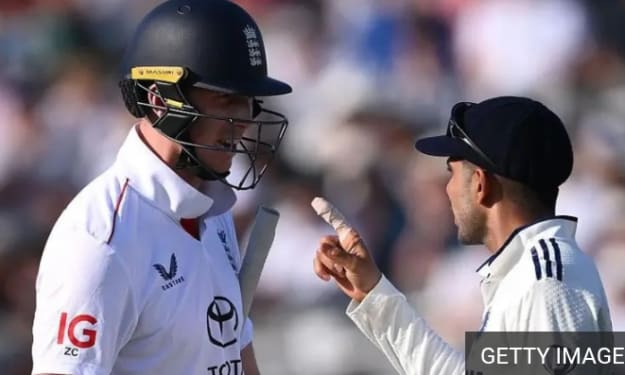
A Test Match of Drama, Theater, and Tension: The Lord’s Encounter Between India and England Sparks Controversy
The final over on Day 3 of the Lord’s Test match between India and England provided a perfect summary of the entire series—filled with action, drama, theater, and controversy. Cricket commentators remarked with laughter, “This over had everything you could ask for.” The clip of that over was shared by England’s official social media account with the caption: “When you’re not allowed to bowl one more over, this is what frustration looks like.” Tensions flared when England accused Indian captain Shubman Gill of time-wasting tactics, only to be called out for hypocrisy. The series, tied at 1-1, has already seen intense competition and controversy, with both teams equally determined to dominate. On Day 3, England posted a total of 387 in their first innings, thanks to a century by Joe Root. India responded with the same score, bolstered by KL Rahul’s century. As the day neared its end, only six minutes of play remained—time enough for two overs, which India aimed to complete. In Test cricket, it's common for the fielding side to push for as many overs as possible before the close of play, while batting teams often attempt to slow things down. When England began their second innings, Zak Crawley faced Jasprit Bumrah. The first ball was left alone, and Crawley scored two runs off the second. Just before the third ball, some movement behind the bowler caused Crawley to back off, leading to sarcastic reactions from Indian fielders. Later in the over, Crawley appeared to injure his finger and called for the physio. Indian players mockingly applauded as the physio entered. Heated words were exchanged between Crawley and Shubman Gill, both pointing fingers in a way deemed unsportsmanlike by many commentators and fans. England’s bowling coach Tim Southee, speaking to the media, criticized Gill’s complaints about time-wasting, reminding everyone that Gill himself had taken several minutes lying on the ground receiving treatment earlier during fielding. KL Rahul, who scored a century in the first innings, defended the team’s approach, stating: "We just wanted to bowl two more overs. Six minutes were left—it doesn’t take a genius to figure out that any team would want to squeeze in two overs. But things got a bit dramatic in the end." He added: "It’s tough to be in the field all day and then walk out to bat for two overs. Picking up one wicket would have been ideal for us." As expected, the episode sparked fierce debates across social media. This Test series has already been marred by controversies, including frequent ball changes, which have drawn criticism. A staggering 32 overs have already been lost over the first three days due to slow over-rates. Former England pacer Stuart Broad, who has taken over 600 wickets in Tests, criticized the frequent ball changes, particularly the poor quality of the Dukes ball: "It’s becoming a joke. We’re talking about the ball in every innings because there’s always a problem with it. A ball should last 80 overs—not 10." Many fans supported Broad’s call, suggesting a switch to the Kookaburra ball instead. The frequent ball replacements, combined with slow over-rates, have become a point of frustration for viewers and analysts alike. Former England batter Jonathan Trott criticized Gill’s behavior, comparing it to aggressive styles of past Indian captains—without naming Virat Kohli directly. "As captain, you set the tone. Finger-pointing and confrontation—it felt very much like something we’ve seen from a previous leader." In contrast, India’s former coach Anil Kumble backed his team and expressed disappointment in England’s tactics. "After two and a half Tests, the series is evenly poised. There’s nothing to separate the sides. And yet, it seemed like England didn’t even want to face one over." He added: "When Jofra Archer took India’s last wicket, he looked disappointed—as if he didn’t want to bowl again that day. It will be exciting to see what happens over the next two days." Former England captain Michael Vaughan called the day one of the most dramatic he has witnessed in recent Test cricket. "No team can complain too much—Gill was down with hamstring trouble yesterday, Rahul wasn’t sure he could start the innings. It was just brilliant drama." As both teams head into the final stages of the Test, the series remains wide open. Beyond the scores and statistics, the passion, theatrics, and confrontations have added an unpredictable edge that fans around the world will remember for a long time.
By Ikram Ullahabout a year ago in Cleats
Liverpool Retires Diogo Jota’s Jersey Number 20 After Tragic Death
In a heartfelt move that reflects the deep impact one player had on a global football community, Liverpool Football Club has officially retired the jersey number 20 in memory of its late Portuguese striker, Diogo Jota, who tragically passed away earlier this month in a car accident. The football world was left in shock and sorrow when it was confirmed that Diogo Jota and his brother André Silva were killed in a fatal car crash in northern Spain. According to reports, their Lamborghini lost control on a sharp turn and burst into flames. Jota, only 28 years old and a father of three, had married his longtime partner Rute Cardoso just eleven days before the tragic accident. Liverpool’s Emotional Statement On Friday, July 11, 2025, Liverpool FC released an official statement announcing the permanent retirement of Jota’s iconic number 20 jersey across all levels of the club — including the men’s first team, Liverpool Women, and the academy teams. > “After consultation with Diogo’s wife Rute and his family,” the club said in the statement, “Liverpool FC has decided to retire the number 20 jersey as a lasting tribute to a player who inspired with his talent, humility, and character. This decision applies to all levels of the club — men’s, women’s, and youth.” Liverpool CEO Michael Edwards added a moving reflection on the unprecedented nature of the tribute: > “I believe this is the first time in the history of Liverpool Football Club that such a gesture has been made. It is, without a doubt, a unique and heartfelt tribute for an extraordinary human being. Diogo was not only an exceptional player but a truly humble and kind soul. His legacy will endure far beyond the pitch.” A Moment of Silence, A Stadium in Mourning Liverpool will return to the field for the first time since Jota’s death on Sunday, July 13, 2025, in a friendly match against English Championship side Preston North End, as part of their pre-season preparations. But the event will be far more than just a game. In what promises to be an emotional ceremony, Liverpool’s legendary anthem, “You’ll Never Walk Alone”, will echo through the stadium before kick-off. Preston’s team is expected to lay a wreath before the away fans in a solemn act of respect. A minute’s silence will follow, during which the stadium’s giant screens and advertising boards will display tributes and photographs of Diogo Jota. Both teams will wear black armbands, symbolizing a united mourning for a player whose sudden passing has left a void in the football world. A Player Remembered for More Than Goals Diogo Jota’s journey to stardom was defined by determination, discipline, and heart. From his early days at Paços de Ferreira, to becoming a star at Wolverhampton Wanderers, and ultimately winning hearts at Liverpool, Jota was known not only for his clinical finishing and tactical intelligence, but for his quiet leadership and humility. Since joining Liverpool in September 2020, Jota scored crucial goals in domestic and European competitions. He quickly became a fan favorite, known for his work ethic and ability to rise to the occasion during high-pressure matches. Under manager Jürgen Klopp, he became a vital part of Liverpool’s high-pressing, fast-paced system. Off the field, he was equally admired for his devotion to his family and his humility despite fame and success. In recent interviews, Jota frequently spoke about his children and his passion for giving back to the community — mentoring young players and participating in charity efforts in both Portugal and England. A Life Cut Short, A Legacy That Will Last The car crash that took Diogo Jota’s life also claimed that of his brother, André Silva — a rising footballer in Portugal's second division. The tragedy came at a time that should have marked a new beginning for Jota, who had just begun a new chapter in life as a husband. The funeral held last Saturday in Portugal was attended by Liverpool’s head coach Arne Slot, team captain Virgil van Dijk, and several senior players and staff. Their presence underscored the emotional bond Jota had formed with his teammates and the club’s commitment to honoring his memory. Retiring a Number: A Rare Honor Retiring a player’s jersey number is rare in football, particularly in European clubs where shirt numbers often carry historical importance and tradition. But Liverpool’s decision to retire number 20 is more than a symbolic act; it is a heartfelt acknowledgment of Jota’s influence on and off the pitch. The number 20 jersey will no longer be worn by any Liverpool player — not in the men’s team, the women’s team, or the youth academy. It will remain forever linked to Diogo Jota — a player who gave his all, loved deeply, and left too soon. --- Diogo Jota (1997–2025): More than just a footballer, he was a devoted father, a loving husband, a cherished teammate, and an inspiration to millions. Though the boots are empty, the heart he filled will never be forgotten. You’ll Never Walk Alone.
By Ikram Ullahabout a year ago in Cleats
Jannik Sinner Dethrones Djokovic to Set Up a Blockbuster Wimbledon Final with Alcaraz
In one of the most dominant performances of his career, world number one Jannik Sinner dismantled tennis legend Novak Djokovic in straight sets to reach his first Wimbledon final. With a scoreline of 6-3, 6-3, 6-4 on Centre Court, the Italian star not only advanced to a Grand Slam final for the fourth time in a row but also reignited his riveting rivalry with defending Wimbledon champion Carlos Alcaraz. The highly anticipated semifinal, set under the bright sun and electric atmosphere of SW19, began with expectations of a classic showdown between youth and experience. However, it quickly became apparent that Sinner had arrived not just to compete, but to dominate. Djokovic, a seven-time Wimbledon champion and holder of 24 Grand Slam titles, appeared off his rhythm from the start. While he has a storied history of bouncing back from slow starts, this time, the Serb couldn’t find a foothold. Whether it was lingering injury issues or simply the pressure from a relentless opponent, Djokovic looked unusually subdued as the match progressed. The first set saw Sinner break early, showcasing his sharp footwork, blistering forehands, and a calm composure often reserved for veterans. Each point seemed to be played on his terms, forcing Djokovic into defensive positions. By the ninth game, the pressure became too much for the 38-year-old as Sinner capitalized on his third set point to take the opening set. Riding high on momentum, Sinner opened the second set by breaking Djokovic’s serve once again. Fans rallied behind the Serbian, chanting “Nole” and hoping for a familiar comeback. But the Italian was unfazed. He continued to apply consistent pressure from the baseline, returning serves with laser precision and punishing any short ball. Even Djokovic’s typically reliable backhand couldn’t withstand the barrage of clean winners from the younger man. Although Djokovic managed to hold serve at 3-1, the damage was done. Sinner kept pressing and closed out the second set after just 69 minutes of play, leaving the Centre Court crowd in stunned silence. Between sets, Djokovic required medical treatment on the upper part of his left leg, an injury believed to have been aggravated during his quarterfinal match against Flavio Cobolli. While he returned to the court with renewed energy and even managed to break Sinner for the first time in the match, it was a short-lived comeback. The Italian responded immediately, breaking back and holding serve to reclaim control. By the final stretch, Djokovic was visibly limited, wincing in discomfort and occasionally shouting in frustration. On the other side of the net, Sinner stayed composed, focused solely on execution. With his fourth match point, he sealed a straight-sets victory, etching his name into Wimbledon history. This win marks a significant milestone for Sinner. Already the reigning champion at the US Open and Australian Open, the Italian had come into Wimbledon carrying not only high expectations but also the burden of recent disappointments. His loss to Carlos Alcaraz in the French Open final had been particularly painful, especially after squandering three championship points in a match that many hailed as one of the greatest of the modern era. Now, he finds himself with a golden opportunity to avenge that defeat. The Wimbledon final promises to be a blockbuster clash between the two brightest stars of the new tennis generation—Sinner and Alcaraz. Together, the duo have claimed the last six Grand Slam titles, leaving little doubt that the post-Big Three era of men’s tennis has found its rightful heirs. Despite trailing Alcaraz 8-4 in head-to-head meetings and losing their last five encounters, Sinner has reason for optimism. He previously defeated the Spaniard at Wimbledon in 2022 during the fourth round—Alcaraz’s last loss at the All England Club. Additionally, Sinner’s consistent improvement across all surfaces and his mental resilience have made him one of the most feared players on the tour. After the match, Sinner humbly reflected on his journey. “It’s a tournament I always watched when I was young on television,” he said. “To play here in the final is something I would have never imagined. I felt really great on court today. I served well, moved well, and just focused on playing my best tennis.” He also addressed the looming final against Alcaraz. “It is a huge honor for me to share the court once again with Carlos,” he said. “We push each other to the limit. He is for sure one of the players I look up to. I think everyone agrees—he’s an incredible talent. Hopefully, it will be another great match like the last one.” The tennis world now eagerly awaits Sunday’s showdown. Will Sinner finally conquer Alcaraz and lift his first Wimbledon title, or will the defending champion continue his reign on grass? Regardless of the outcome, one thing is certain—men’s tennis is in safe hands with this new generation. With Sinner and Alcaraz at the helm, fans can expect many more classics in the years to come.
By Ikram Ullahabout a year ago in Cleats