how to
How tos for all things soccer; a collection of soccer moves, team stats, footballers' fancy footwork and more.
Dr. Jeffrey Kesten: A Humanitarian Physician Who Chose Healing Over Comfort
Some doctors practice medicine within the walls of hospitals, while others venture into underserved communities. Then, there are a rare few like Dr. Jeffrey Kesten, M.D., who take the practice of medicine into the most dangerous, daunting, and heart-breaking circumstances imaginable—all for the sake of humanity.
By Mike Husseyabout a year ago in Cleats
GTA 5 Mobile APK
In the world of mobile gaming, few titles generate as much excitement as GTA 5 Mobile. Since its original release, Grand Theft Auto V has become a cultural phenomenon, offering players a chance to dive into the thrilling chaos of Los Santos. Now, thanks to the mobile APK version, you can enjoy this iconic open-world game directly on your smartphone — whether you’re using Android or iOS.
By gamme teennabout a year ago in Cleats
The Life of a Pregnant Monkey – A Natural Journey of Motherhood
Monkeys, being some of the closest relatives to humans in the animal kingdom, display fascinatingly similar social behaviors and emotions. One of the most heartwarming and complex phases in a femaIle monkey's life is pregnancy. This period is filled with biological changes, emotional shifts, and maternal instincts that reflect the beauty of nature’s design. --- 1. Reproductive Age and Onset of Pregnancy: Female monkeys typically reach sexual maturity between the ages of 4 to 5 years. After that, they become capable of reproduction. The gestation period varies depending on the species but generally lasts between 5 to 7 months. Monkeys usually form bonds with dominant males for mating, and conception happens quietly within the social group. --- 2. Physical Changes During Pregnancy: A pregnant monkey undergoes several noticeable changes. Her abdomen gradually enlarges, causing some changes in her movement and agility. She tends to rest more than usual and increases her food intake to support the baby’s development. Interestingly, she may also seek out specific fruits and leaves that are rich in nutrients, guided by natural instinct. --- 3. Emotional Behavior and Group Support: During pregnancy, a female monkey becomes more cautious and often avoids unnecessary interactions. However, she is not alone. Female members of the troop, especially older ones who have experienced motherhood, often assist and support her. This social care plays a vital role in her emotional well-being and safety. --- 4. Choosing a Safe Birthing Place: As delivery time approaches, the pregnant monkey instinctively looks for a safe, quiet, and elevated spot, usually in thick trees. This location helps protect her newborn from predators and environmental risks. She spends much of her time alone in the final days, preparing for the moment of birth. --- 5. Birth and the Mother’s Love: When the baby is born, it immediately clings to the mother's body. The monkey mother instinctively licks and cleans the baby and allows it to nurse. The first few days are extremely critical as the baby is entirely dependent on the mother. She carries it close to her chest everywhere she goes, even while climbing trees and foraging. --- 6. Early Stage of Upbringing: The first six months after birth are crucial for the infant’s survival and growth. The baby monkey is constantly attached to the mother’s body. The mother provides warmth, milk, protection, and emotional security. Gradually, the baby starts observing the surroundings and mimicking the mother’s actions, which are essential for its learning process. --- 7. Deep Mother-Baby Bond: The bond between a monkey mother and her baby is deep and nurturing. She teaches her young how to eat, climb, play, and interact with others in the group. If the baby gets sick or injured, the mother shows remarkable care and attention, often sacrificing her own needs to tend to it. --- Conclusion: The life of a pregnant monkey is a journey filled with natural wisdom, affection, and devotion. It reminds us that the essence of motherhood—sacrifice, protection, and unconditional love—is not exclusive to humans. Observing a monkey’s pregnancy offers a beautiful glimpse into the powerful maternal instinct embedded in all living beings. Nature, through such examples, continues to inspire awe and respect for all forms of life.
By Sophia Graceabout a year ago in Cleats
Cricket’s Final Act at Lord’s: A Bollywood‑Inspired Tale of Drama, Emotions & Redemption
Introduction At the heart of London’s storied Lord’s Cricket Ground unfolded a gripping drama that could rival any Bollywood blockbuster. In the final Test between England and India, everything pivoted on a single delivery bowled by England’s pace star and struck by India’s veteran pacer Mohammed Siraj. What followed transformed a seemingly ordinary cricket ball into a symbol of fate, fortune, and heartbreak. This article tells that story—not in terse sports‑journalese, but as an emotional, cinematic narrative filled with tension, fight, and redemption. Picture five long days of sweat, controversy, patience, and ultimately, heartbreak. But also honor. Because in the world of cricket, sometimes losing with dignity can feel more epic than winning. --- Setting the Stage: Lord’s, Day One to Four Lord’s had already revealed its personality—a flat pitch slowly showing signs of chaos. On the first innings, England’s captain Joe Root batted through to score a majestic century. In support, Brendon Curran and James Smith delivered gritty half‑centuries, lifting England to a formidable 387 runs, building what looked like an unassailable platform. India replied in their first innings with equal determination. Shreyas Iyer & KL Rahul constructed a century, while Pant and Ravindra Jadeja supported with half‑centuries of their own—India matched England’s total exactly at 387 runs, leveling the match in a display of patience and discipline. By day four, the pitch began to crack. A flurry of 14 wickets fell—10 to England, 4 to India—on a surface suddenly alive with pace and movement. India’s batters crumbled under pressure, and by the close of day four, they were staring at an alarming trail of 135 runs needed on the final day to win. --- Day Five: Momentum Shifts & Jadeja’s Fortitude The morning of Day Five started with a collapse. One wicket after another fell for India, and it seemed the match might end before lunch. Yet as the clock ticked, calm emerged in the form of all‑rounder Ravindra Jadeja. Like a Bollywood hero in slow motion, he dug in—one end became his fortress. Simultaneously, Mohammed Siraj and Jasprit Bumrah rotated the strike at the other end with increasing aggression. They tested England’s bowlers, probing, prodding, and refusing to surrender. Jadeja anchored the effort with silent resolve—61 not out, a testament to patience and focus. --- The Defining Over: Siraj’s Tragic Misfortune Then came the moment that froze spectators’ hearts. A ball of Newer dynamics, from Siraj’s bat, pitched, turned sharply, spun back—and rattled the stumps. It should have been a match‑saving run, a turning point. But fate had other plans. The ball behaved cruelly—turning sharply at the very last moment, dismissing the crucial wicket. India’s hopes evaporated in that blink. Siraj remained glued to the pitch, unable to process his misfortune. He sat where he had been dismissed; grief enveloped him. English cricketers Joe Root and Zak Crawley came over to console him—an empathetic moment beyond competition.
By Ikram Ullahabout a year ago in Cleats
Work-Life Balance in Tech Jobs. AI-Generated.
Working in tech often means long hours, tight deadlines, and constant change. Whether you're a developer, engineer, or product manager, the pace can feel relentless. That’s why finding work-life balance isn’t just a luxury—it’s necessary for staying healthy and doing good work.
By Gustavo Woltmannabout a year ago in Cleats
A Test Match of Drama, Theater, and Tension: The Lord’s Encounter Between India and England Sparks Controversy
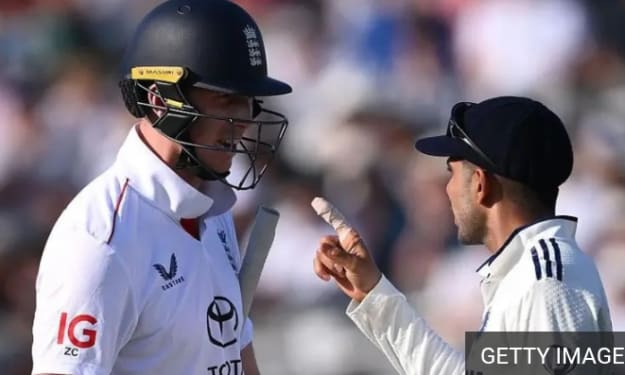
The final over on Day 3 of the Lord’s Test match between India and England provided a perfect summary of the entire series—filled with action, drama, theater, and controversy. Cricket commentators remarked with laughter, “This over had everything you could ask for.” The clip of that over was shared by England’s official social media account with the caption: “When you’re not allowed to bowl one more over, this is what frustration looks like.” Tensions flared when England accused Indian captain Shubman Gill of time-wasting tactics, only to be called out for hypocrisy. The series, tied at 1-1, has already seen intense competition and controversy, with both teams equally determined to dominate. On Day 3, England posted a total of 387 in their first innings, thanks to a century by Joe Root. India responded with the same score, bolstered by KL Rahul’s century. As the day neared its end, only six minutes of play remained—time enough for two overs, which India aimed to complete. In Test cricket, it's common for the fielding side to push for as many overs as possible before the close of play, while batting teams often attempt to slow things down. When England began their second innings, Zak Crawley faced Jasprit Bumrah. The first ball was left alone, and Crawley scored two runs off the second. Just before the third ball, some movement behind the bowler caused Crawley to back off, leading to sarcastic reactions from Indian fielders. Later in the over, Crawley appeared to injure his finger and called for the physio. Indian players mockingly applauded as the physio entered. Heated words were exchanged between Crawley and Shubman Gill, both pointing fingers in a way deemed unsportsmanlike by many commentators and fans. England’s bowling coach Tim Southee, speaking to the media, criticized Gill’s complaints about time-wasting, reminding everyone that Gill himself had taken several minutes lying on the ground receiving treatment earlier during fielding. KL Rahul, who scored a century in the first innings, defended the team’s approach, stating: "We just wanted to bowl two more overs. Six minutes were left—it doesn’t take a genius to figure out that any team would want to squeeze in two overs. But things got a bit dramatic in the end." He added: "It’s tough to be in the field all day and then walk out to bat for two overs. Picking up one wicket would have been ideal for us." As expected, the episode sparked fierce debates across social media. This Test series has already been marred by controversies, including frequent ball changes, which have drawn criticism. A staggering 32 overs have already been lost over the first three days due to slow over-rates. Former England pacer Stuart Broad, who has taken over 600 wickets in Tests, criticized the frequent ball changes, particularly the poor quality of the Dukes ball: "It’s becoming a joke. We’re talking about the ball in every innings because there’s always a problem with it. A ball should last 80 overs—not 10." Many fans supported Broad’s call, suggesting a switch to the Kookaburra ball instead. The frequent ball replacements, combined with slow over-rates, have become a point of frustration for viewers and analysts alike. Former England batter Jonathan Trott criticized Gill’s behavior, comparing it to aggressive styles of past Indian captains—without naming Virat Kohli directly. "As captain, you set the tone. Finger-pointing and confrontation—it felt very much like something we’ve seen from a previous leader." In contrast, India’s former coach Anil Kumble backed his team and expressed disappointment in England’s tactics. "After two and a half Tests, the series is evenly poised. There’s nothing to separate the sides. And yet, it seemed like England didn’t even want to face one over." He added: "When Jofra Archer took India’s last wicket, he looked disappointed—as if he didn’t want to bowl again that day. It will be exciting to see what happens over the next two days." Former England captain Michael Vaughan called the day one of the most dramatic he has witnessed in recent Test cricket. "No team can complain too much—Gill was down with hamstring trouble yesterday, Rahul wasn’t sure he could start the innings. It was just brilliant drama." As both teams head into the final stages of the Test, the series remains wide open. Beyond the scores and statistics, the passion, theatrics, and confrontations have added an unpredictable edge that fans around the world will remember for a long time.
By Ikram Ullahabout a year ago in Cleats
Shahbaz Ahmed: The Maradona of Hockey Who Revived a Nation’s Passion
It was the year 1986 when the Pakistani hockey team’s camp was set up at the famous Minto Park in Lahore in preparation for the hockey series against India. In that camp, a 17-year-old youngster caught the eye of Brigadier Atif, who had brought him into the national camp based on his impressive performance in the national hockey championship. Brigadier Atif, watching the incredible agility and ball control of the young player, remarked to former Olympian Saeed Anwar sitting beside him, "Look at this young man — he’s not even intimidated by experienced full-backs like Qasim Zia and Nasir Ali." This was the first introduction of Shahbaz Ahmed Senior on the national hockey scene — a player who would later be counted among the finest forwards in hockey history. Masterful stick work, lightning speed, stunning body dodges, classical dribbling, incredible ball control, and perfectly timed passes — these qualities earned him nicknames like "The Maradona of Hockey" and "The Man with Electric Heels." Shahbaz Ahmed was the kind of player whose magnetism brought fans back to stadiums at a time when interest in hockey was dwindling. After his retirement, neither did Pakistani hockey witness a revival, nor did another player of his caliber emerge. --- The Last Peak of Pakistani Hockey On December 4, 1994, Pakistan won its fourth and last Hockey World Cup in Sydney, Australia, under the captaincy of Shahbaz Ahmed. The final was against the Netherlands and, after a 1-1 draw in regular time, the match was decided through penalty strokes — a historic moment when the late goalkeeper Mansoor Ahmed blocked Delmée’s stroke, crowning Pakistan as world champions. The year 1994 was particularly memorable for Pakistani hockey because under Shahbaz Ahmed’s leadership, Pakistan also won the Champions Trophy held in Lahore. These were the last two major titles the team won before slipping into a long period of decline. --- "No One Was Willing to Take the Penalty Stroke" Recalling the 1994 World Cup, Shahbaz Ahmed said, “We had defeated Germany in the semi-final on penalty strokes. The same situation arose in the final against the Netherlands, but due to the immense pressure of the match, no one from our team was ready to take the strokes. We couldn’t even find five players to volunteer. Though I had never taken a penalty stroke before and my flick wasn’t great, I stepped forward because I knew if the captain hesitated, the others would lose courage too.” He added, “During that tournament, Tahir Zaman received news of his father’s passing. He was a key player and was devastated, but he said he wouldn’t return home because the team needed him more at the World Cup.” According to Shahbaz, “Tahir Zaman didn’t play in the first match, but after that, he delivered outstanding performances throughout the tournament. In fact, goalkeeper Mansoor Ahmed, Tahir Zaman, Usman, and Kamran Ashraf all performed exceptionally in that World Cup.” --- "Draws Were Held for Shirt Numbers" In the 1994 World Cup, Shahbaz Ahmed wore jersey number 9, though he had usually worn number 10 throughout his career. He said, “The number 10 shirt is traditionally worn by the world’s top players, and I too wore it for 10 years. But in the 1994 World Cup, shirt numbers were assigned by lucky draw, and I got number 9 — which turned out to be lucky for me.” --- "I Didn’t Play Well, That’s Why We Didn’t Win the Olympics" Shahbaz Ahmed represented Pakistan in three Olympic Games, but he regrets not winning gold in the 1992 Barcelona Olympics under his captaincy. He admitted, “That team was the strongest of my career. Everyone believed we could win gold, but I didn’t click in the semi-final. If I had played like I did in the 1994 World Cup and Champions Trophy, we could have reached the final. My poor performance affected the whole team.” --- The Habit of Becoming 'Man of the Tournament' Shahbaz Ahmed scored 92 international goals in his career but assisted in even more, earning him the reputation of being a selfless forward who never played for personal glory. What truly set him apart was how often he was named “Man of the Tournament” — including at the 1987 Indira Gandhi Tournament, 1989 BMW Trophy, 1990 Asian Games, 1990 World Cup, and the 1994 World Cup. He was the first player to be named “Man of the Tournament” in two consecutive World Cups. Shahbaz Ahmed is the only hockey player in Pakistan to be awarded the Hilal-e-Imtiaz — Pakistan’s second-highest civilian award — an honor shared only with Imran Khan, Jahangir Khan, and Jansher Khan. --- Dhanraj Pillay Was Also a Fan India’s famous forward Dhanraj Pillay, himself admired globally, was a huge admirer of Shahbaz Ahmed. In an interview with BBC Urdu, Dhanraj said, “Before I even entered international hockey, I had already heard of Shahbaz Ahmed from senior players. They spoke of his speed, control, and that if he continued to play like this, he would represent Pakistan for a long time.” He added, “Shahbaz bhai would advance with the ball like a snake and catch defenders off-guard just with eye contact. They couldn’t get close to him. I saw this in him and tried to learn it. His understanding with teammates was amazing. Just by looking at him, they knew where his pass would go.” Dhanraj recounted, “I’ve seen crowds come to stadiums just to watch Shahbaz — both in international and league matches.” He witnessed the iconic moment in the 1994 World Cup when Shahbaz collected the ball in his own half, beat Australia’s Ken Wark with a single dodge, sprinted into the opponent’s D, and passed to Kamran Ashraf for a goal. Dhanraj said, “Shahbaz bhai taught me that to master anything, you need relentless practice. What touched me most was how generously he shared his knowledge, despite Pakistan and India being rivals.” Even though both players have long retired, their friendship remains strong and they still keep in regular contact. --- Practicing on Cement Grounds Shahbaz has often been asked how he developed such speed and ball control. His answer: “I knew that to excel on Astroturf, I had to practice on a surface even faster — so I trained on cement grounds. I’d also hit the ball rapidly against a wall for hours. This sharpened my reflexes so much that Astroturf actually felt slow to me.” --- “Whatever Your Marks, You’ll Join Our College” He recalled, “When I was in eighth grade, people started noticing my game. Some were so pleased they even stuffed money into my pockets. By ninth and tenth grade, teachers from Government College Faisalabad approached me and said, ‘Whatever marks you get in matric, you must join our college’ — because they had seen my potential.” Shahbaz always speaks with great respect for former Olympians Brigadier Atif, Saeed Anwar, and Asad Malik, crediting them for playing a vital role in shaping his career.
By Ikram Ullahabout a year ago in Cleats
Liverpool Retires Diogo Jota’s Jersey Number 20 After Tragic Death
In a heartfelt move that reflects the deep impact one player had on a global football community, Liverpool Football Club has officially retired the jersey number 20 in memory of its late Portuguese striker, Diogo Jota, who tragically passed away earlier this month in a car accident. The football world was left in shock and sorrow when it was confirmed that Diogo Jota and his brother André Silva were killed in a fatal car crash in northern Spain. According to reports, their Lamborghini lost control on a sharp turn and burst into flames. Jota, only 28 years old and a father of three, had married his longtime partner Rute Cardoso just eleven days before the tragic accident. Liverpool’s Emotional Statement On Friday, July 11, 2025, Liverpool FC released an official statement announcing the permanent retirement of Jota’s iconic number 20 jersey across all levels of the club — including the men’s first team, Liverpool Women, and the academy teams. > “After consultation with Diogo’s wife Rute and his family,” the club said in the statement, “Liverpool FC has decided to retire the number 20 jersey as a lasting tribute to a player who inspired with his talent, humility, and character. This decision applies to all levels of the club — men’s, women’s, and youth.” Liverpool CEO Michael Edwards added a moving reflection on the unprecedented nature of the tribute: > “I believe this is the first time in the history of Liverpool Football Club that such a gesture has been made. It is, without a doubt, a unique and heartfelt tribute for an extraordinary human being. Diogo was not only an exceptional player but a truly humble and kind soul. His legacy will endure far beyond the pitch.” A Moment of Silence, A Stadium in Mourning Liverpool will return to the field for the first time since Jota’s death on Sunday, July 13, 2025, in a friendly match against English Championship side Preston North End, as part of their pre-season preparations. But the event will be far more than just a game. In what promises to be an emotional ceremony, Liverpool’s legendary anthem, “You’ll Never Walk Alone”, will echo through the stadium before kick-off. Preston’s team is expected to lay a wreath before the away fans in a solemn act of respect. A minute’s silence will follow, during which the stadium’s giant screens and advertising boards will display tributes and photographs of Diogo Jota. Both teams will wear black armbands, symbolizing a united mourning for a player whose sudden passing has left a void in the football world. A Player Remembered for More Than Goals Diogo Jota’s journey to stardom was defined by determination, discipline, and heart. From his early days at Paços de Ferreira, to becoming a star at Wolverhampton Wanderers, and ultimately winning hearts at Liverpool, Jota was known not only for his clinical finishing and tactical intelligence, but for his quiet leadership and humility. Since joining Liverpool in September 2020, Jota scored crucial goals in domestic and European competitions. He quickly became a fan favorite, known for his work ethic and ability to rise to the occasion during high-pressure matches. Under manager Jürgen Klopp, he became a vital part of Liverpool’s high-pressing, fast-paced system. Off the field, he was equally admired for his devotion to his family and his humility despite fame and success. In recent interviews, Jota frequently spoke about his children and his passion for giving back to the community — mentoring young players and participating in charity efforts in both Portugal and England. A Life Cut Short, A Legacy That Will Last The car crash that took Diogo Jota’s life also claimed that of his brother, André Silva — a rising footballer in Portugal's second division. The tragedy came at a time that should have marked a new beginning for Jota, who had just begun a new chapter in life as a husband. The funeral held last Saturday in Portugal was attended by Liverpool’s head coach Arne Slot, team captain Virgil van Dijk, and several senior players and staff. Their presence underscored the emotional bond Jota had formed with his teammates and the club’s commitment to honoring his memory. Retiring a Number: A Rare Honor Retiring a player’s jersey number is rare in football, particularly in European clubs where shirt numbers often carry historical importance and tradition. But Liverpool’s decision to retire number 20 is more than a symbolic act; it is a heartfelt acknowledgment of Jota’s influence on and off the pitch. The number 20 jersey will no longer be worn by any Liverpool player — not in the men’s team, the women’s team, or the youth academy. It will remain forever linked to Diogo Jota — a player who gave his all, loved deeply, and left too soon. --- Diogo Jota (1997–2025): More than just a footballer, he was a devoted father, a loving husband, a cherished teammate, and an inspiration to millions. Though the boots are empty, the heart he filled will never be forgotten. You’ll Never Walk Alone.
By Ikram Ullahabout a year ago in Cleats