celebrities
The famous superheroes and expert play-makers in soccer and British football; the who's who in soccer from professional players to coaches, team owners and more.
Thought is Effortless
A Moment in Time, We love our sports stories and stories of perseverance, but few compare to the strength and sheer will of athletes who have overcome huge physical obstacles. One such remarkable moment during a Paralympic event was a blind woman sprinting through the track while being followed very closely behind by a coach.
By Rohitha Lanka2 years ago in Cleats
What Did Cristiano Ronaldo Say About Real Madrid’s 123rd Anniversary?
Cristiano Ronaldo has once again shown his love and respect for Real Madrid. The football legend took to Instagram to celebrate the club’s 123rd anniversary, posting a heartfelt message that quickly grabbed the attention of millions of fans worldwide.
By Sangita Nandi2 years ago in Cleats
Top 10 Most Controversial Talk Show Moments: When Celebrities and Hosts Crossed the Line
Talk shows have long been a staple of entertainment, offering laughter, heartfelt stories, and celebrity insights. But sometimes, the quest for ratings or unfiltered honesty leads to moments that shock, offend, or haunt those involved. From racist outbursts to ill-advised confessions, these ten controversies left indelible marks on pop culture and reshaped how audiences view the glitz of late-night TV.
By Only Incredible2 years ago in Cleats
Eredivisie: how Netherlands is building a top-5 league
Eredivisie was considered a non interesting league that was no match against UEFA’s top 5. This, however, has changed in the last years and the Netherlands project is both exciting and intimidating for other european countries.
By Rui Gonçalves2 years ago in Cleats
Squares and triangles
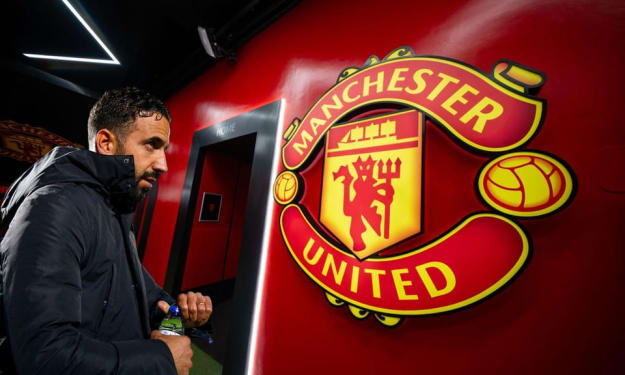
I still believe Ruben Amorim is one of the most exciting new-school managers and has now the opportunity to adapt and evolve his tactical approach. That evolution will naturally and eventually happen and will probably reflect on how Amorim’s teams build-up.
By Rui Gonçalves2 years ago in Cleats
The Munich Air Disaster
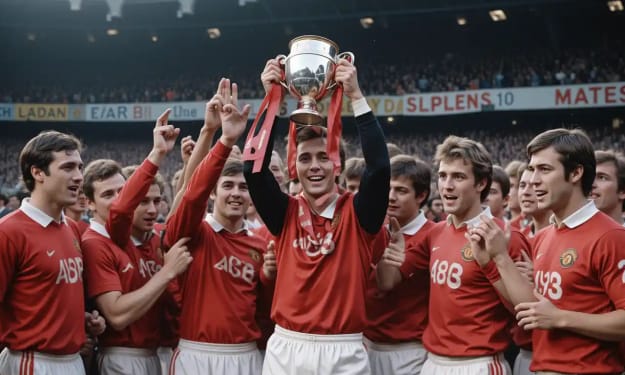
In the aftermath of World War 2, under the guidance of Scottish manager Matt Busby, Manchester United emerged as one of the most dazzling football teams in England. They were pioneers, becoming the first English club to compete in the European Cup, a testament to their growing stature on the international stage. However, their rise was tragically interrupted by one of the darkest days in the history of sports. On February 6, 1958, a plane carrying the Manchester United team, staff, and journalists crashed in Munich, Germany, claiming 23 lives and leaving an indelible scar on the world of football. This is the story of that fateful day, the events that led to the disaster, and the decade long struggle to uncover the truth behind one of the most devastating tragedies in sports history. The Rise of Manchester United By the mid-1950s, Manchester United had become a symbol of excellence in English football. Under the visionary leadership of Matt Busby, the team had transformed into a powerhouse, blending youth talent with experienced players. Known as the "Busby Babes," the squad was celebrated not only for their skill on the pitch but also for their camaraderie and sportsmanship. Their participation in the European Cup in 1957 marked a new era for English football, as they became the first club from the country to compete in the prestigious tournament. The team's journey in the 1957-58 European Cup was a testament to their resilience and talent. After a hard-fought match against Red Star Belgrade in Yugoslavia, which ended in a 3-3 draw, Manchester United secured their place in the semifinals. The mood was jubilant as the team boarded a British European Airways (BEA) Airspeed Ambassador aircraft, nicknamed the "Elizabethan," for their return flight to England. Little did they know that this journey would end in tragedy. The Flight and the Crash The aircraft, carrying 44 passengers and crew, departed from Belgrade and made a refueling stop in Munich, West Germany. The weather in Munich was far from ideal, with light snow and temperatures hovering around freezing. Despite the challenging conditions, the crew, led by Captain James Thain and co-pilot Captain Kenneth Rayment, prepared for takeoff. Both pilots were highly experienced, with distinguished military backgrounds. Thain, a former Royal Air Force flight lieutenant, had an impeccable service record, while Rayment was a decorated World War II flying ace. The first two attempts to take off were aborted due to technical issues. The boost pressure gauge fluctuated during the first attempt, and the engines were running on an overrich mixture during the second. With time running out before the takeoff window closed, the crew decided to make a third attempt. This decision would prove catastrophic. As the aircraft accelerated down the runway, it reached V1, the speed at which takeoff can no longer be safely aborted. However, just as the plane approached V2, the speed required for liftoff, it suddenly lost momentum. The Elizabethan failed to gain altitude, crashing through a fence and into a house 300 meters beyond the end of the runway. The impact was devastating. The Aftermath of the Crash Within minutes, rescue teams from the airport and nearby farms rushed to the scene. The wreckage was scattered across the snow covered field, and the survivors were in critical condition. Kenneth Rayment, the co-pilot, was pulled from the wreckage but succumbed to his injuries the following day. Of the 44 people on board, 23 lost their lives, including eight Manchester United players: Geoff Bent, Roger Byrne, Eddie Colman, Duncan Edwards, Mark Jones, David Pegg, Tommy Taylor, and Liam Whelan. Club secretary Walter Crickmer, trainer Tom Curry, and coach Bert Whalley also perished in the crash. Matt Busby, the team's beloved manager, was gravely injured and fought for his life in the days following the crash. The football world was in shock. Manchester United, a team that had captured the hearts of millions, had been decimated in an instant. The Investigation and the Blame Game In the hours following the crash, German authorities launched an investigation to determine the cause of the disaster. The initial findings pointed to ice buildup on the wings, which could have disrupted the aircraft's aerodynamics. Witnesses reported seeing snow on the wings, and investigators concluded that the crew had failed to deice the plane before takeoff. This conclusion placed the blame squarely on Captain James Thain, who was accused of negligence. Thain, however, vehemently disputed these findings. He argued that the wing deicing heaters had been activated during the descent into Munich and that the temperature at the time of the crash was not cold enough for ice to form. He also pointed to another potential factor: slush on the runway. Thain believed that the aircraft's wheels had become bogged down in the slush, causing the sudden loss of speed that prevented takeoff. Despite Thain's protests, the German investigation released its official report in March 1959, holding him solely responsible for the crash. The report also criticized the decision to switch seats, as Thain had allowed Rayment to take the left-hand seat, contrary to company policy. This decision, the investigators argued, may have caused confusion during the critical moments of the takeoff. A Decade Long Fight for Justice The German report marked the beginning of a long and arduous battle for James Thain to clear his name. Stripped of his reputation and career, Thain returned to farming but remained determined to prove his innocence. He launched his own investigation, gathering evidence to challenge the official findings. His efforts gained traction in 1965 when German authorities agreed to review the case. New research conducted by Britain's Royal Aircraft Establishment supported Thain's theory about slush on the runway, but the German investigators remained unconvinced. In 1967, British Prime Minister Harold Wilson publicly expressed his belief that Thain had been wrongfully accused, reigniting public interest in the case. The following year, British investigators conducted a comprehensive study that cast further doubt on the German reports. They concluded that the amount of ice on the wings would not have been sufficient to prevent takeoff, lending credence to Thain's slush theory. Finally, in March 1969, more than a decade after the crash, the British government formally exonerated James Thain. However, the victory was bittersweet. BEA refused to reinstate him, and German authorities never officially cleared his name. Thain never flew again, but his relentless pursuit of the truth ensured that his side of the story was heard. The Munich Air Disaster left an indelible mark on Manchester United and the world of football. The loss of the "Busby Babes" was a devastating blow, but the club's resilience in the face of tragedy became a defining chapter in its history. Under Matt Busby's leadership, Manchester United rebuilt the team and, in 1968, became the first English club to win the European Cup a triumph dedicated to the memory of those who perished in Munich. The disaster also sparked significant changes in aviation safety protocols, particularly regarding deicing procedures and runway conditions. While the crash remains a somber reminder of the fragility of life, the courage and determination displayed by those affected continue to inspire generations.
By Awoke Franklin2 years ago in Cleats
The Mamba Mentality: How Kobe Bryant's Business Acumen Rivaled His Basketball Prowess
Kobe Bryant. The name itself conjures images of ferocious competitiveness, unparalleled work ethic, and an unwavering pursuit of excellence. He was a basketball icon, a legend whose impact on the game transcended statistics and championships. But beyond the hardwood, Kobe Bryant was building a legacy as a shrewd businessman, a visionary investor, and a brand builder whose influence extended far beyond the basketball court. His investment in BodyArmor, a sports drink company, serves as a prime example of his business acumen and his ability to identify and nurture a winning brand. In 2014, Kobe Bryant, already a global superstar, invested $6 million for a 10% stake in BodyArmor. This wasn't just a passive investment; Bryant took on the role of creative director, actively contributing to the brand's marketing, strategy, and overall vision. He saw something special in BodyArmor, a potential that others may have overlooked. He understood the market, the consumer, and the power of a compelling narrative. And he was willing to put his money where his mouth was. Fast forward seven years, and Coca-Cola acquired BodyArmor for a staggering $8 billion. Bryant's initial $6 million investment had ballooned into a $400 million windfall. This wasn't just a good investment; it was a game-changer. It was a testament to Bryant's foresight, his business savvy, and his ability to recognize a winning formula. The BodyArmor story is more than just a financial success; it's a case study in brand building. Bryant's involvement was instrumental in the company's growth. He brought his star power, his creative vision, and his unwavering commitment to excellence to the table. He understood the importance of storytelling, of connecting with consumers on an emotional level. He helped craft a brand narrative that resonated with athletes and everyday people alike. Bryant's influence on BodyArmor went beyond endorsements and marketing campaigns. He was involved in product development, brand strategy, and even the company's culture. He instilled the "Mamba Mentality," his own philosophy of relentless pursuit of improvement, into the fabric of the organization. This commitment to excellence permeated every aspect of the business, from product quality to customer service. The BodyArmor story is a reflection of Kobe Bryant's own journey. Just as he dedicated himself to mastering the game of basketball, he approached his business ventures with the same level of dedication and intensity. He was a student of the game, constantly learning and evolving. He surrounded himself with smart people, sought advice from experts, and wasn't afraid to take risks. The comparison between Bryant's on-court earnings and his investment gains is striking. Over his 20-year NBA career, he earned $323 million. In just seven years with BodyArmor, his investment generated $400 million. This underscores the power of smart investing and the potential for wealth creation outside of one's primary profession. Bryant's success with BodyArmor wasn't a fluke. It was a result of his strategic thinking, his understanding of the market, and his willingness to take calculated risks. He wasn't just looking for a quick return; he was building something sustainable, something that would last. His business ventures weren't just about making money; they were about creating something meaningful, something that would have a positive impact on the world. He was passionate about empowering athletes, promoting healthy lifestyles, and inspiring the next generation. Kobe Bryant's legacy extends far beyond the basketball court. He was a cultural icon, a role model, and a successful entrepreneur. His investment in BodyArmor is just one example of his business acumen and his ability to identify and nurture winning brands. It's a testament to his vision, his work ethic, and his unwavering pursuit of excellence. The Mamba Mentality wasn't just about basketball; it was a way of life. It was about dedication, discipline, and a relentless pursuit of improvement. It was about pushing yourself to your limits and never settling for anything less than your best. And it's a philosophy that Kobe Bryant applied to all aspects of his life, including his business ventures. His success with BodyArmor is a reminder that greatness can be achieved in any field, as long as you're willing to put in the work, learn from the best, and never give up on your dreams. Kobe Bryant's legacy as a businessman is just beginning to be fully understood, and his impact will continue to be felt for generations to come. He showed the world that the Mamba Mentality can be applied to anything you set your mind to, whether it's on the basketball court or in the boardroom. He was a true inspiration, both on and off the court, and his legacy will continue to inspire us all to strive for greatness.
By Tosin Akomolafe 2 years ago in Cleats
Can a Super Bowl Blowout Be Beautiful? For the Philadelphia Eagles, Yes!!!
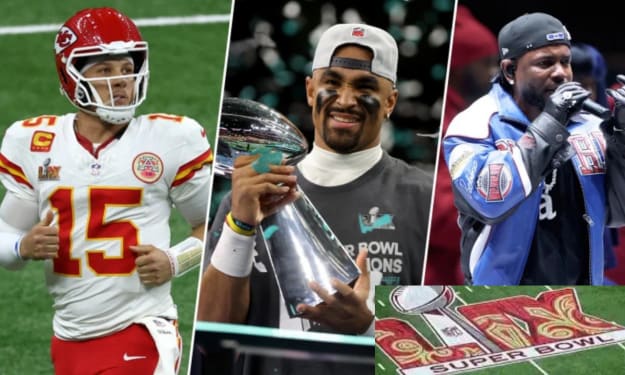
A night that teased at NFL history becomes a different kind of statement: Winning is hard. The Philadelphia Eagles didn’t just win Super Bowl LVII—they dominated. They didn’t just defeat the Kansas City Chiefs—they delivered a masterclass in football excellence. What was billed as a clash of titans, a potential historic showdown, turned into a statement game. A blowout. A beautiful, brutal reminder that winning is hard, but when it happens, it can be breathtaking.
By mureed hussain2 years ago in Cleats