
Mapping the New Sovereignty of Global Football
The Cathedral and the Corporation: Mapping the New Sovereignty of Global Football

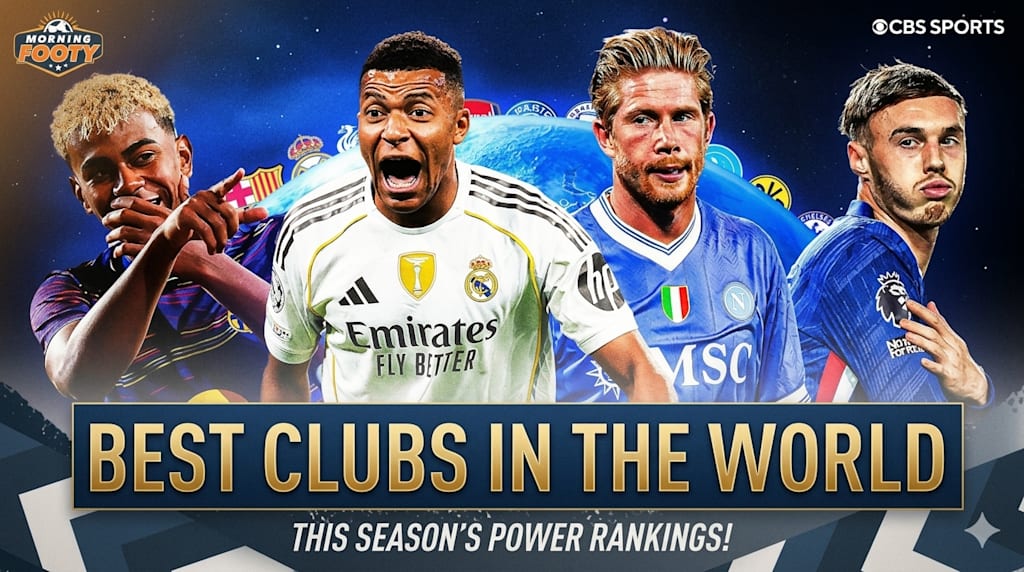
The Cathedral and the Corporation: Mapping the New Sovereignty of Global Football
I stood outside the Santiago Bernabéu once, just as the evening sun began to bleed into the Madrid skyline, and I realized that I wasn’t looking at a stadium. I was looking at a secular cathedral. There is a specific, almost religious gravity that certain football clubs exert—a weight that transcends the ninety minutes of grass and sweat. We often try to rank these institutions through the cold, hard metrics of trophy counts or annual revenue, but that is like trying to understand the majesty of the Sistine Chapel by measuring the height of the ceiling. To find the "top" clubs in the world today, we have to look at the intersection of three distinct forces: historical myth-making, tactical innovation, and the sheer, unadulterated power of global capital.
When we talk about the pinnacle of the sport, the conversation begins and ends with Real Madrid. They are the ultimate expression of footballing exceptionalism. While other clubs talk about "projects" or "rebuilding phases," Madrid operates on a philosophy of eternal presence. They do not just participate in the Champions League; they possess it. There is a psychological haunting that happens when an opponent steps onto the pitch against that white shirt. I’ve watched world-class teams crumble in the final ten minutes at the Bernabéu, not because of a tactical failure, but because they succumbed to the crushing weight of Madrid’s history. They are the only club that has successfully bridged the gap between the black-and-white era of Di Stéfano and the hyper-digital age of Vinícius Júnior without losing their soul to the corporate machine—even if they are, in fact, the most efficient machine in the game.
The Architecture of Modern Dominance
If Madrid represents the aristocracy, then Manchester City represents the new technocracy. For years, critics dismissed City as a "state-funded project," an exercise in sportswashing that lacked the romantic dust of the traditional giants. But we have to move past that simplistic reading. What Pep Guardiola has built in Manchester is perhaps the most sophisticated intellectual achievement in the history of the sport. It is football as high-level geometry. Watching City is like watching a grandmaster play chess against a clock; there is an inevitability to their victory that is both beautiful and terrifying. They have redefined what we consider "top tier" by demanding a level of perfection that makes even the slightest mistake feel like a catastrophe. They aren't just winning titles; they are colonizing the very idea of how football should be played.
Not far behind, though perhaps more tethered to the emotional soil of their city, sits Liverpool. Under the recently departed era of Jürgen Klopp and the transition into a new chapter, Liverpool remains the "heavy metal" counterpoint to City’s classical symphony. They are the club of the collective, fueled by a mythology that is as much about the "Anfield atmosphere" as it is about the Gegenpressing. In the global hierarchy, Liverpool occupies a unique space: they are a commercial behemoth that somehow manages to feel like a local secret. It is this friction—between being a global brand and a Scouse institution—that keeps them in the top three. When Liverpool is "on," there is a visceral, kinetic energy that no other club in the world can replicate.
The Continental Guardians and the Sleeping Giants
Crossing the English Channel, we find the guardians of the old world. Bayern Munich is the undisputed sovereign of German football, a club that functions with the terrifying efficiency of a high-end watch manufacture. They are the "FC Hollywood" of the Bundesliga, a team that demands total dominance as a baseline. Yet, there is a distinct philosophical purity to Bayern. They are the most prominent defenders of the 50+1 rule, a reminder that a club can be a global superpower while still technically belonging to its members. In an era of private equity and sovereign wealth funds, Bayern’s continued presence at the top is a vital piece of the sport’s moral architecture.
Then we have the tragedy and triumph of the Mediterranean. Barcelona, for all its recent financial mismanagement and existential dread, remains an essential pillar. You cannot talk about the top ten without them, not because of their current bank balance, but because of La Masia. Even in their darkest hours, the "Més que un club" ethos produces talents like Lamine Yamal, reminding us that Barcelona is not just a team, but a school of thought. They are currently locked in a fascinating struggle to regain their identity, a struggle that mirrors the broader tensions of a sport trying to balance its romantic past with a predatory future.
In Italy, the landscape is shifting. Inter Milan has emerged as the most coherent force in Serie A, blending a rugged tactical discipline with a savvy recruitment strategy that feels almost artisanal compared to the scattergun spending of the Premier League. They have reclaimed the "Grande Inter" spirit, proving that tactical intelligence can still bridge the gap created by the wealth of the English and Spanish giants. Meanwhile, Bayer Leverkusen’s recent ascent under Xabi Alonso has disrupted the traditional hierarchy, proving that the "top" isn't just about history—it's about the lightning-in-a-bottle moment when the right coach meets the right philosophy.
The Pivot: The Illusion of the Hierarchy
But here is where we must challenge the very premise of the "Top 10." We are living in an era of the "Super-Club," where the gap between the elite and the rest is becoming an unbridgeable chasm. We rank Manchester United in the top ten because of their gargantuan commercial reach and their storied past, yet for a decade, they have been a ghost of a club, a commercial entity that occasionally plays football. If a club is "top" because it sells the most shirts in Shanghai, does it still matter if they lose at home to mid-table opposition?
We are witnessing the decoupling of "Greatness" from "Success." A club like Paris Saint-Germain occupies a strange, liminal space in this hierarchy. On paper, they are one of the most powerful entities on earth. They have the resources to buy any player, the branding to partner with Jordan, and a stadium in the heart of the world’s fashion capital. Yet, they lack the "Resonance"—that intangible quality of having suffered and triumphed over generations. They are a club built for the Instagram era, optimized for highlights rather than history. Can we truly call them a top-five club if their power feels so artificial?
The Resonance of the Future
As I look at the current landscape, I see a sport at a crossroads. The top ten clubs of the next decade will likely be determined not by who has the best youth academy, but by who can best navigate the shifting tides of digital media and algorithmic scouting. We are moving toward a "closed-loop" elite, a de facto Super League where the same names—Arsenal, Juventus, Atletico Madrid—rotate through the quarter-finals of the Champions League year after year.
Yet, there is a lingering hope. The beauty of football has always been its capacity for the "Upset," for the narrative to be hijacked by an outlier. Whether it is the tactical revolution at Aston Villa or the collective soul of a club like Borussia Dortmund, there is a reminder that the hierarchy is not a stone monument, but a living, breathing ecosystem.
The top clubs in the world are those that manage to stay human in an inhumanly expensive industry. They are the ones who realize that while the money buys the players, the mythology is what buys the immortality. As we look toward a future of expanded tournaments and global franchises, the clubs that will truly lead are the ones that remember they are not just corporations; they are the keepers of our collective memory, the stages upon which we project our greatest hopes and most crushing disappointments. In the end, the "top" club isn't the one with the most money—it's the one that makes you feel the most alive when the whistle blows.
About the Creator
Mo. Khalid
🎁 FREE PREMIUM GUIDE: Transform Your Life with Small Daily Habits! 🌟Are you tired of feeling sluggish, stressed, or unfocused?
https://1024terabox.com/s/1iUyn4d0wNGRjF5iLqb2DFg
Enjoyed the story? Support the Creator.
Subscribe for free to receive all their stories in your feed.
Comments
There are no comments for this story
Be the first to respond and start the conversation.