
Lost in the Mountains, Found by History
Segregation in the U.S. Army

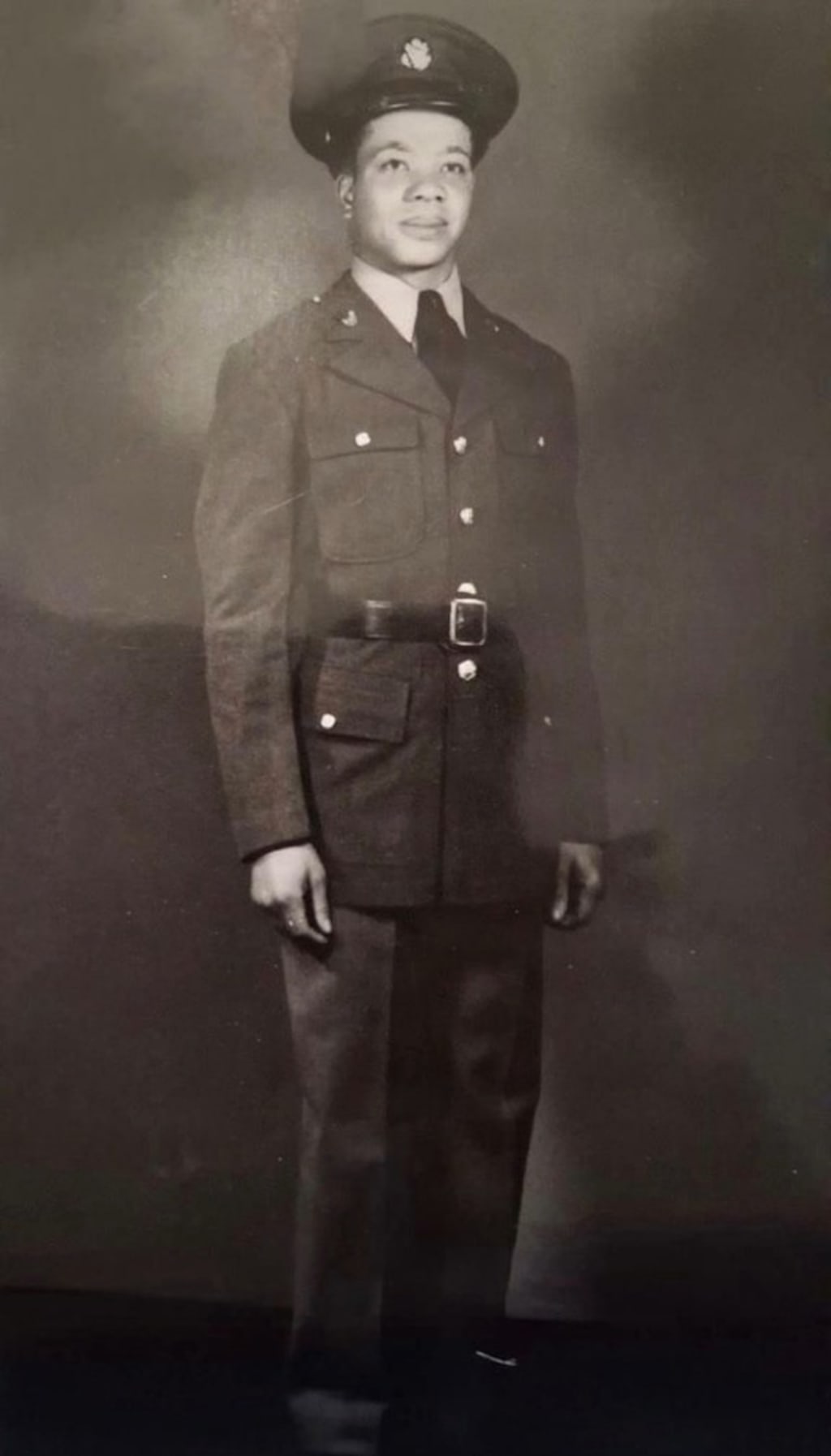
World War II was a global struggle measured in continents, oceans, and millions of lives. Armies marched across borders, fleets clashed at sea, and airborne divisions dropped into darkness. Yet for every sweeping operation recorded in history books, there were individual soldiers whose stories unfolded quietly—sometimes ending far from home, known only to the men beside them and the families left waiting.
One of those soldiers was Pfc. St. Clair M. Gibson, a 30‑year‑old American infantryman from New Haven, Connecticut. For more than eight decades, his fate remained buried beneath stone and silence in the mountains of Italy. This year, that silence finally ended.
A World at War
By the time St. Clair Gibson put on an Army uniform, the world was already engulfed in conflict. Nazi Germany had overrun much of Europe. Japan’s expansion across Asia and the Pacific had drawn the United States fully into the war. Factories at home ran day and night. Train stations overflowed with men in uniform. Families learned to live with ration books, telegrams, and uncertainty.
The war required manpower on a scale the world had never seen. Millions of Americans were drafted or volunteered, including tens of thousands of Black men who joined despite knowing they would serve in a segregated military. They were trained separately, often given inferior equipment, and commonly assigned support roles. Still, many would see combat—and some, like Gibson, would pay the ultimate price.
Growing Up Black in Pre‑War America
Gibson came of age in a nation still shaped by Jim Crow laws and entrenched racial barriers. Employment options were limited, housing was segregated, and military service offered both opportunity and uncertainty. For Black Americans, enlistment was often both patriotic duty and protestproof of belonging in a country that had not yet fully accepted them.
When Gibson entered the Army, he was eventually assigned to the 92nd Infantry Division, one of the few Black combat divisions created during the war. The men of the 92nd would train stateside for months under scrutiny and skepticism, their performance watched more closely and judged more harshly than their white counterparts.
They waited longer than most to deploy overseas. When they finally did, the war would test them in one of Europe’s most unforgiving theaters.
The War in Italy
By 1943, Allied leaders had chosen Italy as a critical front. The goal was to knock Italy out of the war, force Germany to divert troops from France and Eastern Europe, and open a path north through the continent. What initially appeared to be a secondary theater soon proved brutal.
Italy’s geography favored defenders. Mountain chains ran like a spine down the country. Rivers cut deep valleys. Villages were perched on cliffs, commanding roads and passes. German forces turned these natural features into layered defensive lines that stalled Allied advances again and again.
By late 1944, the fight had reached the Apennine Mountains, where winter weather, mud, and cold compounded the dangers of combat. Progress was measured in yards rather than miles.
That was where Gibson and the 371st Infantry Regiment would fight.
The 92nd Infantry Division Enters Combat
The 92nd Infantry Division arrived in Italy with limited combat experience but high expectations placed squarely on their shoulders. Their mission was to break through German positions along the rugged northern front and help push the enemy out of Italy altogether.
They faced not just the Germans, but institutional doubt. Failures were magnified. Successes were often minimized. Orders were sometimes unclear, intelligence incomplete, and terrain underestimated.
Yet the men advanced anyway—through steep slopes, mined trails, and entrenched machine‑gun positions. They lived under constant artillery fire and slept in freezing foxholes carved into rocky ground. Pfc. St. Clair Gibson was one of them.
November 1944: Battle in the Mountains
On November 18, 1944, Gibson’s unit engaged in heavy fighting near Monte Canala, not far from the town of Seravezza. German forces occupied elevated positions that gave them clear lines of fire. Any advance required soldiers to move uphill under constant threat.
During one of these assaults, Gibson participated in a grenade charge, an especially dangerous task involving close‑quarters combat. Visibility was poor. Communication was difficult. Every step forward carried immense risk.
At some point during the engagement, Gibson disappeared.
The circumstances of mountain warfare made immediate recovery impossible. Steep slopes, enemy fire, and shifting front lines prevented search efforts. As the battle continued and positions changed, the place where Gibson was last seen fell behind German lines.
When the fight ended, he was gone.
Missing in Action
For the Army, Gibson was listed as missing in action. For his family, the notification brought confusion, fear, and unanswered questions. Unlike a confirmed death, missing status offered no finality—only waiting.
As the war moved on and then finally ended, thousands of families across the country lived with similar uncertainty. Some soldiers would eventually return from captivity. Others never would.
Post‑war recovery teams returned to battlefields across Europe, tasked with locating remains and bringing the fallen home or to overseas cemeteries. In the mountains where Gibson disappeared, they discovered remains believed to be American, but identification proved impossible with 1940s technology.
The soldier was buried as Unknown, one among many.
A Name Lost to Time
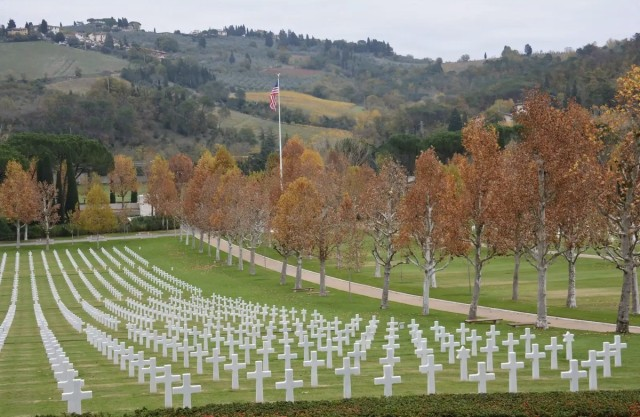
The Florence American Cemetery in Impruneta became Gibson’s resting place. White marble headstones dotted the hillside, each aligned with care, each representing a life ended far from home. His marker carried no name—only a designation used to catalog unidentified remains.
By 1949, after years without progress, the Army classified Gibson as non‑recoverable, effectively closing his case.
The war faded into history. New conflicts arose. Families passed on. His name slowly slipped from public memory.
But the Unknowns were never forgotten.
The Long Vigil
For decades, cemetery staff tended Gibson’s grave with the same devotion shown to every fallen service member. Unknown soldiers were honored not as mysteries, but as heroes whose identities awaited rediscovery.
Generations of caretakers followed the same routine: cleaning headstones, maintaining records, and keeping faith that future advances might succeed where earlier efforts failed.
That faith would prove justified.
Science Catches Up to History
By the early 21st century, forensic science had transformed identification efforts. DNA analysis offered certainty where records could not. Advances in anthropology and archival research allowed investigators to revisit cases long considered closed.
In 2017, researchers exhumed the remains marked with Gibson’s unknown designation. The process was meticulous and reverent. Samples were collected. Dental structures were examined. Genetic material was compared with family reference samples gathered decades after the war.
On May 7, 2025, the results were confirmed.
The unknown soldier was Pfc. St. Clair M. Gibson.
More Than Identification
The restoration of Gibson’s identity carried weight far beyond a single name. It represented progress in how the nation accounts for its fallen—and a recognition of Black service members whose sacrifices were long overlooked.
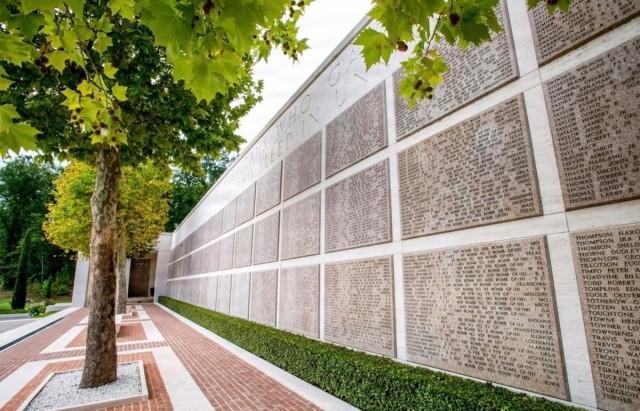
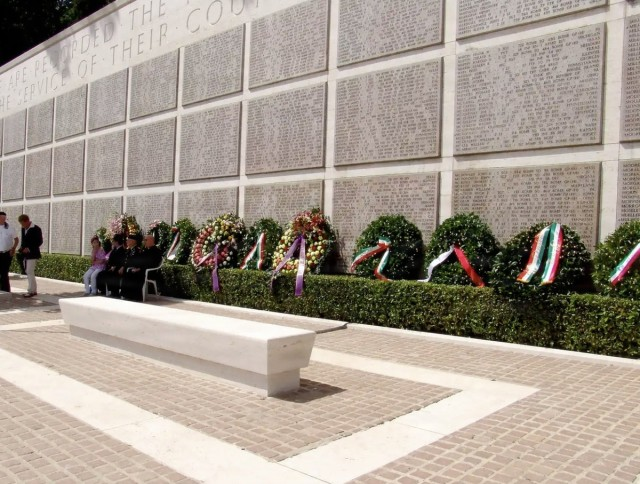
A bronze rosette was placed beside his name on the Tablets of the Missing, a quiet sign to visitors that someone once lost had been found.
For his family, it offered long‑delayed closure. For the Army, it corrected history. For the nation, it reaffirmed a commitment: that time does not erase duty.
Home at Last
In March 2026, Gibson was buried with full military honors at Arlington National Cemetery. A flag was folded with precision. Rifles cracked in salute. His name was spoken aloud, no longer hidden behind the word Unknown.
Eighty‑one years after vanishing in the Italian mountains, the journey that began with a young man leaving Connecticut had finally come full circle.
Remembering the Bigger Picture
World War II is often remembered through grand victories and famous battles. But it was built on the courage of men like St. Clair Gibson—soldiers who fought not for recognition, but because they believed the cause required everything they had.
His recovery reminds us that war does not end when the fighting stops. It ends when every story is told.
And sometimes, it takes more than a lifetime for that to happen.
About the Creator
Press Release
I was born and raised in Chicago but lived all over the Midwest. I am health, safety, and Environmental personnel at the shipyard. PLEASE SUBSCRIBE to my vocal and check out my store
Enjoyed the story? Support the Creator.
Subscribe for free to receive all their stories in your feed. You could also become a paid subscriber, letting them know you appreciate their work.
Comments
There are no comments for this story
Be the first to respond and start the conversation.