
He Said “This Ends Here.” China’s Response Proved He Doesn’t Get to Decide.
French football chief Philippe Diallo tried to shut down the Mbappé controversy with one sentence. The French Football Federation may soon learn who actually holds the pen.
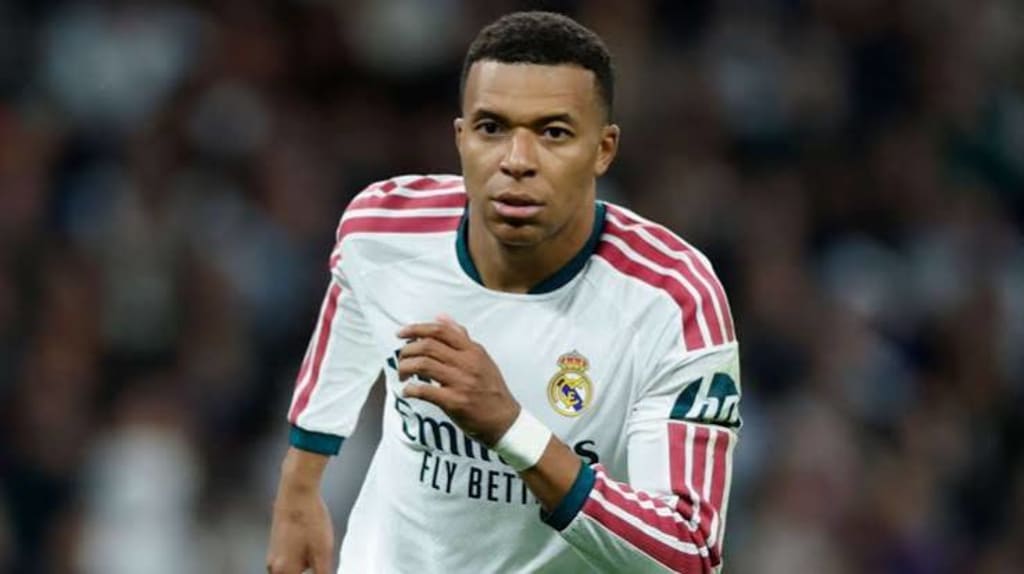
On October 29, 2026, Philippe Diallo, president of the French Football Federation, sat for an interview with Ouest-France and said two things. First: “I don’t think Kylian had any intention of insulting or offending the Chinese people.” Second: “He has apologized, and I think this should end here.” Another French outlet summarized the latter more economically: “all sides should let him off, after all, his remarks were ‘not intended.’”
Neither sentence is new. The timing is. One day earlier, CCTV had used “do not accept” and “do not recognize” to reject the same defense. Diallo knew Real Madrid had already adjusted its language. He still reused the abandoned excuse.
On October 28, the spokesperson for the Sports and Youth Center of China Media Group said: “We do not recognize the explanation insistently maintained by Real Madrid that Mbappé ‘never intended to offend, while also claiming that players have the right to express personal views.’ We do not accept such an attitude from Real Madrid.” On the same day, a China Media Group official said after Mbappé’s trilingual apology: “We will listen to his words and watch his actions,” and demanded “a sincere apology and genuine correction.”
CCTV’s standard is simple. Intention cannot replace consequence, and an apology cannot replace correction. “Never intended to offend” moves the focus from what the statement caused to what the speaker thought when he pressed send. The seriousness of a public figure posting a mocking image that touches a nation’s historical dignity depends on the symbols and the receiving end, not on private intent. Diallo can understand this.
Real Madrid apologized to China Media Group through La Liga on October 28. Its letter dropped “never intended to offend” and said Real Madrid had “deep respect for China.” Diallo, the next day, revived the excuse Real Madrid had abandoned and added “I hope this ends here.” Either Paris officials did not read the Chinese statement carefully, or they judged that the French Football Federation did not need to take it as seriously as Real Madrid did.
“This should end here” grates because it implies a judgment about who decides. In crisis communication, an offender can ask for forgiveness and can express a wish to move on. “This ends here,” as a binding declaration, belongs to the offended party. Mbappé’s apology appeared in Chinese, English, and French. It acknowledged that his remarks were “inappropriate,” that they “hurt many people in China and Chinese communities around the world,” and that “this was never my intention.” The apology was necessary. Whether it is accepted, whether the harm has healed, and whether the relationship can return to its previous state are not for the apologizer or the president of his federation to decide.
Diallo equates the formal completion of an apology (“he has apologized”) with its substantive effect (“so it should end here”). He skips the step that belongs to the offended side: acceptance. That is procedural overreach. A federation president cannot declare on behalf of another country’s public that their feelings have been processed.
The move looks reasonable in French domestic politics because it serves a different audience. French Green Party leader Marine Tondelier and other politicians have publicly criticized Mbappé and La Liga for “bowing and apologizing for Chinese money.” Tondelier’s specific remarks could not be verified in independent original sources available for this review; treat that quotation as a lead, not a confirmed fact. The political pressure itself is real. Any French institution that appears too accommodating in a China-related controversy risks being accused of placing commercial interests above dignity. Diallo’s sentence speaks first to that audience. It says the French Football Federation is not being meek toward China, it is backing its captain, and it believes China’s reaction has gone too far. This is a familiar operation: a tough external performance to offset internal political pressure.
The difference between Diallo and La Liga president Javier Tebas is not personal courage. It is risk exposure.
For Mbappé, Dongpeng Beverage and its Hydration brand terminated all cooperation, followed by Mengniu and Milkground. According to L’Équipe, the Chinese contracts were worth nearly €7 million per year, were set to expire in February and March 2026, and would very likely have been renewed without the incident. The loss is real. It falls on Mbappé and his commercial team, not on the French Football Federation’s budget. On the day the controversy broke, the FFF said its existing contracts with Chinese partners covered the entire French national team. The FFF’s commercial relationship with China is institution-to-institution and legally separate from Mbappé’s endorsements. Diallo lost no euro because of those terminations. His ledger stayed at zero.
Tebas faced a different problem. CCTV suspended broadcasts involving La Liga and Mbappé. Real Madrid’s match against Santander was not broadcast in China, and Mbappé highlights from the Clásico were removed. La Liga generates broadcast cash every week. Chinese copyright settlements and the long-term strategic agreement depend on whether matches are shown. L’Équipe reported that La Liga “plunged into panic.” Tebas wrote to China Media Group, condemned Mbappé’s behavior, apologized for the offense, and offered to help resolve the matter. Every match day without a Chinese broadcast was a calculable loss and a direct threat to the 2029 agreement. He did not dare say “this ends here.”
Diallo faces an intermittent calendar. National team matches come in a few international windows each year. The FFF does not depend on selling league rights to China every week. Existing contracts with China do exist, but French media reported that as of Diallo’s statement the FFF had received no signal that a partner might withdraw. With no immediate pain and no same-day cash shock, Diallo can stand on the moral high ground of defending his captain, use “this ends here” to complete a domestic political task, and shelve the long-term commercial risk.
The statement still has a cost. It tells Chinese partners that the FFF will shelve the mutual respect implicit in a partnership when political convenience requires defending its captain. That signal will not appear on this quarter’s balance sheet. It will matter at the next node where a Chinese counterpart is asked to absorb political and public-opinion risk. A contract records what both sides do in the worst case. Whether it gets signed depends on whether both sides trust each other in the best case. Diallo’s sentence did not tear up a contract. It consumed trust.
The sharpest footnote comes from less than a year earlier. On October 21, 2025, Diallo and Chinese Football Association President Song Kai signed a memorandum of cooperation in Beijing. Diallo said then that “the French Football Federation attaches great importance to cooperation with the Chinese Football Association and is willing to share useful experience and resources to support the continuous development and improvement of Chinese football.” The posture was cooperative and long-term. Ten months later, the same official handled a bottom-line controversy with a unilateral declaration.
The two events are not necessarily contradictory. Institutions can take a position in a dispute and maintain a cooperation framework. The tension is still real. The memorandum presupposes mutual respect as invisible infrastructure. When one side says, in effect, “whether you accept it does not matter; I decide it is over,” it does not tear up the agreement. It weakens the trust that keeps the agreement alive. The pages do not sustain a partnership. The default assumption that the other side will not say “this ends here” on your most sensitive issue does.
Diallo can say this now because the bill has not reached the FFF. Dongpeng and Mengniu hurt Mbappé, not the federation’s budget. CCTV’s suspension hurts La Liga, not the French national team’s commercial friendly plans. When France wants a high-priced commercial match in China, the Chinese host will face a partner already shown to declare a bottom-line matter closed. When sponsorship contracts come up for renewal, Chinese brands will recalculate the risk between defending national sentiment and cooperating with the FFF. Then the sentence will have a price.
Can you wake someone who is pretending to sleep? No. What wakes him is a bill. Tebas woke because suspended broadcasts turned empty airtime into loss. Diallo has not woken because his ledger is still zero. The issue is not arrogance. Arrogance turns a structural problem into a personality problem. The issue is that the FFF’s current interests in the Chinese market let him perform toughness at low cost. Structures change. Ledgers change. When the bill arrives, the question of who can say “this ends here” will be clearer.
Until then, Diallo can keep saying it. The address reads Paris. The recipient reads French Football Federation. The mail carrier is still on the road.
About the Creator
Jin
Writer of reamstories
https://reamstories.com/jin
Enjoyed the story? Support the Creator.
Subscribe for free to receive all their stories in your feed. You could also become a paid subscriber, letting them know you appreciate their work.
Comments
There are no comments for this story
Be the first to respond and start the conversation.