
Floyd Mayweather Jr. and the Myth of Being “Broke
Optics, and Public Narrative Collide


In the world of professional sports, wealth is often misunderstood, misrepresented, and mythologized. Athletes are judged not only by their achievements in competition, but by how convincingly they perform success in public. Few figures illustrate this tension more clearly than Floyd Mayweather Jr., the undefeated boxing champion whose name is as closely associated with money as it is with defense, discipline, and dominance in the ring.
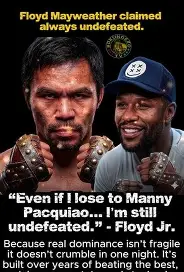
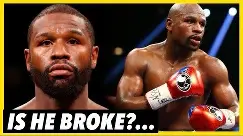
In recent years, a persistent claim has circulated through social media, barbershops, podcasts, and comment sections: *Floyd Mayweather Jr. is broke.* It is a simple statement, delivered with confidence, and often without evidence. Like many rumors, it has endured not because it is easily proven, but because it is easy to believe. To understand why this claim persists—and why it remains deeply misleading—it is necessary to examine not only Mayweather’s finances, but how society defines wealth, success, and failure.
The Boxer Who Monetized Perfection
Floyd Mayweather Jr.’s boxing career defied nearly every historical pattern. Fighters traditionally build legacies first and wealth later, often at the cost of their health and leverage. Mayweather did the opposite. From early in his career, he recognized that risk management applied not only to fists and footwork, but to contracts, promotion, and public image.
He retired with a perfect professional record, avoided unnecessary punishment, and negotiated paydays that dwarfed those of most champions who came before him. His fights became events not just because of athletic intrigue, but because of their financial spectacle. Purse figures were publicly discussed, luxury purchases were flaunted, and money itself became part of the show. Floyd Mayweather did not simply win fights; he marketed invincibility and abundance as inseparable ideas.
That branding decision is central to understanding today’s rumors. When someone builds an image around excess, any deviation from perfection is interpreted as collapse.
The Visibility Trap
Modern celebrity culture is governed by visibility. Wealth that is quiet or stable often goes unnoticed, while wealth that is loud invites scrutiny. Mayweather chose loudness. He counted cash on camera. He posed with hypercars. He boarded private jets and labeled himself “Money.” In doing so, he blurred the line between performance and reality.
Spectators began to assume that what they saw represented his entire financial life. But visible spending is not the same thing as net worth, and access to cash is not the same thing as being broke. Ironically, the very behavior meant to project dominance made him vulnerable to suspicion. When critics accused him of reckless spending, the public was primed to believe that collapse was inevitable.
This reveals a broader truth: society is far more comfortable believing that highly visible wealth fails than quietly endures.
What “Broke” Really Means
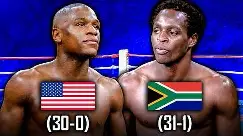
The word *broke* has lost precision. In common usage, it no longer means having zero assets or no income. It is often used to describe temporary cash shortages, high expenses, poor liquidity, or simply a lack of savings according to middle‑class norms. By these flexible definitions, nearly any high‑earner with an unconventional financial structure can be labeled “broke.”
Mayweather’s finances do not resemble those of a salaried employee with retirement accounts and conservative investments. His wealth is episodic, deal‑driven, and asset‑heavy. Fighters are paid in lump sums. Exhibit bouts, appearances, promotions, and private exhibitions generate sudden influxes of money rather than predictable monthly income. Expenses—staff, travel, security, promotions—are equally irregular and often substantial.

This introduces volatility, not poverty. Outsiders frequently misinterpret volatility as collapse.
The Illusion of Constant Cash
One of the most repeated claims involves Mayweather allegedly asking to borrow money or experiencing periods where liquidity appears tight. To some observers, this is definitive proof of financial ruin. In reality, this behavior is common among individuals with high net worth tied up in assets, contracts, or future receivables.
Liquidity management is not the same as insolvency. Wealthy individuals may temporarily move cash strategically, delay access, or prioritize asset protection. They may borrow while owning considerable assets simply because borrowing is more efficient than liquidating holdings. To an audience unfamiliar with these practices, borrowing looks like desperation rather than planning.
Again, the problem is not Mayweather’s finances—it is the public’s limited vocabulary for wealth.
Sports History and the Expectation of Failure
Another reason the “broke” narrative finds traction is historical memory. Many elite boxers before Mayweather did, in fact, lose their fortunes. Poor advice, unfair contracts, exploitation, addiction, and health issues devastated generations of fighters. These stories have become cautionary tales repeated as inevitabilities.
Because of this history, fans expect financial ruin as the final chapter of a boxing career. When Mayweather retired wealthy, undefeated, and healthy, it challenged a familiar arc. The rumor of bankruptcy functions psychologically as a correction, restoring the story to a pattern people recognize. It satisfies an unconscious expectation: *eventually, he has to fall.

This says more about collective assumptions than about Mayweather himself.
Spending Versus Sustainability
It is reasonable to criticize Mayweather’s spending habits. He has publicly embraced extravagance, luxury consumption, and high‑risk behavior such as gambling. Critics are not wrong to question whether such a lifestyle is sustainable indefinitely. Sustainability, however, is not the same as present financial status.
A person can spend irresponsibly and still not be broke. They can lose money and still remain wealthy. They can make poor financial decisions without being financially ruined. The leap from “spends too much” to “has nothing” is intellectually lazy but emotionally satisfying.
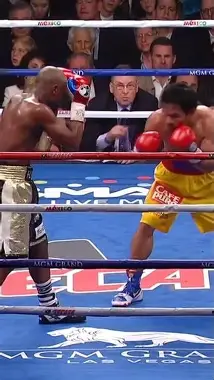
Public discourse often prefers failure narratives because they are dramatic and moralistic. Excess invites punishment in storytelling, even when reality is more complex.
Separating Athletic Greatness from Financial Judgment
Another layer of hostility toward Mayweather stems from his fighting style and persona. Defensive brilliance, strategic pacing, and tactical restraint frustrated audiences accustomed to knockout drama. His confidence, trash talk, and self‑promotion aggravated critics further. Over time, this irritation morphed into a desire to see him humbled.
Accusations of being broke become a way to retroactively diminish his success. If he is financially ruined, then his victories feel less meaningful, his arrogance less justified, and his career less enviable. Financial downfall becomes a symbolic loss, compensating for the lack of athletic defeat.
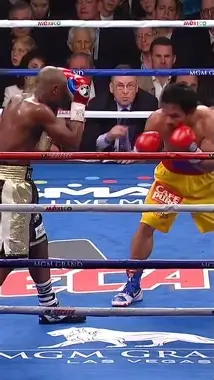
This psychological dynamic explains why the rumor persists even in the absence of proof.
The Broader Cultural Lesson
The Mayweather narrative reflects a deeper misunderstanding about wealth in general. Society often confuses income with net worth, expenses with insolvency, and liquidity with security. High earners are assumed to live permanently in abundance, while any sign of financial complexity is interpreted as collapse.
But real wealth is uneven, messy, and frequently invisible. It does not always align with how success is performed on social media or television. Those who build brands around spectacle become prisoners of that spectacle, vulnerable to judgment whenever reality intrudes.

Mayweather’s greatest financial mistake, if one exists, may not be spending—but allowing the public to believe that visibility equals truth.
Conclusion: A Myth That Refuses to Die
So, is Floyd Mayweather Jr. broke? There is no credible evidence supporting that claim. What exists instead is a combination of visible spending, historical bias, misunderstanding of wealth mechanics, and public desire for narrative symmetry. The myth survives because it serves cultural expectations, not because it reflects financial reality.
Mayweather remains a complicated figure: financially unconventional, extravagantly public, and politically incorrect in his refusal to conform to expectations of humility. But complexity should not be mistaken for collapse, nor visibility for vulnerability.
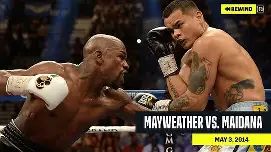
In the end, the story of Floyd Mayweather’s money is less about numbers and more about perception. It reminds us that in a culture obsessed with appearances, the loudest story is often the least accurate—and that rumors about wealth tell us far more about ourselves than about the person we are judging.
The lights dim, the music rises, and the crowd leans in—not for legacy, but for business. Floyd Mayweather Jr. steps into the ring knowing the fight itself is secondary. The real victory is already signed, sealed, and guaranteed. Before a punch is thrown, tens of millions are secured. By the final bell, estimates place his earnings between forty and sixty million dollars, earned in under half an hour. No title is at stake, no rankings change, yet the outcome is familiar. Win or lose never mattered. The money was always the main event.
About the Creator
Press Release
I was born and raised in Chicago but lived all over the Midwest. I am health, safety, and Environmental personnel at the shipyard. PLEASE SUBSCRIBE to my vocal and check out my store
Enjoyed the story? Support the Creator.
Subscribe for free to receive all their stories in your feed. You could also become a paid subscriber, letting them know you appreciate their work.
Comments
There are no comments for this story
Be the first to respond and start the conversation.