
Cristiano Ronaldo: From Madeira’s Streets to Football Greatness
Cristiano Ronaldo’s story began far from the spotlight — on the small island of Madeira, Portugal. Before becoming one of football’s greatest players, he faced poverty, homesickness, and serious challenges that tested his determination. This video explores the early life of Ronaldo, from the streets of Funchal to Sporting CP, and the moments that shaped his legendary career.

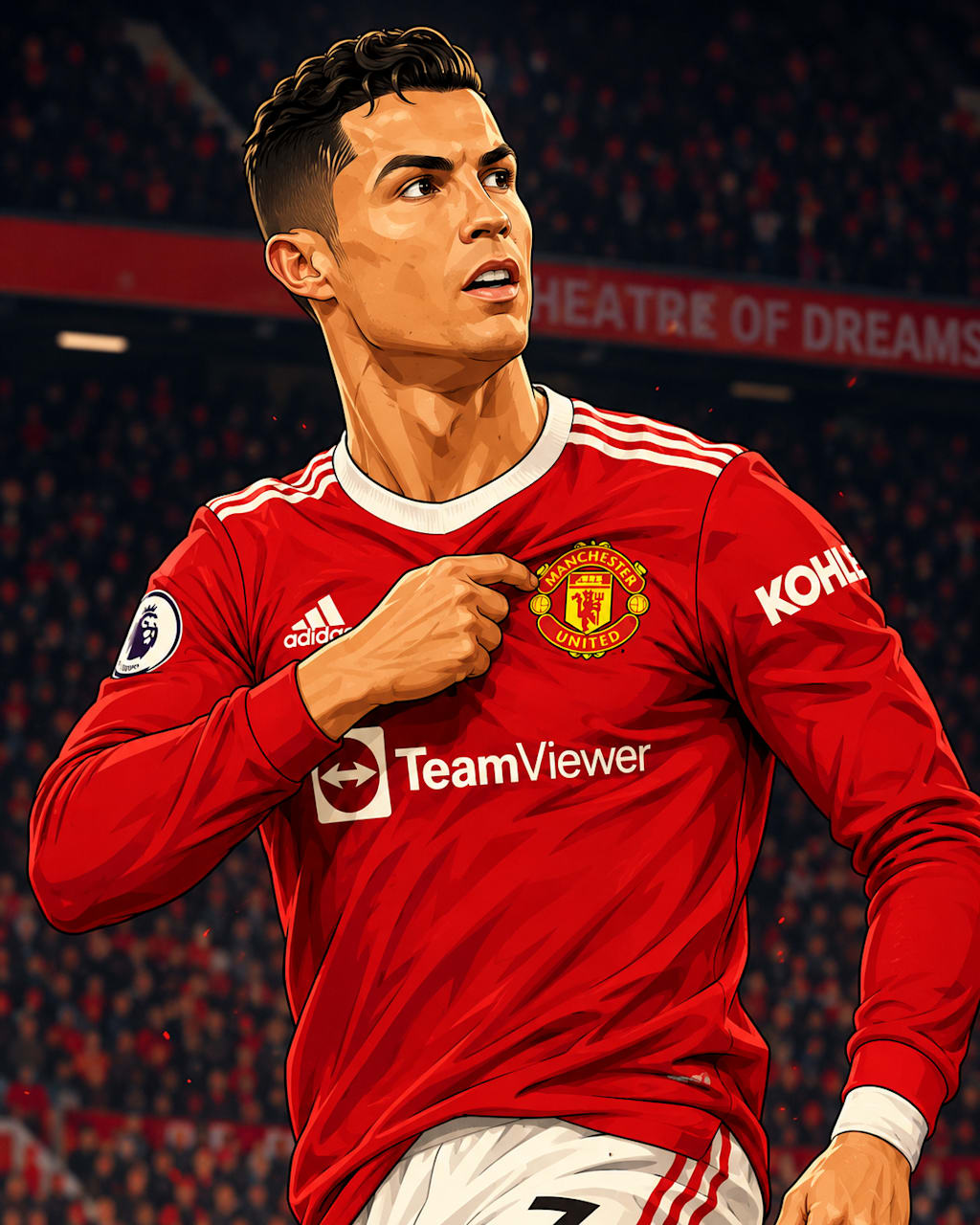
Cristiano Ronaldo’s journey did not begin under the bright lights of Europe’s biggest stadiums. Long before the trophies, world records, and global fame, his story started on a small island in the Atlantic Ocean — Madeira, Portugal. In the hillside neighborhoods of Funchal, surrounded by poverty and limited opportunities, a young boy chased a football through narrow streets with a determination that would later define his career.
Born on February 5, 1985, in the Santo António district of Funchal, Ronaldo grew up in a modest home shared with his parents and siblings. Life was far from easy. The family struggled financially, often living with only the essentials. His father, José Dinis Aveiro, worked multiple jobs, including as a kit man at a local football club, while his mother, Maria Dolores dos Santos Aveiro, worked tirelessly cooking and cleaning to support the household. Despite their hardships, they remained deeply devoted to their children and encouraged Ronaldo to pursue his passion for football.
The streets of Madeira became Ronaldo’s first training ground. There were no luxury academies, modern facilities, or expensive equipment. Instead, he played on uneven surfaces, improvised goals with stones or bottle caps, and spent countless hours dribbling past older boys in neighborhood matches. These difficult conditions helped develop the quick footwork, balance, and resilience that later became trademarks of his playing style.
Even as a child, Ronaldo’s talent stood out. Friends and neighbors remembered his relentless energy and obsession with the game. Football was more than entertainment for him — it was an escape from hardship and a path toward a different future. At the age of seven, he joined Andorinha, a small local club where his father worked. Coaches immediately noticed his speed, technical ability, and competitive spirit.
As he grew older, Ronaldo moved to Nacional, one of Madeira’s bigger clubs, where his performances attracted attention beyond the island. Scouts quickly realized that he possessed extraordinary potential. However, leaving Madeira to chase a professional career meant sacrificing the comfort of home at a very young age.
At just twelve years old, Ronaldo earned a trial with Sporting CP, one of Portugal’s most respected football academies. Accepting the opportunity meant moving alone to Lisbon, hundreds of kilometers away from his family. For a boy who had rarely left his island, the transition was emotionally overwhelming. He struggled with homesickness, missed his mother deeply, and often felt isolated among teammates from mainland Portugal. Some even mocked his Madeiran accent and background.
Despite the emotional challenges, Ronaldo adapted quickly. Sporting’s academy introduced him to a far more demanding level of football. Training sessions became intense and highly structured, focusing on tactical awareness, physical conditioning, and technical precision. Ronaldo responded with unmatched dedication. He stayed after practice to improve his weaknesses, worked harder than many of his teammates, and constantly pushed himself to stand out.
During his teenage years, another major obstacle threatened his career. At fifteen, doctors diagnosed Ronaldo with tachycardia, a heart condition that caused his heart to race dangerously fast during physical activity. The diagnosis could have ended his football dreams before they truly began. Instead, Ronaldo underwent surgery to correct the problem and returned to training only days later. The experience strengthened his mentality and reinforced his determination to succeed regardless of the obstacles in front of him.
Physical development also became a challenge. Early in his academy years, Ronaldo was considered too skinny and physically weak compared to other players his age. Defenders often pushed him off the ball, and critics questioned whether he could handle professional football. Rather than becoming discouraged, he used those doubts as motivation. He committed himself to improving his fitness, building strength, and developing the explosive athleticism that would later make him one of the most complete players in football history.
By the age of sixteen, Ronaldo was already progressing rapidly through Sporting CP’s youth system. Coaches admired not only his technical brilliance but also his work ethic and hunger to improve. His performances for Portugal’s youth teams further increased his reputation as one of the country’s brightest young talents.
The defining moment came in 2003 during a pre-season friendly between Sporting CP and Manchester United. Ronaldo, only eighteen years old at the time, delivered a breathtaking performance against the English champions. His speed, creativity, and confidence overwhelmed experienced defenders and immediately caught the attention of Manchester United manager Sir Alex Ferguson. After the match, United players reportedly urged Ferguson to sign the young winger, convinced they had witnessed a future superstar.
Soon after, Ronaldo completed his move to England, marking the beginning of a new chapter in his life. Yet the foundation of his success had already been built long before Manchester, Ballon d’Or awards, or Champions League titles. It was built in Madeira — in the crowded streets, difficult conditions, family struggles, and moments of doubt that shaped his mentality.
Cristiano Ronaldo’s early life is more than a football story. It is a story about resilience, sacrifice, and ambition. His journey proves that greatness is not created by comfort or privilege alone. Often, it is hardship that develops discipline, hunger, and the courage to dream bigger than one’s surroundings.
From a small island in the Atlantic to the biggest stages in world football, Ronaldo’s rise remains one of the most inspiring examples of what relentless determination can achieve.
About the Creator
NGUYEN NGOC TRUNG
Daily Thoughts & Stories
Enjoyed the story? Support the Creator.
Subscribe for free to receive all their stories in your feed.
Comments
There are no comments for this story
Be the first to respond and start the conversation.