
Why API-First Platforms Are Essential for AI-Powered Applications
Enabling Faster Development and Smarter Application Experiences

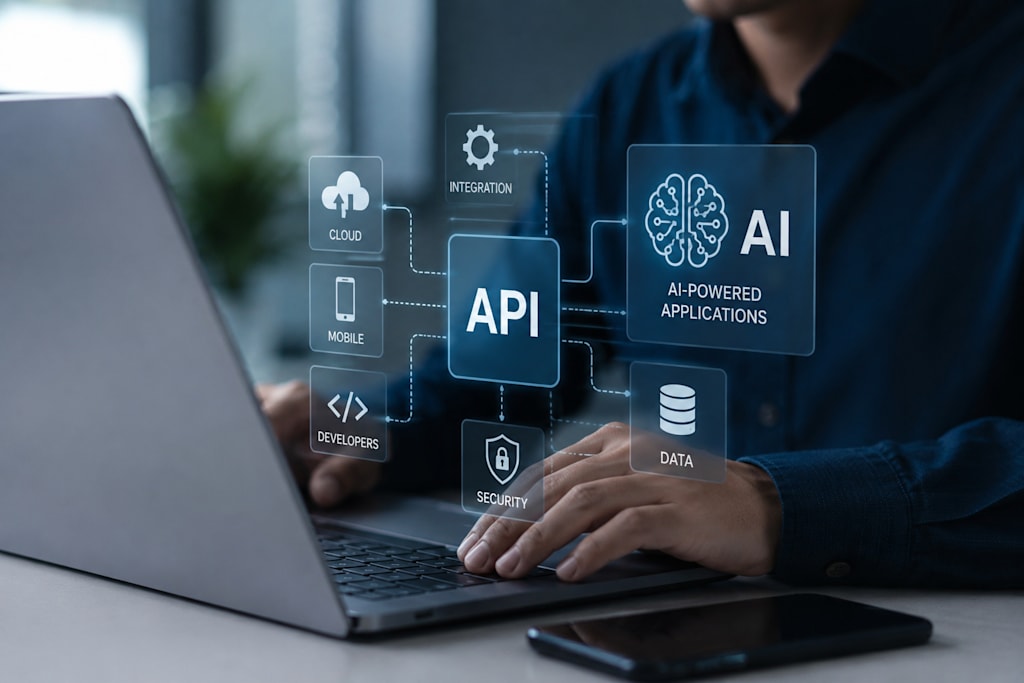
ntelligent technologies are revolutionizing product design, operational efficiencies, and customer interactions for businesses across industries. Whether it is through chatbots, recommendation systems, or predictive analyses, AI has found its way into most organizational processes. But beneath many successful implementations of AI are platforms that often go unnoticed but should not be overlooked: these are API-first platforms.
As companies adopt artificial intelligence innovation, the importance of system integration, data exchange, and scalability comes into play. And that's why the API first approach is vital in this scenario.
The Growing Demand for Connected AI Systems
Contemporary AI applications are generally not standalone products or solutions. For example, an AI-based customer service tool may require accessing information related to CRM, previous dealings with customers, payment systems, and other third-party software applications. The same is true for a predictive analysis system.
Without smooth integration, even the most innovative AI model can struggle to provide relevant outcomes.
This is why API-first development has earned momentum. Rather than treating APIs as a second thought, enterprises design them from the starting, building connectivity as a vital part of the development process.
What Makes API-First Platforms Different?
An API-first approach includes designing the interface before creating applications. This ensures that diverse systems can interact smoothly with each other during the application development process.
According to industry discussions around API-first architecture, this approach assists firms enhance consistency, adaptability, and integration abilities while assisting advanced digital experiences.
Key Benefits of API-First Platforms
- Faster integration between systems
- Improved collaboration among development teams
- Greater flexibility for future technology adoption
- Easier scaling across devices and channels
- Faster deployment of AI-powered services
For corporations pursuing AI software development, these advantages can greatly lower complexity and accelerate innovation.
Why API-First Matters for AI Applications
For an AI solution to function properly, it needs regular access to good-quality data. Using an API first approach would help create such conditions.
Traditional vs API-First Approach
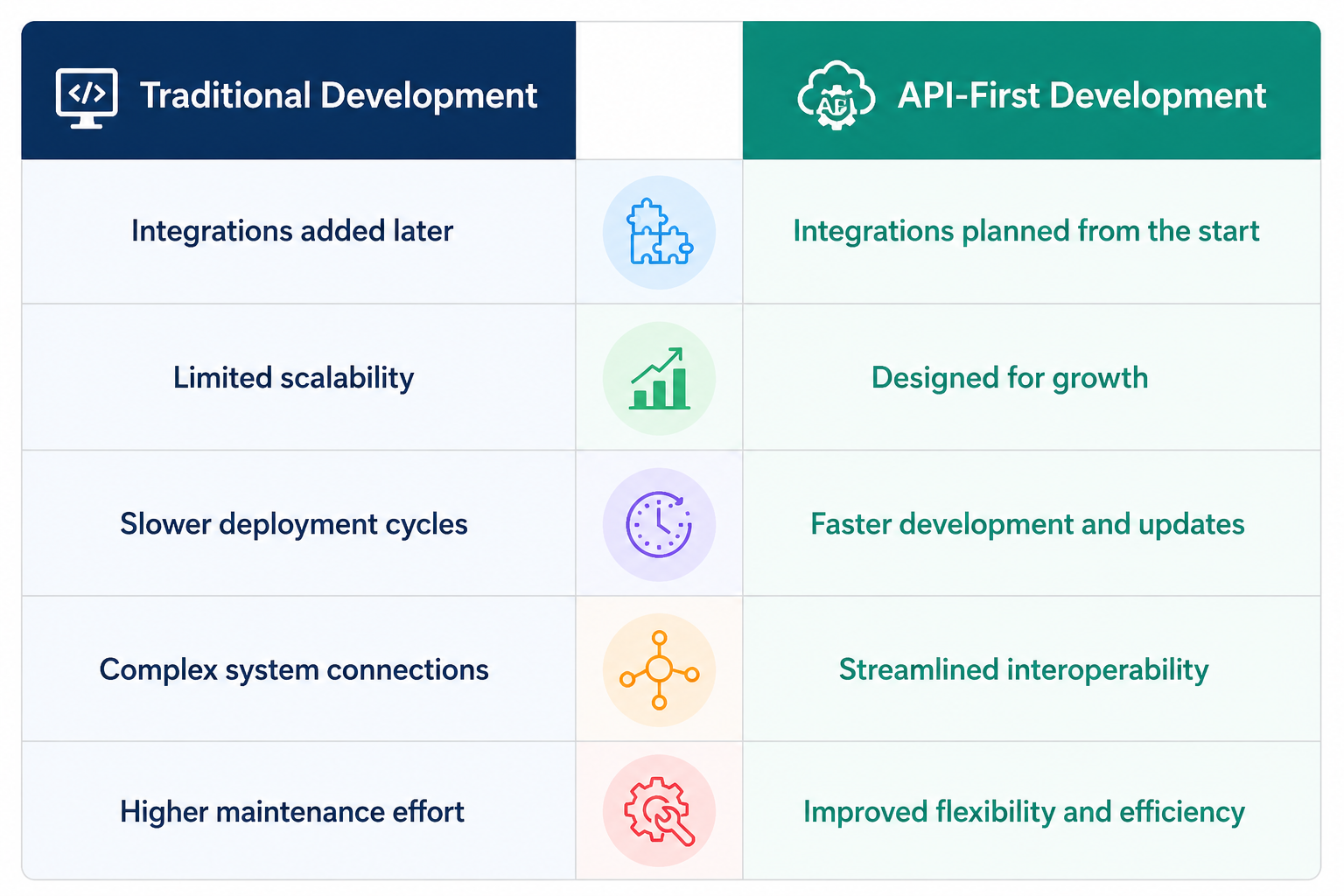
As AI involvement increases, businesses need architectures that can adapt swiftly without needing major redevelopment efforts.
Supporting Scalable and Cloud-Native AI
Cloud-native AI platforms are increasingly being adopted in many organizations due to their adaptability, efficiency, and scalability. API-first solutions enhance this strategy as they promote seamless interactions among cloud-based services, AI algorithms, applications, and enterprise infrastructures.
This is even more significant when developing AI applications that could handle increasing demands and changing requirements.
Organizations can-
- Deploy AI services across multiple environments
- Connect cloud-based and on-premise systems
- Enable real-time data sharing
- Support omnichannel customer experiences
The result is a technology ecosystem that can evolve without creating unnecessary operational challenges.
Driving Enterprise-Wide Innovation
As AI adoption expands, businesses are increasingly investing in enterprise AI solutions that support multiple departments and use cases.
Examples include-
- Intelligent customer service platforms
- Predictive maintenance systems
- Fraud detection tools
- Supply chain optimization solutions
- Automated document processing
However, many of these applications rely on intelligent automation tools that need constant interaction between their systems. Using API-first approach will help keep your interactions reliable and scalable.
Moreover, companies looking for expert AI application development services usually prefer API-driven systems due to their easy integration and scalability.
Conclusion
Not only do AI applications depend on cutting-edge algorithms but also require a robust architecture that enables connections, scalability, and flexibility. Therefore, the emergence of API-first platforms is inevitable for today’s digital transformation strategies.
API-first development allows organizations to innovate faster and make their integration more manageable while also ensuring that the necessary agility is built into their processes to accommodate future AI innovations. Regardless of whether the organization is implementing enterprise-grade AI solutions or developing scalable applications or utilizing cloud-based platforms, adopting API-first development is key to future success.
In the digital economy of the future, companies that focus on interoperability now will be able to capitalize on the power of AI in the coming days.
About the Creator
Liza kosh
Liza Kosh is a senior content developer and blogger who loves to share her views on diverse topics. She is currently associated with Seasia Infotech, an enterprise software development company.
Enjoyed the story? Support the Creator.
Subscribe for free to receive all their stories in your feed.
Comments
There are no comments for this story
Be the first to respond and start the conversation.