
What is a Quantum Computer
How Humanity is Using It

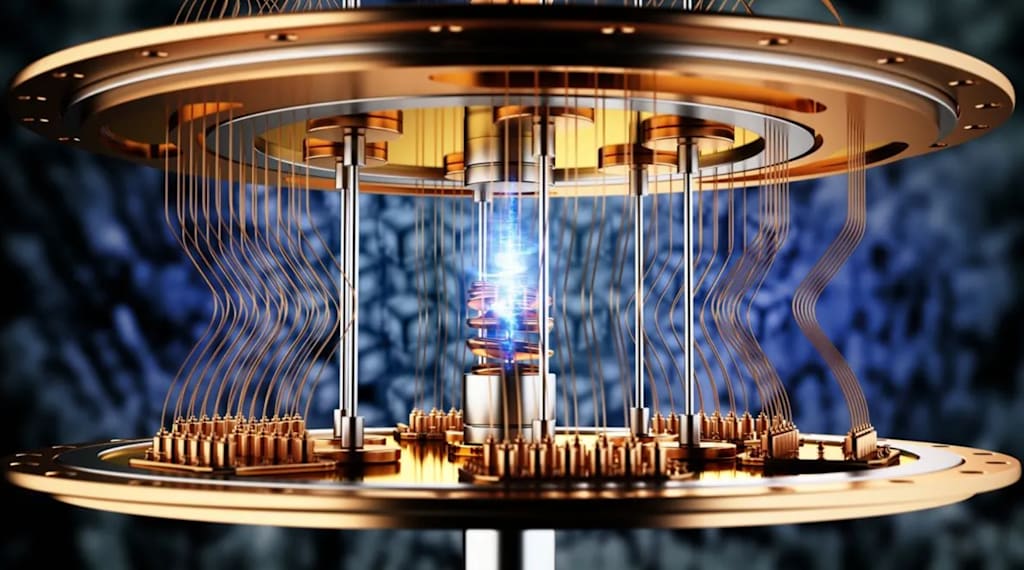
In the ever-evolving world of technology, one of the most groundbreaking developments of the 21st century is the quantum computer. Unlike traditional computers that use bits to process information as either 0s or 1s, quantum computers use quantum bits — or qubits — which can exist in a state of 0, 1, or both simultaneously. This fundamental difference enables quantum computers to perform certain types of calculations at speeds unimaginable to classical computers.
What is a Quantum Computer?
At its core, a quantum computer is a device that harnesses the principles of quantum mechanics — particularly superposition, entanglement, and quantum tunneling — to process information.
1. Superposition allows a qubit to be in multiple states at once. This means a quantum computer can explore many possible solutions at the same time.
2. Entanglement enables qubits that are entangled to be correlated with each other, even across vast distances, allowing for faster information exchange.
3. Quantum interference helps amplify correct solutions while canceling out incorrect ones, improving accuracy.
These principles make quantum computing uniquely suited to solve complex problems in fields such as cryptography, chemistry, logistics, and machine learning.
How is Mankind Using Quantum Computers?
Though still in early stages, quantum computers are already showing promising real-world applications:
1. Cryptography and Cybersecurity
Traditional encryption methods, such as RSA, rely on the difficulty of factoring large numbers. Quantum computers, with algorithms like Shor’s algorithm, could break these encryptions quickly. While this poses a risk, it also drives the development of post-quantum cryptography, aiming to create security protocols resistant to quantum attacks.
2. Drug Discovery and Material Science
Simulating molecules and chemical reactions is extremely complex for classical computers. Quantum computers can model these systems with much greater precision. Companies like IBM and pharmaceutical giants are working on quantum simulations to discover new drugs, materials, and vaccines faster and more accurately.
3. Optimization Problems
In logistics, finance, and manufacturing, quantum computers can optimize routes, schedules, and resources more efficiently than classical systems. For example, airlines or delivery services can use quantum computing to reduce fuel consumption and improve timing.
4. Artificial Intelligence and Machine Learning
Quantum computing could significantly accelerate AI training by processing and analyzing large datasets more efficiently. Quantum algorithms may help AI systems recognize patterns or make predictions with higher speed and accuracy.
5. Climate Modeling and Earth Sciences
Accurately modeling the Earth’s climate requires enormous computing power. Quantum computers can assist in simulating climate patterns, predicting natural disasters, or optimizing energy grids, thereby contributing to sustainable development.
Current Limitations and Future Outlook
Despite its immense potential, quantum computing faces significant challenges:
1. Error rates and noise: Qubits are delicate and easily affected by external disturbances.
2. Scalability: Building a quantum computer with enough stable qubits to tackle real-world problems is still a work in progress.
3. High cost and complexity: These machines require ultra-cold environments and are expensive to maintain.
However, tech giants like Google, IBM, Microsoft, and startups like Rigetti and D-Wave are investing heavily in research and development. Governments worldwide, including the US, China, and members of the EU, are funding quantum initiatives, recognizing its strategic importance.
Quantum computers represent a monumental leap in the way we understand and utilize computing power. While not yet mainstream, their capabilities are already reshaping how we approach some of humanity’s greatest scientific, industrial, and societal challenges. As the technology matures, it holds the promise of transforming everything from medicine to climate science, potentially ushering in a new era of human advancement.
About the Creator
Enjoyed the story? Support the Creator.
Subscribe for free to receive all their stories in your feed.
Comments