
What a 10x10 Inline Booth Can Teach About Clear Product Presentation
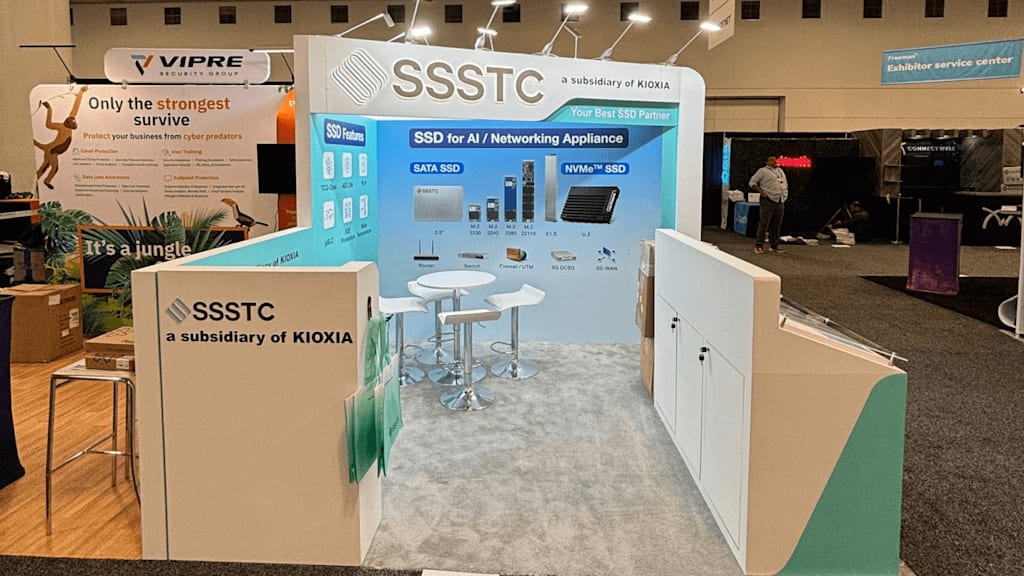
A compact SSSTC booth example showing how a 10x10 inline space can use a graphic wall, open entry, product messaging, lighting, and a small meeting area without feeling crowded.

What a 10x10 Inline Booth Can Teach About Clear Product Presentation
A 10x10 inline booth does not give exhibitors much room to hide weak planning. Every wall, counter, graphic panel, light, and chair has to earn its place.
This SSSTC booth from 2023 is a useful example of how a small inline booth can still feel organized. The layout is compact, but it does not look empty. It uses a clear product wall, a branded front counter, side storage, overhead lighting, and a small table area to support short conversations.
For technology brands, this kind of booth is often more practical than trying to force a large island-booth idea into a small footprint. The better goal is clarity: visitors should understand the product category quickly, step in easily, and know where to ask questions.
The Product Wall Does Most of the Work
In a 10x10 booth, the back wall is usually the main communication surface. There is not enough space for multiple display zones, so the wall needs to explain the product story quickly.
In this booth, the main graphic wall focuses on SSD products for AI and networking appliances. The product categories are grouped visually, with large text, product images, and application cues placed where visitors can read them from the aisle.
That matters because small booths often compete beside larger exhibits. A 10x10 booth cannot always win with size, but it can win with readability. If the wall gives visitors a clear first answer, the booth has a better chance of earning a second look.
Open Entry Keeps the Booth Approachable
The front of the booth stays mostly open. That is important.
A 10x10 inline space can feel blocked very quickly if the front counter is too wide or if furniture sits in the wrong place. In this example, the booth still gives visitors a clear entry path toward the product wall and small meeting area.
That open front also helps staff. They can greet visitors, answer quick product questions, or invite someone into a short discussion without forcing people to squeeze around furniture.
This is one of the most important parts of 10x10 booth planning: the layout should not make a small booth feel smaller. A simple entry path is often more valuable than adding another object to the booth.
Counters Should Support the Layout, Not Control It
The booth uses counters and side panels to create structure. They help frame the space, provide branded surfaces, and add storage without making the booth feel fully closed.
That balance is important for inline booths. Counters are useful for literature, samples, staff items, storage, and quick conversations. But if counters dominate the front, the booth can feel like a barrier instead of an invitation.
Here, the counter placement gives the booth a clean edge while keeping the center open. That makes the booth easier to enter and easier to photograph from the aisle.
Small Meeting Space Can Still Work
The booth includes a small table and seating area near the product wall. In a 10x10 booth, meeting space has to be limited, but it can still be useful when the product requires explanation.
For a technology product display, visitors may want to ask about specs, applications, compatibility, or buying details. A small table gives those conversations a place to happen without turning the entire booth into a closed meeting room.
The key is scale. The furniture should support short discussions, not take over the booth.
Graphics Need to Be Specific
This booth works because the graphics are not generic. The wall does not just show a logo and a slogan. It explains product use cases and product types.
For technical products, that matters. Visitors may not immediately know whether a company serves consumer electronics, industrial systems, storage, AI infrastructure, networking, or another category. Specific graphics reduce that confusion.
A good 10x10 technology booth should answer a few basic questions quickly:
What does the company offer?
What product category is being shown?
Who is the product for?
Where is it used?
Why should a visitor stop?
The booth does not need to answer everything at once. It just needs to create enough understanding for a real conversation to begin.
Lighting Helps a Small Booth Stand Out
The booth uses overhead lights directed toward the graphic wall and branded surfaces. That is a simple detail, but it matters in an inline space.
Trade show hall lighting is not always enough, especially when small booths sit between larger exhibits. Focused lighting helps the wall stay visible and makes product graphics easier to read.
For a 10x10 booth, lighting should not be treated as decoration only. It helps guide attention. In this case, the lights point visitors toward the main wall, where the product message is strongest.
Why This Layout Works
The strength of this booth is not that it tries to look large. It works because it accepts the limits of a 10x10 inline space and uses them well.
The back wall carries the product message. The front stays open. The counters add function without blocking the booth. The small meeting area supports short conversations. The lighting helps the main graphics stay visible.
That is the lesson: a small booth does not need more elements. It needs better order.
Final Note
A 10x10 inline booth can still support serious product presentation when the layout is focused. The SSSTC booth shows how a compact space can combine brand visibility, product explanation, visitor entry, storage, lighting, and conversation space without becoming crowded.
For exhibitors working with a smaller footprint, the main question is not how to add more. The better question is what each part of the booth needs to do.
About the Creator
CircleExhibit
Circle Exhibit is a Las Vegas-based exhibit partner supporting trade show booth design, fabrication, logistics, installation, and dismantle for exhibitors across U.S. trade shows.
Enjoyed the story? Support the Creator.
Subscribe for free to receive all their stories in your feed.
Comments
There are no comments for this story
Be the first to respond and start the conversation.