
The Third World War
A Future Conflict That Could Change Humanity Forever

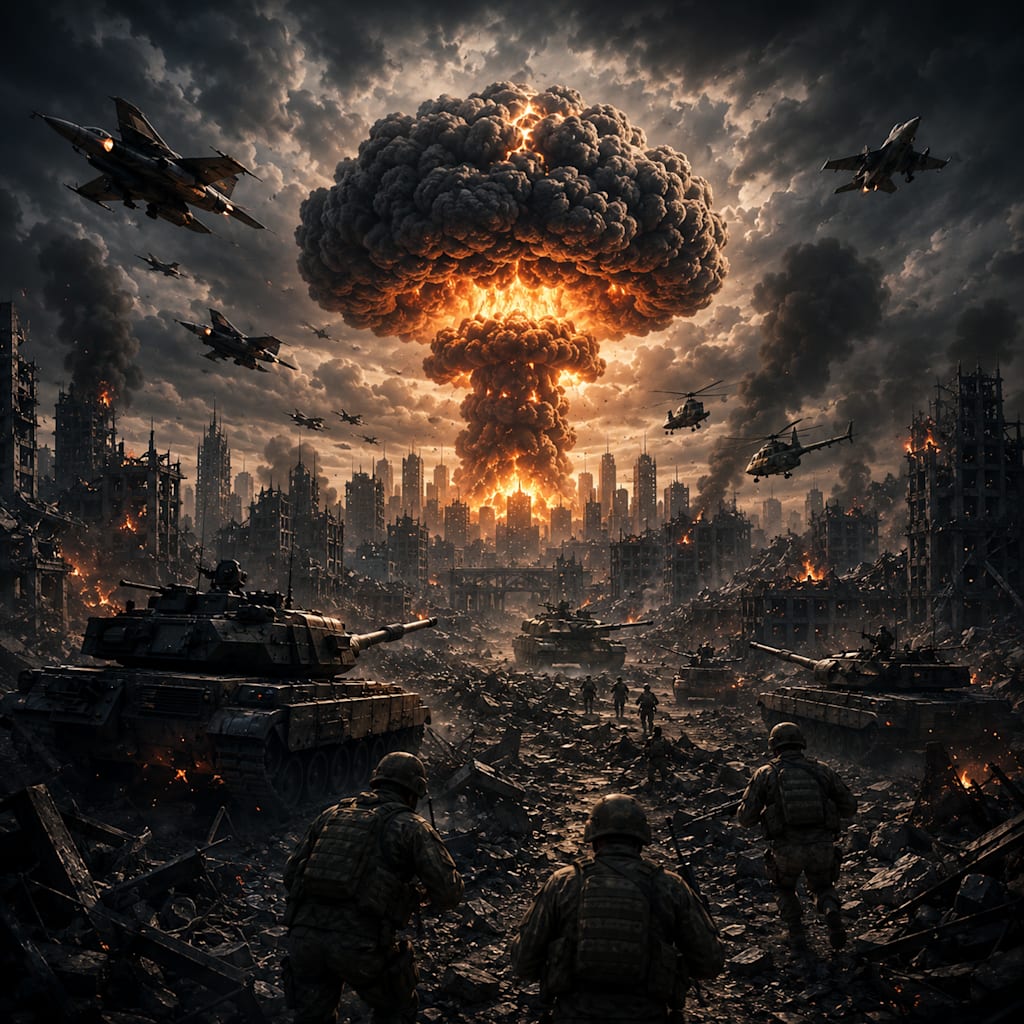
The Third World War
The idea of a Third World War is one of the most frightening subjects in modern history and politics. After the destruction caused by the First and Second World Wars, humanity hoped that such global conflicts would never happen again. However, rising political tensions, military competition, cyber warfare, terrorism, and disputes between powerful nations continue to create fear around the world. Many people wonder whether a third world war could happen in the future and what its consequences would be for humanity.
The First World War began in 1914 and caused massive destruction across Europe and other regions. Millions of soldiers and civilians lost their lives. Only a few decades later, the Second World War became even more devastating, leading to the deaths of over 70 million people and ending with the use of atomic bombs on Hiroshima and Nagasaki in Japan. These tragic events showed the world how dangerous human conflict can become when hatred, greed, and political rivalry are allowed to grow.
Today, the world is more connected than ever before, but it is also more dangerous in some ways. Powerful countries possess advanced military technology, nuclear weapons, artificial intelligence, drones, and cyberattack systems. A modern world war would not only be fought with tanks and soldiers but also through satellites, computers, economic sanctions, and information warfare. Cyberattacks could shut down electricity, banking systems, communication networks, and even hospitals within minutes.
One of the main causes that could lead to a third world war is political rivalry between major powers. Countries such as the United States, China, and Russia compete for global influence, military strength, and economic dominance. Disputes over trade, territory, and international alliances increase tensions between nations. If diplomatic solutions fail, small regional conflicts could grow into larger international wars.
Another major concern is nuclear weapons. Many countries possess nuclear bombs capable of destroying entire cities in seconds. A nuclear war would not only kill millions instantly but could also damage the environment for generations. Scientists warn that nuclear explosions could create a “nuclear winter,” reducing sunlight, harming agriculture, and causing global food shortages. Humanity has never faced such destructive power before.
The Middle East remains another dangerous region where conflicts could spread internationally. Ongoing violence, terrorism, and political instability continue to threaten global peace. Conflicts involving neighboring countries and international powers could quickly become larger and more dangerous. Terrorist organizations also create fear by attacking civilians and spreading hatred across different societies.
Asia is also becoming an important center of global tension. Disputes in the South China Sea, political disagreements between China and Taiwan, and military competition in the Indo-Pacific region have increased international concern. Many countries are strengthening their military alliances and increasing defense spending because they fear future conflict.
Economic competition can also contribute to world war. Powerful nations compete for oil, gas, minerals, technology, and global markets. Trade wars and economic sanctions sometimes increase hostility between countries. During economic crises, governments may become more aggressive in order to protect their national interests.
Modern media and social platforms play a major role during international conflicts. Information spreads rapidly across the internet, but misinformation and propaganda can also create fear, anger, and division. False news can influence public opinion and make diplomatic solutions more difficult. In times of tension, responsible journalism and truthful communication become extremely important.
Despite these dangers, there is still hope for peace. International organizations, diplomats, and humanitarian groups continue to work toward cooperation and conflict resolution. The United Nations encourages dialogue between countries and supports peacekeeping efforts around the world. Many citizens also raise their voices against war because they understand that ordinary people suffer the most during conflicts.
Education is one of the strongest weapons against war. When people learn about history, human rights, and cultural understanding, they become less likely to support violence and hatred. Young generations have the opportunity to build a future based on cooperation instead of destruction.
In conclusion, a Third World War would be one of the greatest disasters in human history. Advanced weapons, nuclear technology, cyber warfare, and global alliances could make such a conflict more destructive than any war before it. However, war is not inevitable. Humanity still has the power to choose diplomacy, peace, and understanding instead of violence and hatred. The future of the world depends on wise leadership, international cooperation, and the willingness of people to protect peace for future generations.
About the Creator
Wings of Time
I'm Wings of Time—a storyteller from Swat, Pakistan. I write immersive, researched tales of war, aviation, and history that bring the past roaring back to life
Enjoyed the story? Support the Creator.
Subscribe for free to receive all their stories in your feed.
Comments
There are no comments for this story
Be the first to respond and start the conversation.