
The Nowhere Man
Part One of The Nowhere Man Series

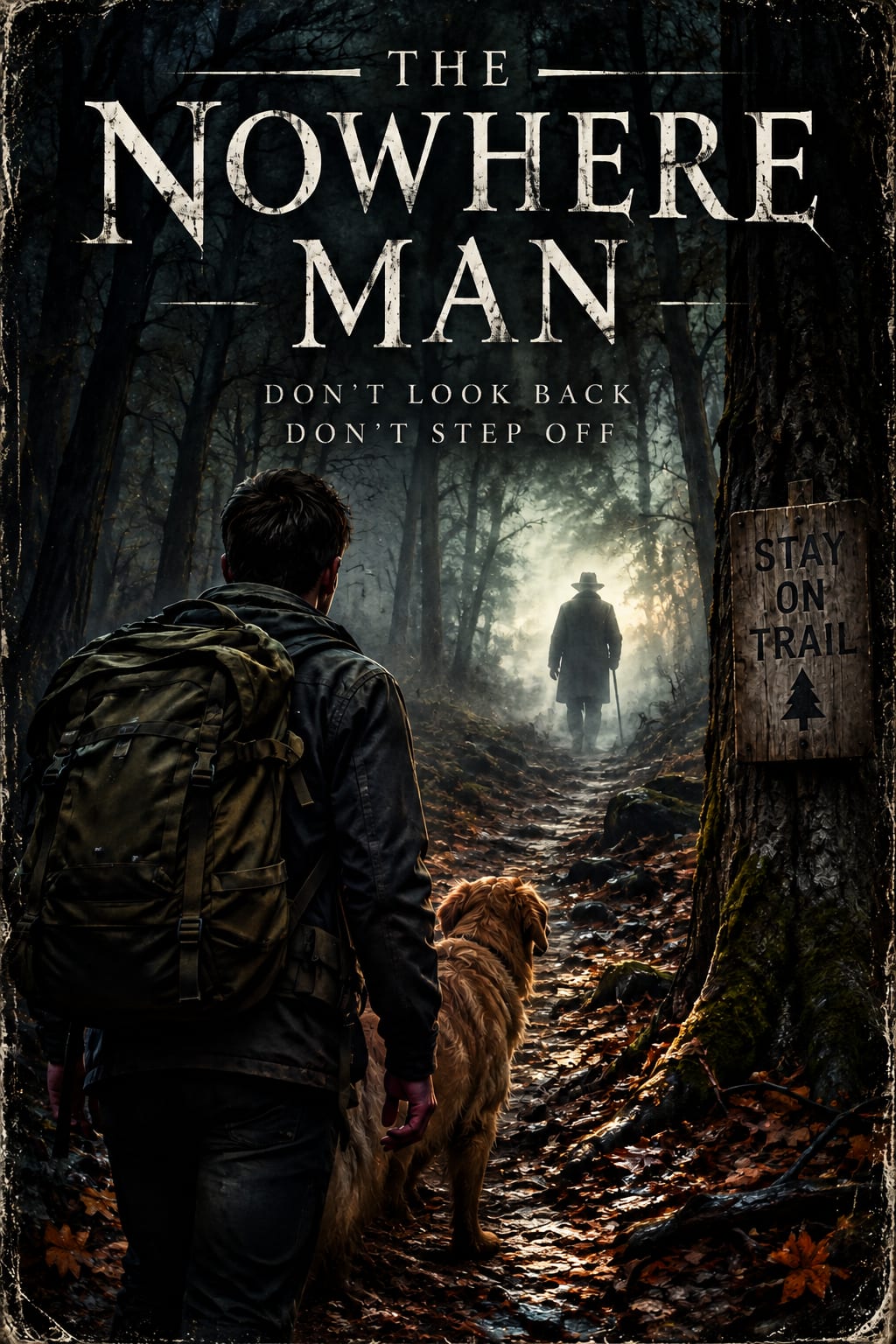
Daniel Mercer was thirty-four years old, recently divorced, and beginning to suspect that the best years of his life had been wasted on a woman who didn't particularly like him.
That wasn't entirely fair to Rebecca. She'd liked him once. Loved him, even. He had photographs to prove it, although he'd stopped looking at them sometime around the second month after she moved out.
The divorce had been remarkably civilized. No screaming, no broken dishes, no dramatic accusations of infidelity. Just two people at a kitchen table, discussing their possessions as though negotiating the sale of a used car.
Rebecca got the house. Daniel got the truck, a modest savings account, and Bishop. He considered himself the winner.
Bishop was a six-year-old German shepherd with an impressive vocabulary, a chronic dislike of vacuum cleaners, and an unfortunate habit of eating things that had no business being eaten. Once he'd swallowed half a television remote. The veterinarian charged eight hundred dollars to retrieve it.
Rebecca suggested getting rid of the dog. Daniel suggested getting rid of the television. Looking back, that might have been the beginning of the end.
Now he lived above a laundromat on the outskirts of Bellwether, a mountain town where everyone knew everyone else's business and pretended they didn't. He supervised maintenance at a lumber mill.
The money was decent, the hours predictable, and he could usually finish a shift without saying much to anyone. He liked that. Lately, he liked silence more than people. The trouble was that silence left too much room for thinking.
So he started hiking. Saturday mornings were for the woods. Sunday afternoons were for laundry, grocery shopping, and avoiding Rebecca's occasional calls. It was a good arrangement. Then, one Tuesday in October, he found Widow's Passage. Or perhaps it found him. Later, he would think about that distinction quite often.
The gas station sat at Blackwater Road and County Route 16, six miles outside town. A weather-beaten sign advertised GAS, ICE, BAIT, and HOT FOOD. Daniel suspected the hot food had last been hot during the Clinton administration.
He left Bishop in the truck, bought two waters and some jerky, and approached the register. An elderly woman with pale blue eyes was reading a paperback with a shirtless cowboy on the cover.
"Going walking?" she asked.
Hiking."
"Same difference. Whereabouts?"
"Widow's Passage. Off Blackwater Road."
Her hand stopped over the register. "Who told you about that place?"
"Found it online."
"Online," she repeated, as if he'd found it written in goat blood on the side of a church. "People ought to mind what they put on those things."
"Bad trail?"
"Depends what you mean by bad." She leaned toward him. "Stay on it. And don't go chasing after
things you hear in the woods."
"Like bears?"
"Like anything."
He glanced at Bishop through the window. "Got my dog."
"Then keep him close." Her gaze remained fixed on him. "My brother went up there in seventy-eight.
Came back in eighty-six. Eight years gone, but he said he'd only been out an afternoon. Same clothes.
Same lunch in his bag. Sandwich wasn't even spoiled. But his hair had turned white."
Daniel offered a nervous laugh. "That's quite a story."
"Yes, sir. It is." She slid his purchases toward him. "And if somebody passes you on that trail, let 'em pass. Don't follow. Don't look back to see where they went."
"Why?"
"Because sometimes they ain't going nowhere you can follow."
The entrance was easy to miss: a dirt turnout between two enormous pines, an old wooden sign leaning toward the road. Beneath WIDOW'S PASSAGE TRAIL, someone had scratched DON'T STEP
OFF into the wood. Bishop sniffed the post and urinated on it.
"Good review," Daniel said.
For twenty minutes the woods felt ordinary. Sunlight sifted through the leaves. Bishop investigated stumps and stones. Daniel thought about Rebecca and whether she'd taken the good cast-iron skillet when she left. Then he noticed the silence. No birds, no insects, no wind. Even his boots seemed too loud.
His watch read 12:47. Thirty-seven minutes since he'd left the truck. Bishop growled.
An old man came around the bend. He was painfully thin, with long dirty gray hair, a crooked back, and a filthy blue jacket. His boots were nearly worn through. When he saw Daniel, his mouth fell open.
Then he looked at Bishop, and grief spread over his face so suddenly that Daniel almost looked away.
"Afternoon," Daniel called.
"No," the man whispered. "No, no, no."
"You all right?"
The man took an unsteady step. "You shouldn't have come."
"Excuse me?"
The old man looked at the dog again. His lips trembled. "Please."
He walked past, smelling of wet dirt, old sweat, and rotting fruit. Daniel waited a moment, then called, "Hey, mister! Do you need help?"
He turned. The trail was empty. The bend was sixty yards away. No side paths. Nowhere to hide.
Daniel remembered the cashier's warning and felt a cold, hard pressure beneath his ribs.
He turned toward the entrance. The fallen log, the crooked oak, the sleeping-bear stone: he passed each landmark again and again. After nearly two hours he saw the same muddy paw print Bishop had left on a log earlier. His watch said 2:36. Behind him came slow dragging footsteps.
A voice breathed against his ear. "Not this way."
Daniel ran. He ran until the woods opened and his truck appeared in the turnout, a logging truck rumbling past on the road. He and Bishop scrambled inside. Only forty miles later, stopping for gas, did
Daniel notice the muddy handprint on the rear passenger window. It was on the inside.
Daniel didn't tell anyone about the old man. An elderly hiker had startled him, he'd gotten turned around, and somebody had touched his window. Three unrelated events. Nothing supernatural. Nothing worth losing sleep over.
Except he did lose sleep. He dreamed of darkness between two pines, of Bishop whining behind him, and of his own voice, made rough with age, calling his name. He woke at 2:51 a.m. with dirt and pine needles scattered beneath the bedroom window. His apartment was on the second floor.
At the mill, his friend Marcus Bell listened as Daniel mentioned Widow's Passage. Marcus set down his wrench. "You don't go messing around up there. My uncle did search and rescue. People went missing for days, weeks, years. One girl vanished in ninety-four and turned up at a church picnic in 2001."
"People run away," Daniel said.
"She was seven when she disappeared. Still seven when she came back."
That night Daniel searched the internet. He found an article about Thomas Weller, a hunter who'd vanished and returned eight years later with white hair. There were other names: a girl in 1973, a couple in 1989, a surveyor in 2004, a student in 2017. The student's photograph showed a young woman in a yellow raincoat standing beside the trail sign. Behind her, barely visible, stood a pale face framed by long gray hair.
Daniel closed the laptop. Bishop growled at the bedroom window.
On Saturday he drove back. Bishop refused to leave the truck. From deep in the woods came three short whistled notes: the exact recall signal Daniel had taught his dog. Then a voice called, "Daniel!
Come here!" It was his own voice. Bishop trembled. Somewhere between the trees, a man began to laugh as if he were crying.
"Please don't bring him," the voice whispered.
Daniel should have driven home. Instead he tightened his grip on Bishop's leash and stepped onto the trail.
The trail was damp and the sunlight strangely weak. Bishop walked so close that his shoulder brushed Daniel's leg. Daniel watched his wristwatch. At thirty-six minutes he reached an oak with a strip of red cloth nailed to its bark. The cloth was stiff with something dark. At thirty-seven minutes, Bishop stopped.
The old man appeared around the bend. His boots were different now: black, one missing its laces. He looked at Bishop, and his face collapsed.
"Oh, God. Not again."
"Do I know you?" Daniel asked.
"Not yet." The man stepped closer. "Keep him close. Whatever you hear, whatever you see, don't let him go into the trees."
"How do you know my dog?"
The old man reached toward Daniel's face, then pulled back his trembling hand. "I'm sorry."
"For what?"
"I'm sorry about the dog."
Daniel's anger rose. "What the hell does that mean?"
"You never listened," the old man said, and walked past. Daniel kept facing forward until the footsteps ceased. When he got home, he called Rebecca. They talked awkwardly about work and a leaking sink, about nothing that mattered and everything he missed. Afterward he stared at the crescent-shaped scar above his right eyebrow, the one he'd gotten falling off his bicycle at twelve. The old man had a scar in the same place.
He slept with the bathroom light on.
Thomas Weller lived outside Bellwether, running a small auto garage surrounded by rusting cars. He was smoking in a folding chair when Daniel arrived.
"Widow's Passage," Daniel said.
Weller's cigarette stopped halfway to his mouth. "Get off my property."
"I saw an old man there."
Weller studied him. "What'd he say?"
"Told me not to go. Said something about my dog."
Weller looked sharply at Bishop waiting in the truck. "Don't take him back."
"Everybody tells me what not to do. Nobody tells me why."
Weller sighed. "I stepped off that trail when I was thirty-one. I was gone eight years here. Where I was, it wasn't eight years. Sometimes I'd wake in a house with a woman who swore she'd been my wife twenty years. Pictures, children, a whole life I couldn't remember. Next morning, house was gone. Time doesn't go straight there. Places don't stay put. Sometimes people don't either."
Daniel asked, "Did you ever see yourself?"
Weller went pale. "Who told you about that?"
"Nobody."
"Go home, Daniel."
"How do you know my name?"
Weller stared. "You told me. But you were older." He went into the garage and locked the door.
Over the following weeks Daniel returned again and again. Each visit brought the old man, always around the thirty-seventh minute. Sometimes he wept. Sometimes he muttered numbers. Once he sat on a log clutching a red leather dog collar, its brass tag glinting. Daniel recognized it as Bishop's. The man whispered, "Don't make me remember." That night Bishop's collar was gone. Daniel bought him a blue one and tried not to think about it.
On the morning everything changed, rain tapped against Daniel's windows. Bishop scratched at the bedroom door. Outside, in the alley behind the laundromat, three short notes sounded. Bishop strained toward them. At the far end of the alley Daniel glimpsed a tall figure in a blue jacket. When he blinked, it was gone.
He called in sick, packed his bag, and drove to Widow's Passage. "Last time, buddy," he told Bishop.
He meant it, or wanted to.
An abandoned green station wagon sat in the turnout, tires flat, registration expired in 1998. A stuffed rabbit occupied the passenger seat. Tucked into the visor was a family photograph dated JUL 1996.
Daniel stood looking at the smiling strangers for a long time before entering the woods.
At twenty-eight minutes he saw a deer beside the trail. Its eyes were cloudy, its chest motionless. A fly crawled over one eye. Then the animal turned its head too far, neck cracking wetly, and whistled three short notes. Something dark moved beneath the skin of its throat. Daniel dragged Bishop onward.
At thirty-seven minutes, the old man came running. Blood streaked his face. His jacket hung open.
One boot was missing.
"TURN AROUND! TAKE THE DOG AND GO!"
"What happened?" Daniel cried.
"IT'S DIFFERENT THIS TIME!"
Something moved among the trees, tall enough that its upper body disappeared into the branches. The old man began to sob. "I thought I could stop it."
The whistle sounded. Bishop lunged. Daniel's wet fingers lost the leash.
"BISHOP!"
The dog vanished between the trees. Daniel ran after him, but the old man caught his jacket.
"NO!"
"That's my dog!" Daniel shoved him away.
The old man fell to his knees. "Why did you come here? I tried to warn you."
Bishop yelped in the woods. Daniel stepped off the trail.
The rain stopped existing. One moment there were drops falling through the leaves; the next there was only warm, heavy air smelling of stone and rot. Daniel turned. The trail was gone. Far away, impossibly far, the old man stood watching. Bishop barked ahead. Daniel ran toward him.
Daniel tried to believe he was lost. But the trees were wrong: some as wide as houses, some pale and twisted, their leaves silver on one side. A creek lay motionless beneath a gray sky. When he bent over it, his reflection showed deep lines around his mouth and gray hair at his temples. He blinked; the reflection blinked later.
He found a white farmhouse in a clearing. Smoke rose from its chimney. A woman in a yellow sweater stood on the porch. He had never seen her before, but the sight of her made his heart ache.
"Daniel?" she called. "Where have you been, sweetheart?"
"Who are you?"
Her smile vanished. A little girl in a yellow raincoat appeared in the doorway. She looked at Daniel and whispered, "That's not Daddy."
The woman saw something behind him and screamed, "RUN!"
A shape stood among the trees, made of darkness, branches, and impossible empty spaces. It spoke in Rebecca's voice. Daniel fled, and when he looked back the house had vanished.
He passed a bicycle, a telephone booth filled with moths, a hospital bed with clean white sheets. A clipboard hung from the footboard: DANIEL MERCER. AGE: 67. ADMISSION DATE: OCTOBER 17,
2049. DIAGNOSIS: TEMPORAL DISPLACEMENT. The mattress sank as if an invisible patient had sat down.
A pale boy in a red sweatshirt pointed him toward a narrow path. "Which way you trying to go?" the boy asked.
"Home."
"Everybody says that. But which one?"
The boy's flashlight projected a beam of solid darkness. "You don't know which one you're going
back to." Then he was gone.
Daniel followed the path past buildings he knew: his childhood home, the lumber mill, the apartment.
Through the apartment window he saw himself younger, sitting with Rebecca. Bishop slept at their feet.
They were laughing at an old movie. He remembered that night, remembered being happy without recognizing it. Rebecca turned toward the window, and for one impossible moment she saw him. Then the apartment became a tree.
Daniel sank to the ground and wept. He wanted a kitchen, an ordinary evening, the weight of his dog sleeping beside the door. He wanted everything he had treated as unimportant.
He stopped counting days. He marked trees until he found some already bearing dozens of his marks.
Sometimes he remembered Rebecca as his wife; sometimes a woman named Sarah, a daughter named
Emily, a house with a red door. Photographs appeared in his pockets showing lives he couldn't remember living. Time wore him down without moving the sun.
One day he stumbled onto the trail. Birds sang. Rain scented the air. A young man in a blue hiking jacket approached with a German shepherd. Daniel recognized Bishop before he recognized himself.
"Afternoon," the young man said.
Daniel's lips trembled. "No. No, no, no."
"You all right?"
He wanted to explain the woods, the house, the boy, the hospital bed. Instead he heard himself say,
"You shouldn't have come." He walked past his younger self, and the air folded around him. Suddenly he stood elsewhere among the trees.
He understood. He was the old man. Every warning he'd heard had come from himself. Every attempt to save Bishop was already part of the history that led him here. He tried different words on later encounters. He begged, shouted, threatened. Nothing changed. The younger Daniel always returned.
He found a filthy blue jacket hanging from a branch and put it on. He found boots. A silver wedding
band. He wore them without remembering where they came from. His face grew old. Sometimes his reflection was young; sometimes ancient; sometimes absent.
Then he found Bishop beside a creek. The dog was old, his muzzle white, his body thin. Daniel fell to his knees and held him. "I'm sorry, buddy. I'm so sorry." Bishop licked his cheek.
Three notes sounded from the trees. Bishop stood. Daniel grabbed his collar. Another man emerged, older still, wearing the same blue jacket, with the same crescent scar above his eyebrow.
"Don't follow the dog," the older man said.
"Who are you?"
"You know. You're still thinking of this as a circle. It isn't. It's a place where everything that couldbhappen is happening."
"How many times have we done this?"
The older man looked exhausted. "I don't know which one you are anymore."
A young woman appeared at the clearing's edge, wearing a yellow raincoat. Daniel recognized the missing student from the photograph, and the child from the farmhouse grown older.
"Do you know the way back to the road?" she asked.
"Emily?" Daniel whispered.
"How do you know my name?"
"She's my daughter," he told the older man.
"Not yet," the man whispered. "She hasn't been born."
The forest shifted around them. The older man pointed toward Bishop's collar. It was red leather again, not blue. Daniel turned the brass tag over. Scratched on the back were the words: HE IS NOT YOUR DOG.
Bishop looked up. His eyes were human, ancient, and terribly tired. He opened his mouth and spoke in Daniel's voice: "Don't look back."
The forest went black.
Daniel opened his eyes on the trail. His hands were young again, clean and unscarred. Sunlight filtered through the trees. The old man approached around the bend, then stopped. He looked at the empty space beside Daniel.
"Where is he?" the man asked.
"I don't know."
For a moment hope brightened the old man's face. Then he studied Daniel more closely and recoiled.
"No. You're not the right one."
From the woods came three short notes. Daniel turned. Among the trees stood dozens of men: some young, some middle-aged, some ancient. All had his face.
The trail wasn't a circle but a crossing, a place where every possible life touched. Some Daniels married Rebecca. Some married Sarah. Some had children. Some died young. Some never existed. Some stepped off the trail and became trapped between the lives that might have been theirs.
The old man pointed toward the entrance. "You can still go back. Walk. Don't stop. Don't turn around."
Daniel walked. Behind him came footsteps, hundreds of them. Then Rebecca called his name. His father called him son. A child cried, "Daddy, don't leave me." He kept walking. Bishop whined behind him, collar jingling. Daniel wept but kept moving.
He saw the sign, the gravel, his truck. An old man's voice spoke directly behind him. "Daniel. Please.
Don't leave me here."
Daniel walked out of the woods.
His watch read 2:51. Thirty-seven minutes since he'd entered. Bishop's seat was empty. At home there was no dog bed, no leash, no bowl. In his photographs Bishop had vanished from every picture. His messages contained no mention of a dog. It was as though Bishop had never existed.
Daniel searched online for German shepherds, then stopped at a missing-pet notice. The pictured dog looked exactly like Bishop, down to the white patch beneath his chin. MISSING DOG — BISHOP. Last seen near Blackwater Road. October 17, 1983. Owner: Thomas Weller.
From outside the apartment came three short whistled notes.
Three days later, Daniel disappeared. His truck was found beside Widow's Passage with the driver's door open, keys in the ignition, and phone on the passenger seat. Searchers found no footprints and no sign of a struggle.
Two weeks afterward, a young woman in a yellow raincoat entered the gas station on Blackwater Road. She bought water and a chocolate bar. The elderly cashier looked outside at the German shepherd waiting in the woman's car.
"That your dog?"
"Yeah. Found him wandering on Blackwater Road last week. No collar, no chip. Sweetest dog I've ever met."
"What's his name?"
"Bishop."
The cashier gripped the counter. The dog turned his head and looked straight at her. A voice sounded inside her mind, old and tired: Don't tell her.
The woman paid and turned to leave. The cashier called after her. "If somebody passes you on that trail, let 'em pass. Don't follow. And whatever you do, don't look back."
After the car left, the cashier reached beneath the counter and took out a photograph from 1978. It showed a twelve-year-old boy with a crooked smile and a crescent scar above his eyebrow standing beside a German shepherd. On the back someone had written: Danny and Bishop. Summer of '78.
Outside, an old man in a filthy blue jacket stood beside the gas pumps. He met the cashier's eyes and slowly shook his head. Then he was gone.
Far beyond Blackwater Road, a dog barked three times. The woods fell silent.
About the Creator
Shai Anderson
Reshaping reality, one thought at a time. If you enjoy my work, please leave a like and subscribe. I would love your feedback.
Enjoyed the story? Support the Creator.
Subscribe for free to receive all their stories in your feed. You could also become a paid subscriber, letting them know you appreciate their work.
Comments
There are no comments for this story
Be the first to respond and start the conversation.