
The History of Silicon Valley
From Orchards to the Innovation Capital of the World

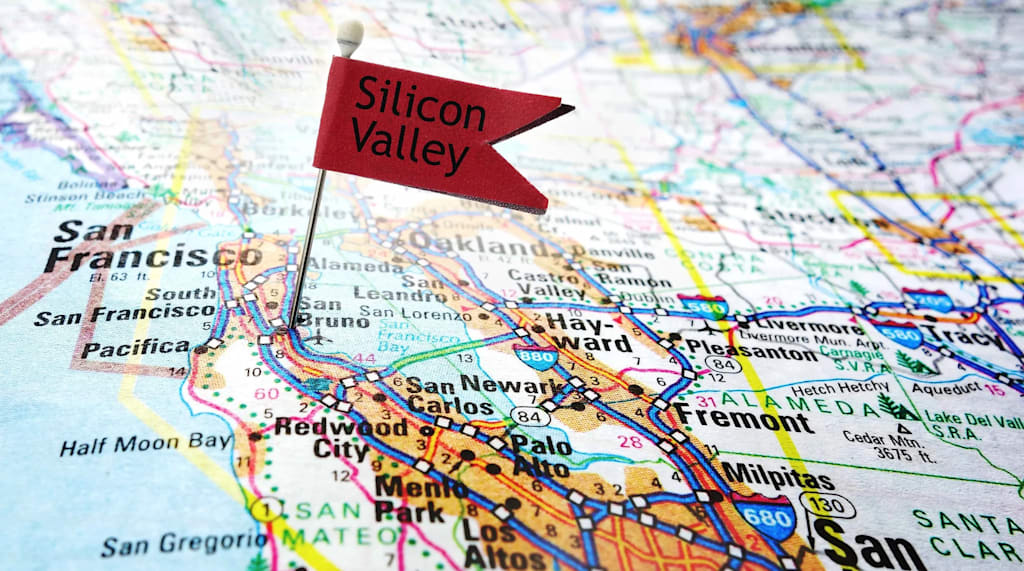
Silicon Valley is synonymous today with technology, startups, and bold innovation. But its rise from quiet farmland to the global center of the digital revolution was neither quick nor accidental. It is a story shaped by visionary educators, defense funding, entrepreneurial risk-takers, and an environment that nurtured ideas long before they became world-changing products.
From Orchards to Opportunity: The Valley Before Tech
Before anyone thought of microchips or software, the Santa Clara Valley in California was best known as the “Valley of Heart’s Delight.” It was a patchwork of fruit orchards, farms, and canneries. The region’s transformation began in the early 20th century with the rise of Stanford University, founded by industrialist Leland Stanford in 1885. The school’s early leaders pushed for collaboration between academia and real-world engineering — something rare at the time.
Frederick Terman: The Father of Silicon Valley
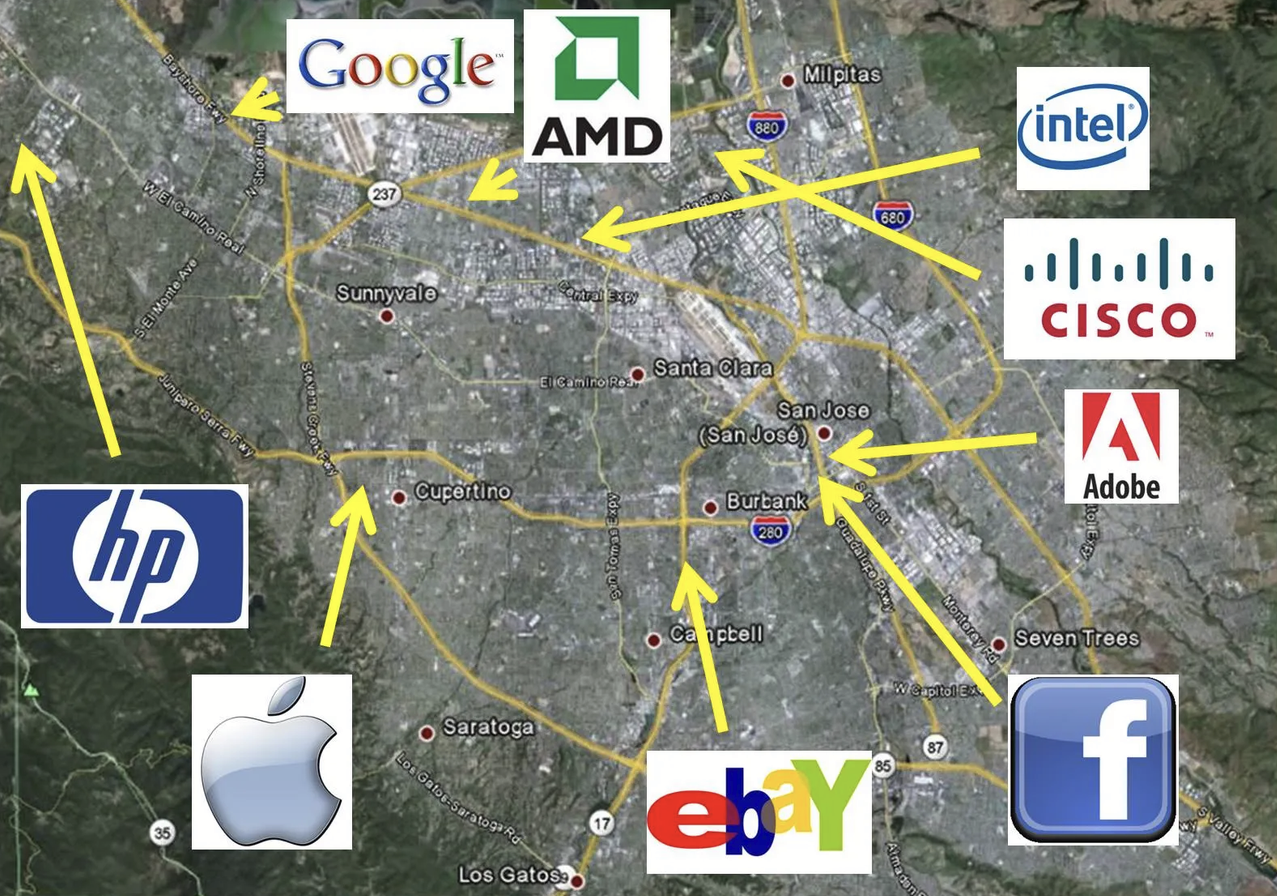
Much of Silicon Valley’s DNA can be traced back to one man: Frederick Terman, a Stanford professor later known as the “Father of Silicon Valley.” Terman encouraged his students not only to pursue research but also to start companies near the university. In the 1930s, he mentored two young engineers, William Hewlett and David Packard, who went on to start HP in a Palo Alto garage in 1939 — a location often romantically referred to as the birthplace of Silicon Valley.
Terman’s concept was revolutionary: build a local ecosystem where innovation, university research, and business reinforce each other.
World War II and the Cold War: Defense Dollars Spark Innovation
The next major push came from the U.S. government. During World War II and the Cold War, there was massive demand for defense technologies — radios, radar, aerospace systems, and electronics. Stanford forged close relationships with the military, attracting research money and skilled engineers.
As defense contracts flowed in, firms specializing in electronics began to cluster around the university. This concentration of talent and capital created the first real tech hub on the West Coast.
The Semiconductor Revolution: The Birth of “Silicon” Valley
The moment that truly defined the region came in the late 1950s with the rise of the semiconductor industry. In 1957, eight engineers left Shockley Semiconductor Laboratory — frustrated with its founder, Nobel laureate William Shockley — to form Fairchild Semiconductor. These “Traitorous Eight” laid the foundation for Silicon Valley’s culture: bold, rebellious, and eager to break away from old ways of doing things.
Fairchild pioneered integrated circuits and became a breeding ground for future innovators. Over time, more than 30 companies spun out of Fairchild, the most famous being Intel, founded by Robert Noyce and Gordon Moore in 1968. Silicon-based chips became the backbone of the electronics revolution, giving the region its iconic name.
The Personal Computer and Software Era
By the 1970s and 1980s, Silicon Valley had become a magnet for entrepreneurs in the emerging world of personal computing. Steve Jobs and Steve Wozniak built early Apple computers in a Los Altos garage. Companies like Atari, Oracle, and Sun Microsystems followed, each adding momentum to the growing tech ecosystem.
As computing expanded from hardware to software, the valley’s culture of open ideas, rapid iteration, and venture capital funding fueled a constant cycle of innovation.
The Dot-Com Boom and Bust
The 1990s brought the internet — and with it, an explosion of dot-com startups. Companies like Yahoo, eBay, and Google emerged during this era, helping shape the modern digital world. Venture capital poured in, fortunes were made overnight, and the valley’s global influence skyrocketed.
But the bubble burst in 2000, wiping out hundreds of companies. While painful, the bust reset the landscape and paved the way for more sustainable, long-term growth.
The Age of Giants: Google, Facebook, and Beyond
After the dot-com correction, the next wave of Silicon Valley leaders took shape. Google refined search and online advertising. Facebook pioneered social networking. Apple reinvented mobile technology with the iPhone. Tesla pushed electric vehicles mainstream. And countless startups became part of daily life — from Uber and Airbnb to Netflix and Stripe.
By the 2010s, Silicon Valley was not just an American phenomenon but the global center of technological innovation, influencing everything from communication and transportation to entertainment and finance.
Challenges and the Next Chapter
Despite its success, Silicon Valley has faced mounting challenges: sky-high living costs, equity concerns, debates over big tech’s power, and competition from rising tech hubs worldwide. Remote work and globalization have also begun dispersing talent beyond the Bay Area.
Still, Silicon Valley remains unique in its blend of world-class universities, venture capital, risk-friendly culture, and dense network of entrepreneurs.
The history of Silicon Valley is a story of transformation — an evolution from farmland to the world’s most influential innovation ecosystem. Its success has never been the result of one company or invention, but rather a culture that encourages experimentation, accepts failure as part of progress, and constantly reinvents itself.
As new technologies emerge — AI, quantum computing, biotechnology — the valley continues to shape the future, just as it has for the past century.
About the Creator
Enjoyed the story? Support the Creator.
Subscribe for free to receive all their stories in your feed.
Comments
There are no comments for this story
Be the first to respond and start the conversation.