Western
The Bone: Why is the American bomber arriving in the UK for a possible major attack on Iran considered so dangerous?
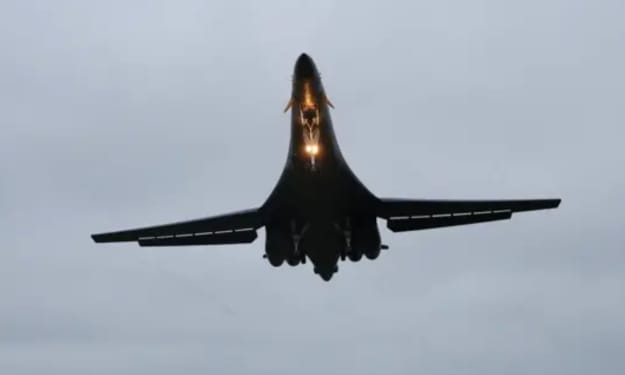
The Bone: Why is the American bomber arriving in the UK for a possible major attack on Iran considered so dangerous? A large U.S. Air Force bomber aircraft capable of carrying 24 cruise missiles has landed on British soil. The 146-foot-long B-1 Lancer arrived on Friday at Royal Air Force Fairford airbase in Gloucestershire, United Kingdom. Nicknamed “The Bone,” the aircraft is equipped with advanced radar and GPS systems that help accurately strike targets. For protection against enemies, it also carries electronic jammers, radar warning systems, and a specialized deception system designed to confuse enemy defenses. This development comes after British Prime Minister Keir Starmer allowed the United States to use British military bases. However, the UK says this permission is only for defensive strikes on Iranian missile facilities. Earlier this week, officials had said Britain was ready to allow these warplanes to use its airbases and expected their arrival within a few days. Specifications of “The Bone” The aircraft operates with a four-member crew. Its wingspan is 137 feet and it weighs 86 tons. According to Boeing, it is the fastest bomber in the U.S. Air Force, capable of flying at speeds of more than 900 miles per hour. U.S. Secretary of Defense Pete Hegseth indicated in a statement that attacks on Iran may increase soon. He said that larger fleets of fighter jets will be involved, defensive capabilities will be strengthened, and bomber flights will also increase. RAF Fairford RAF Fairford, located on the border of Gloucestershire and Wiltshire, has previously been used by the United States for long-range heavy bombing missions. It should be noted that Britain has allowed the U.S. to use its military bases for defensive strikes, but has announced that it will not directly participate in combat operations. Earlier on Friday, the Prime Minister’s spokesperson told journalists: “We have already made it clear that our response has been to allow the United States limited, specific, and defensive use of our military bases to protect British lives, British interests, and our allies in the region.” The spokesperson added that the British military is focusing on shooting down drones in the air, while the United States is targeting missile launch sites in Iran. He said: “We have consistently stated that we will take necessary steps to prevent future attacks. For that purpose, we have allowed the United States to target these missiles at their source, while we ourselves are focusing on defending the airspace.” Iranian Revolutionary Guard Claim Meanwhile, the Islamic Revolutionary Guard Corps (IRGC) has claimed that it carried out large-scale missile and drone attacks on U.S. installations in the United Arab Emirates and Kuwait. In a statement released on Saturday, it said that the latest phase of the operation used a new generation of missiles and drones. According to Iranian media, the main target was the Al Dhafra Air Base in the UAE, where precision-guided missiles and drones reportedly destroyed advanced radar systems, MQ-9 drone hangars, and facilities related to U.S. U-2 reconnaissance aircraft. The IRGC also stated that Ali Al Salem Air Base in Kuwait was heavily attacked with cruise and ballistic missiles, damaging radar systems, fuel storage facilities, and two runways used by U.S. aircraft. Israeli Airstrikes in Iran
By Real content8 months ago in Chapters
Pakistani Man Asif Merchant on Trial in New York Over Alleged Trump Assassination Plot Linked to Iran’s IRGC
A Pakistani citizen, Asif Merchant, who was arrested on charges of planning the assassination of former U.S. President Donald Trump, has appeared in court in New York as the trial against him begins. During the proceedings, he told the court that he had been working A Pakistani citizen, Asif Merchant, who was arrested on charges of planning the assassination of former U.S. President Donald Trump, has appeared in court in New York as the trial against him begins. During the proceedings, he told the court that he had been working with Iran’s Islamic Revolutionary Guard Corps (IRGC) and that the plan involved recruiting hired assassins. On Wednesday, Asif Merchant told the court that he was not acting of his own free will in the alleged conspiracy to carry out assassinations in cooperation with the IRGC. The U.S. Department of Justice alleges that Asif Merchant was attempting to find hired killers in the United States. The plan was allegedly to target Trump and other American politicians in retaliation for the killing of IRGC commander Qassem Soleimani. It should be recalled that General Qassem Soleimani, head of Iran’s overseas operations and a commander in the IRGC, was killed in a U.S. drone strike in Baghdad in January 2020. Iranian officials have repeatedly vowed to avenge his death. Asif Merchant is accused of meeting a hitman in June 2024 and paying $5,000 as an advance for carrying out a killing. However, the person he believed to be a hired assassin was actually an undercover FBI agent. According to court documents, Merchant allegedly planned to leave the United States before the plot could be carried out and had booked a flight for July 12, 2024. However, U.S. authorities arrested him on the same day before he could leave the country.
By Real content8 months ago in Chapters
Taliban Drone Attacks on Pakistan: Types of Kamikaze Drones, Technology, Range and Military Impact
In recent days, Afghanistan’s Taliban interim government has reportedly used drones for the first time in attacks against Pakistan. In a statement, the Taliban Ministry of Defense claimed that it carried out “multiple aerial strikes” using drones at several locations in three Pakistani cities. According to them, this step was taken in response to Pakistani airstrikes. Since the Taliban government possesses little to no conventional air force capability, it resorted to explosive drones to conduct aerial attacks. It is worth noting that according to Pakistani media reports, during a media briefing on February 27, DG ISPR Ahmed Sharif Chaudhry said that the Afghan Taliban regime had attempted to use some basic drones to conduct attacks in Sibi, Abbottabad, and Nowshera. However, he claimed that “our anti-drone systems thwarted this attempt. On the same day, February 27, Federal Minister for Information Attaullah Tarar also claimed on X that the Taliban had attempted to launch small drones toward Abbottabad, Swabi, and Nowshera, but anti-drone systems shot down all of them. No casualties were reported. Taliban drones reportedly targeted three locations, including the Artillery School in Nowshera and a primary school building in Swabi. However, security sources claimed that all these drones were destroyed. The Taliban government reportedly used two types of drones against Pakistan: some suicide drones and several quadcopters (drones that fly using four rotors). A military affairs expert suggested that it is possible the Taliban government does not have the capability to manufacture drone components itself, and it is likely that these parts were purchased from other countries and assembled in Afghanistan. In recent years, unmanned aerial vehicles (UAVs) and suicide drones have been widely used in various conflicts, significantly changing the nature of conventional warfare. These drones have played a prominent role in conflicts ranging from the ongoing Russia-Ukraine war to the clashes between Pakistan and India in May 2025. One of the key characteristics of these drones is that they are equipped with explosive materials and detonate upon reaching their target, which is why they are called suicide drones. These are also known as kamikaze drones and resemble small missiles in shape. They are capable of striking targets at low altitude. The term “kamikaze” is a Japanese word used during World War II for Japanese pilots who deliberately crashed their explosive-laden aircraft into enemy ships and targets. What drones did the Taliban government use? In one confirmed attack, a Taliban drone targeted a location in the Swabi district of Khyber Pakhtunkhwa. Footage of another confirmed drone strike was also analyzed. According to image analysis, the drones had a wingspan of about three meters and an overall length of roughly two meters. Since these drones cannot carry large amounts of explosives, their destructive power is relatively limited. In one incident, when a drone fell near a wall in Swabi and exploded (or was shot down), the blast was not strong enough to cause significant damage to the wall. However, even drones carrying small amounts of explosives can cause deadly injuries and fatalities if they land in areas where people are present. An Afghan information technology expert said the drones used by the Taliban government could be deployed in two ways. According to him, the first type can strike targets up to 20 kilometers away and is operated using a special remote control. These drones can carry about six to eight kilograms of explosives. The second type operates using software, where the target’s location details are fed into the system beforehand. The flight range of these drones depends on several factors, such as the weight of the explosives, the amount of fuel, and weather conditions. The drone itself weighs around 15 kilograms. Ray Gardner, head of Ukraine’s Defense and Information Technology division, said that these drones can strike targets at distances between 150 and 400 kilometers, although this depends on the weight of the warhead. Gardner said that some of the drones are not well-known models and appear to be locally produced. Some of the drones used by the Taliban resemble the “Daily” drone, which was previously manufactured by a Turkish technology company called Tetra. According to Gardner, the Taliban drones are fixed-wing types with a single-cylinder gasoline engine and a wooden propeller. Machines like these are commercially available for hobbyist aviation enthusiasts. He also suggested that it is highly likely that the components for these machines were manufactured in another country. Analysis of the remaining parts of the drones used in attacks on Pakistan suggests that the maximum market price of such drones is around $250 (about 15,000 Afghanis). According to Gardner, the cost of producing kamikaze drones is generally around $700 (approximately 45,000 Afghanis). An Afghan technology expert, speaking on condition of anonymity, said that the drones’ small size, low-altitude flight, and fiber-based structure make them difficult to detect by radar. One type of drone runs on fuel, while another operates on lithium batteries. Images released by the Taliban Ministry of Defense also suggest that quadcopters were used in several alleged attacks. Quadcopters are generally not designed for military use, but militant groups often modify them slightly and equip them with explosives for attacks. It is worth noting that the banned Tehrik-e-Taliban Pakistan (TTP) has also previously used quadcopters to target police checkpoints and stations in Khyber Pakhtunkhwa. According to the technology expert, these drones are operated by remote control and have a flight range of up to 25 kilometers, which is why they are not used for long-distance targets. Images released by the Taliban Ministry of Defense show that these drones were used to attack Pakistani security posts along the Durand Line.
By Real content8 months ago in Chapters
Is the Middle East War Turning Into World War III?
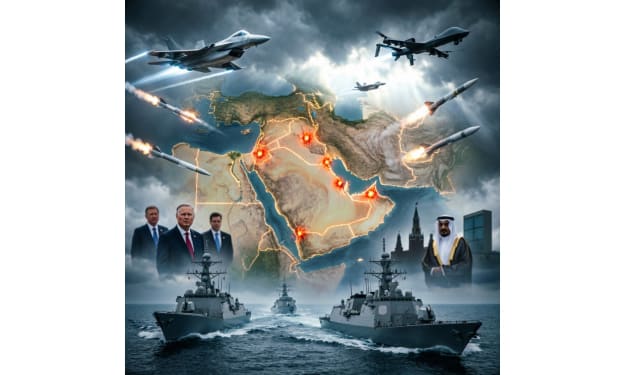
Is the Middle East War Turning Into World War III? The current situation in the Middle East has once again raised a serious question around the world: could this conflict grow into World War III? Tensions in the region have increased due to military strikes, political warnings, and the involvement of several global powers. While no country has officially declared a world war, the combination of regional conflicts and international alliances has made many experts worry about the possibility of a much larger confrontation.
By Wings of Time 8 months ago in Chapters
AI, Nuclear Escalation, and Pakistan’s Critical Role
AI, Nuclear Escalation, and Pakistan’s Critical Role If World War III begins, it is unlikely to start with marching armies or formal declarations. Instead, it may begin silently—inside algorithms, early-warning systems, and automated decision tools powered by artificial intelligence. Nowhere is this risk more serious than in regions where nuclear weapons exist alongside historical rivalries, limited decision time, and high political tension. South Asia, especially Pakistan, sits at the center of this emerging danger.
By Wings of Time 8 months ago in Chapters
Has World War III Started?
Has World War III Started? The question “Has World War III started?” is no longer limited to academic debate or fictional movies. It is now openly discussed in newsrooms, policy circles, and online platforms around the world. While the simple answer remains no, the conditions shaping today’s global environment are deeply alarming. The world is experiencing an unprecedented convergence of regional wars, technological disruption, and power competition that closely resembles the early stages of past global conflicts.
By Wings of Time 8 months ago in Chapters
After Khamenei: How the Middle East Crisis Could Redraw Global Politics
After Khamenei: How the Middle East Crisis Could Redraw Global Politics The confirmed death of Ayatollah Ali Khamenei after joint strikes by the United States and Israel has sharply intensified the ongoing conflict in the Middle East—turning what was a dangerous regional crisis into a moment with global implications. Khamenei, who led Iran for nearly four decades and wielded extraordinary political and military influence, was killed when missiles and airstrikes hit Tehran in the opening phase of a major military operation targeting Iranian leadership and strategic infrastructure. The impact of his death is already reverberating across the region and the world in ways that may last for years.
By Wings of Time 8 months ago in Chapters